
Technical Information
Developer: Konami Digital Entertainment
Publisher: Konami Digital Entertainment
Release Date: September 23, 2021
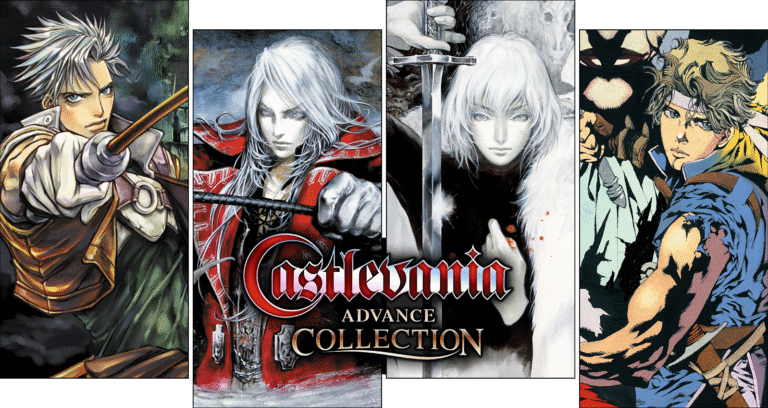
Castlevania: Harmony of Dissonance is part of the Castlevania Advance Collection.
It’s a remastered version of the original Game Boy Advance title.
The story takes place in 1748, exactly 50 years after Simon Belmont defeated Dracula. You control Juste Belmont, Simon’s grandson. Alongside his best friend Maxim, Juste sets out to find Lydie, who has been imprisoned in a mysterious castle.
Final Considerations – Analyzing the Game as a Whole
Graphics and UI
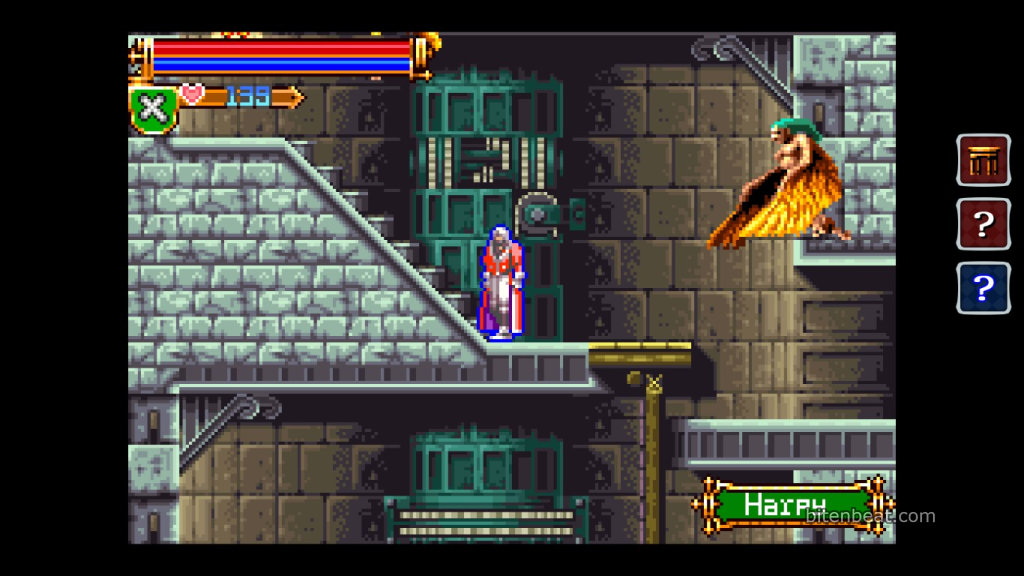
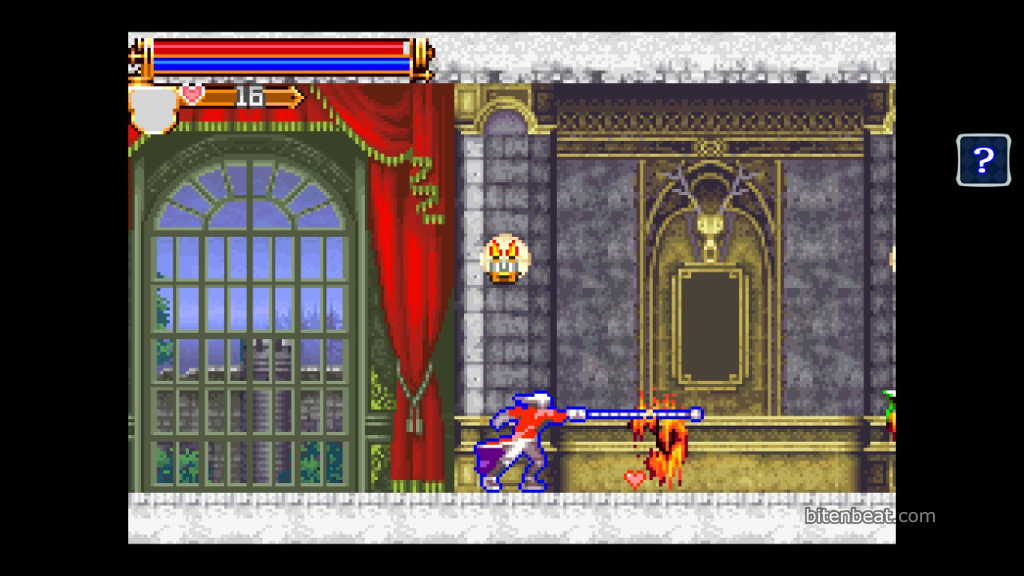
For those used to more modern games, the pixel art in Harmony of Dissonance may initially seem limited, giving the impression that there isn’t much room for detailed artwork. At least, that was my first impression.
But let me remind you: this game was originally released in 2002, and at that time, this style was far more refined than that of the previous generation.
After getting used to the game’s resolution, the visuals became quite pleasant to me.
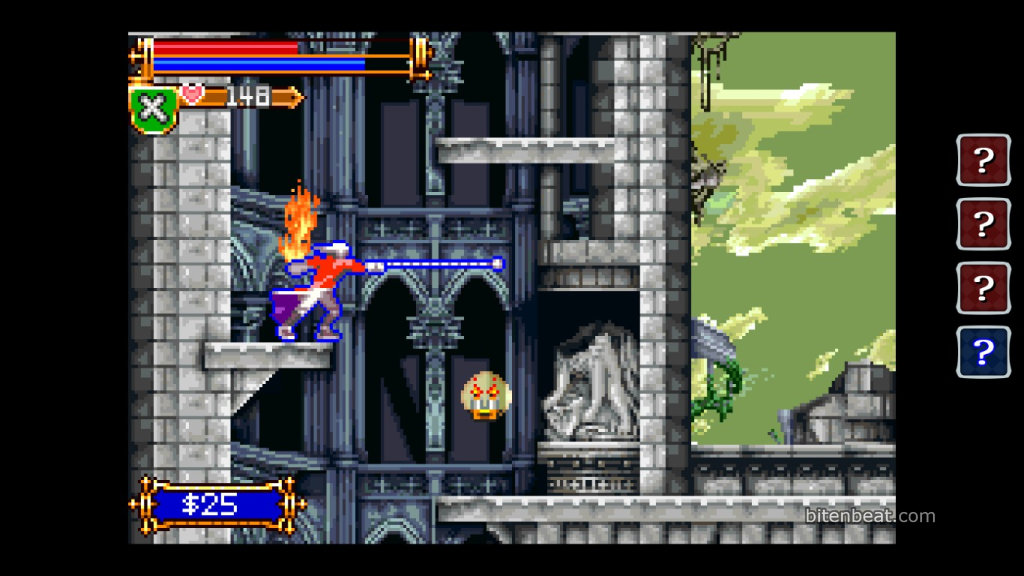
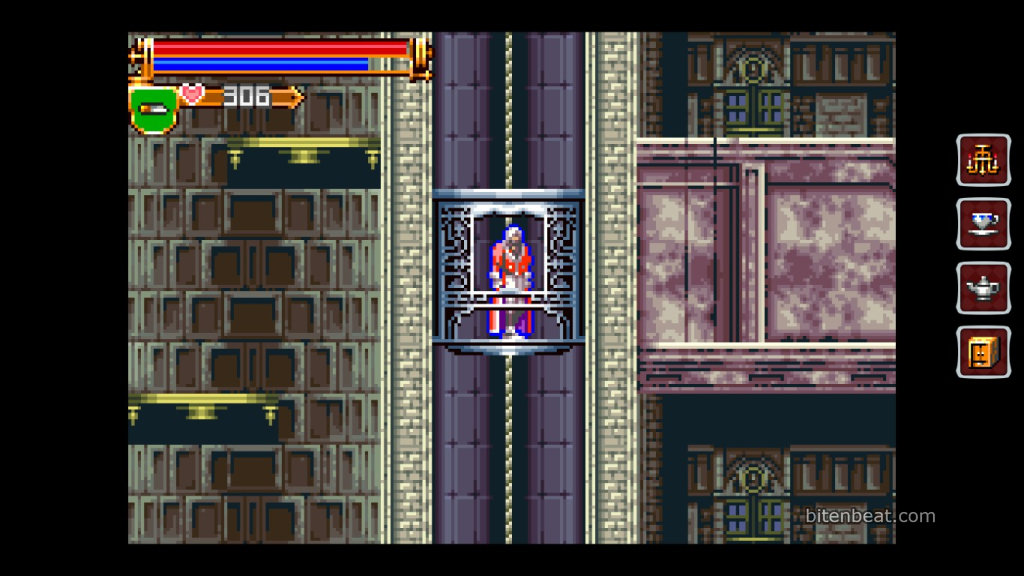
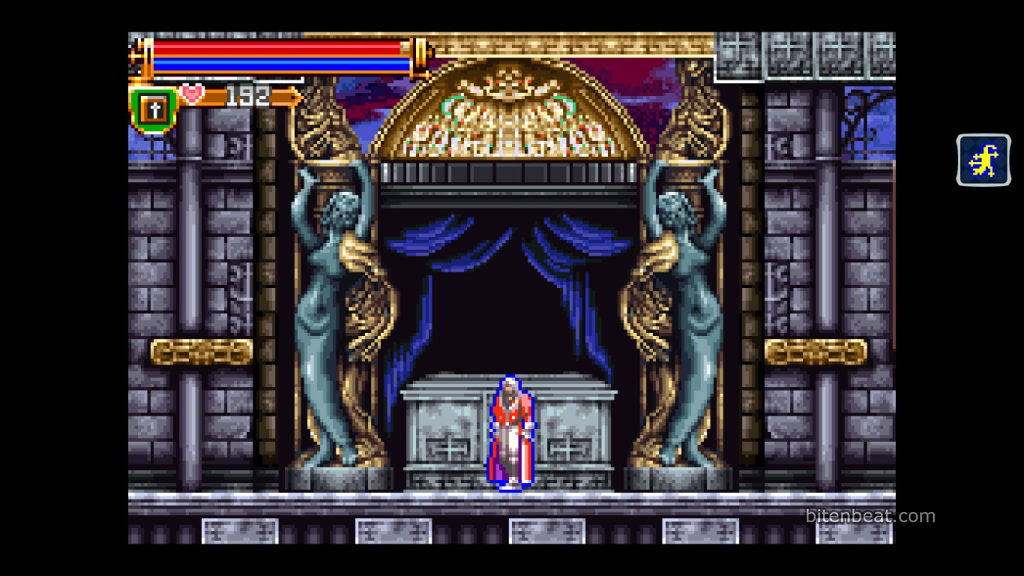
The levels are very detailed, as are the character and enemy animations.
For those who played Castlevania: Symphony of the Night, several references won’t go unnoticed. I would even say that some rooms are nearly identical.
The most notable aspect, in my opinion, is Juste’s resemblance to Alucard, especially in his movements and hair.
As usual, enemies from previous games return. Some retain their classic designs (such as Medusa Head and Fleaman), while others have been redesigned (like the Merman).
The HUD is very intuitive. If you’ve played any other Castlevania title, you’ll immediately understand everything.
There’s a life bar, an MP bar, and a heart counter. Next to the hearts, the currently equipped sub-weapon is displayed.
When opening the menu, it may initially seem complex due to the number of options. However, everything is easy to understand, with clear names and descriptions.
Unfortunately, I couldn’t remember the area names, since they only appear the first time you enter a location. I found this frustrating, especially when I got stuck and couldn’t figure out where to go without using a guide.
This collection version adds an indicator on the right side of the screen showing which collectible items are available in each area. That helped me avoid looking up a walkthrough.
In my opinion, the biggest negative point is the lack of clarity when using portals. After unlocking them, the game doesn’t clearly explain that you can travel between previously activated ones. I accidentally discovered this by pressing down unintentionally.
The confusion happens because those same portals are also used to move between Castle A and Castle B.
It took me a while to realize they were two different commands on the same screen, which resulted in extra hours of gameplay, since the castle is huge!
Soundtrack and Sound Effects
Of all the Castlevania games in this style, this one left me wanting more in terms of soundtrack.
The music fits the game, but it isn’t particularly memorable. Overall, it feels somewhat dull and doesn’t evoke strong emotions.
The other sound effects are acceptable by my standards.
Gameplay
Without a shadow of a doubt, this is the easiest Metroidvania in the franchise.
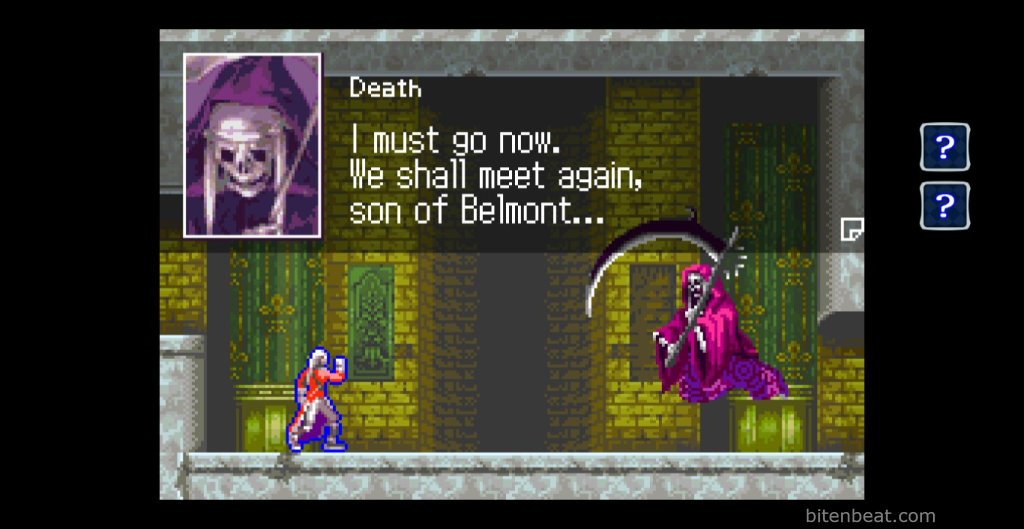
So easy that I defeated most bosses on my first try — including Dracula and Death.
On the other hand, exploration felt confusing at times.
Because the castle has two versions, I got lost several times while transitioning between them.
And that’s not even counting the moments when I didn’t understand what I needed to do to progress, since certain items are required to unlock specific doors.
Juste can use magical books that, when combined with sub-weapons, grant him unique abilities.
I found this mechanic very interesting, as it allows for character customization based on the abilities you find most useful.
In certain areas, there are puzzles to solve. There were only two that I couldn’t complete without a guide: breaking the rock near Luminous Cavern and solving the final box puzzle on the lower floor of Castle A.
The story is fine, but it’s not particularly engaging to me.
What truly excites me in games like this is exploring the environments, appreciating the level design, and encountering different enemies.
Harmony of Dissonance features three endings. The true ending requires collecting all relics and facing Maxim in Castle B.
Replayability and Game Retention
I always return to Castlevania-style Metroidvanias. Always.
It might take a year or more, but I inevitably come back. I love this genre and always enjoy exploring the environments and comparing enemies to other entries in the series.
After completing the game for the first time, Boss Rush Mode is unlocked.
Personally, I don’t care much for it, it doesn’t hold much appeal for me.
It’s also possible to play as Maxim. To unlock him, start a new game and enter “Maxim” as your name.
His gameplay is much faster. For those who enjoy a different playstyle, this mode will certainly be interesting.