
Technical Information
Developer: Nolla Games
Publisher: Nolla Games
Release Date: September 24, 2019
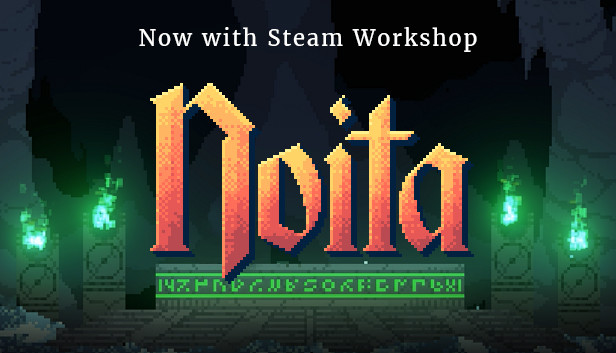
Noita is a roguelite where your only goal is to enter a cave and go as deep as possible.
However, all of your actions have consequences, as the entire game focuses on the physics of every millimeter of the environment, objects, and enemies.
Final Thoughts – Analyzing the Game as a Whole
When this review was written, the game was in early access, so some things may have been improved or modified later.
Graphics and UI
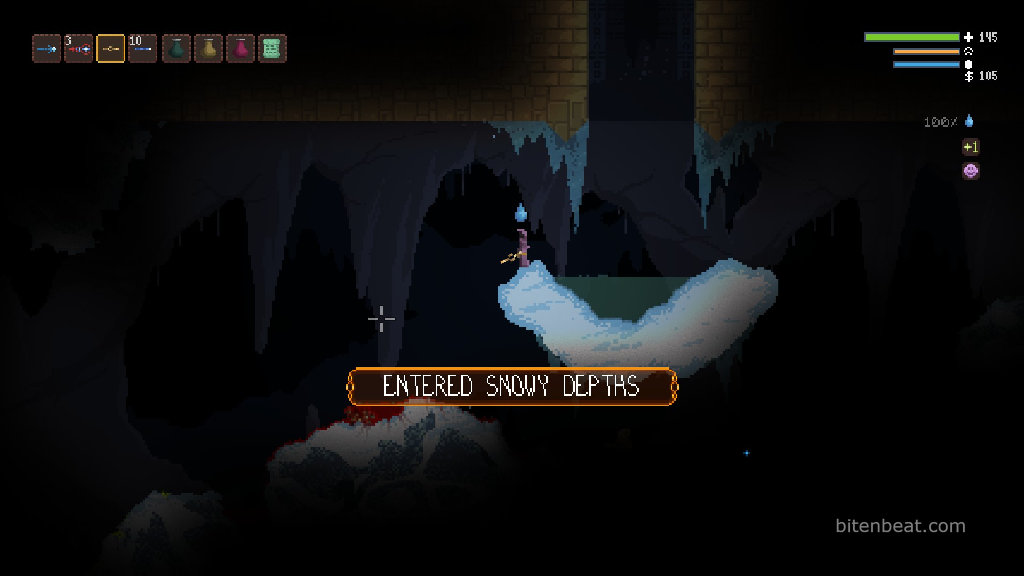
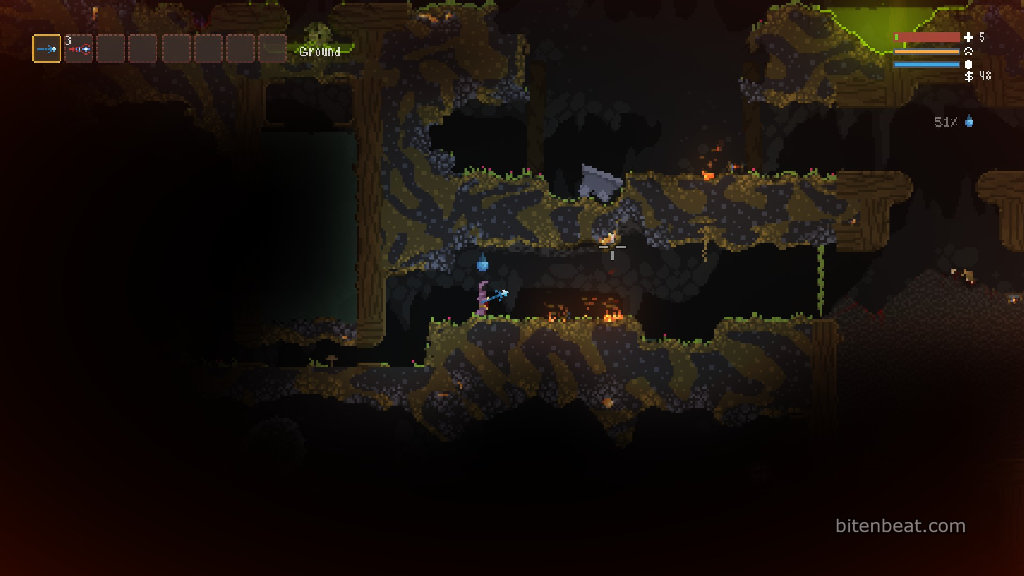
I loved the art!
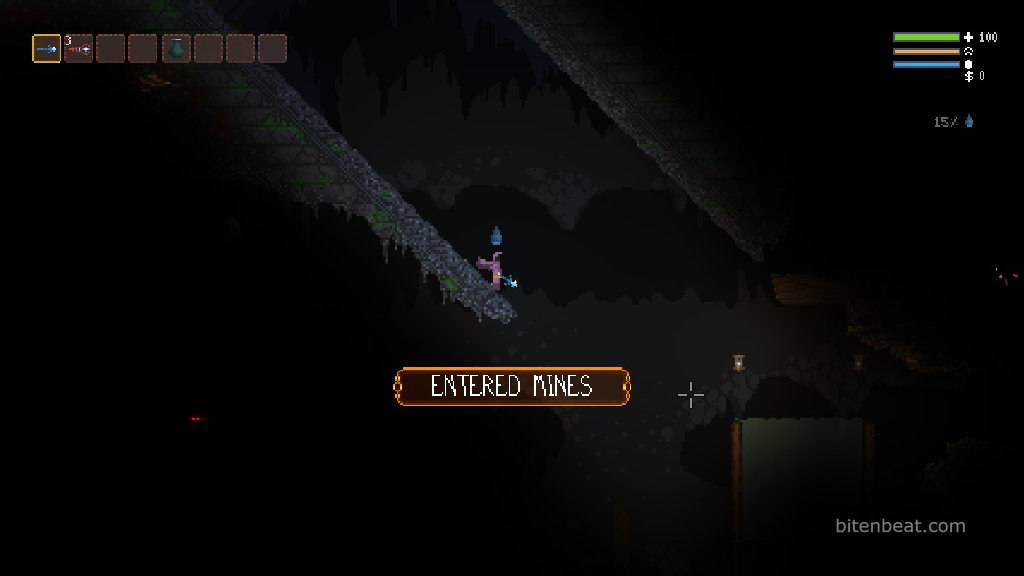
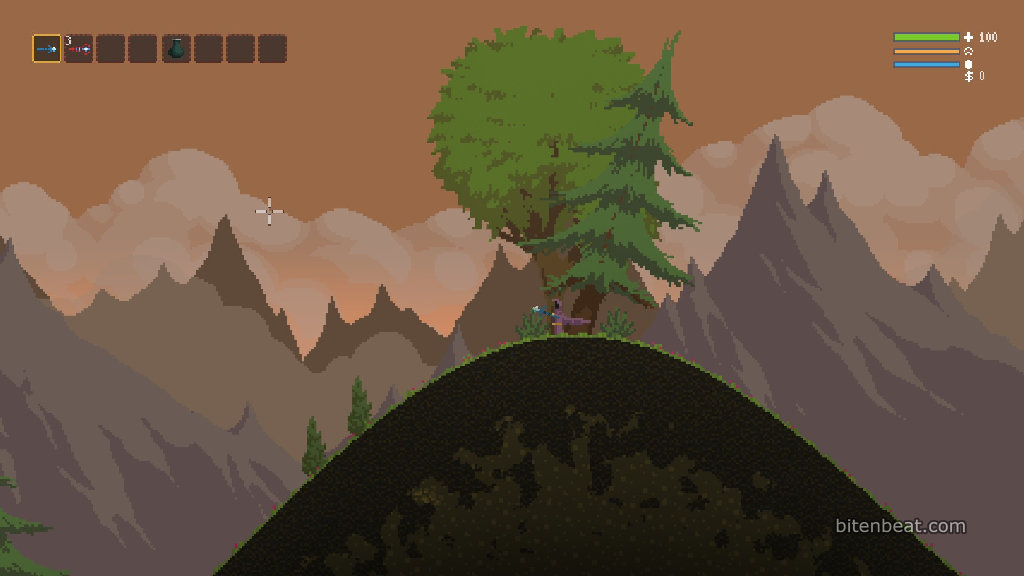
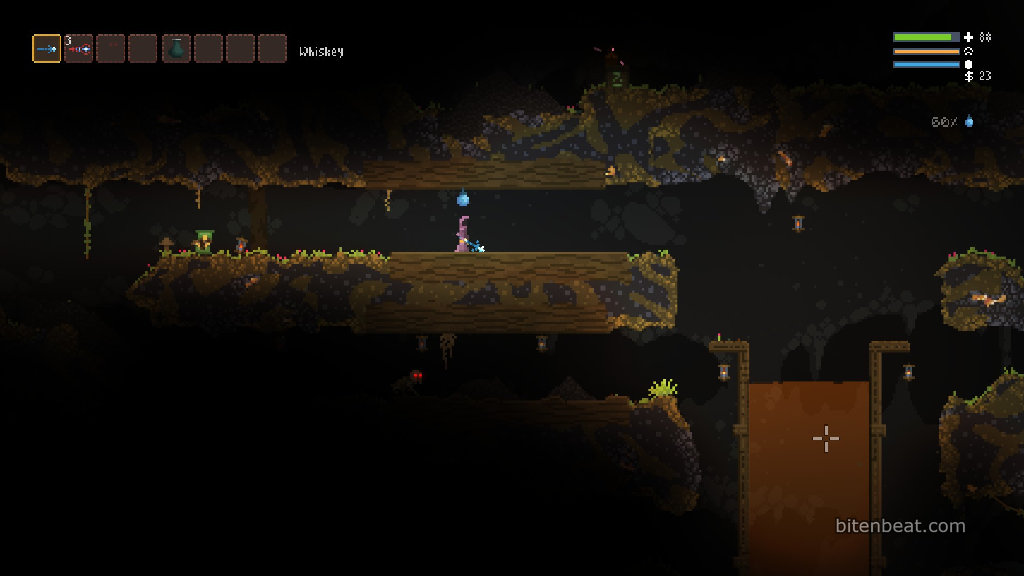
The minimalist pixel art style is very well executed.
The color balance in the compositions is excellent, making everything easy to see, even though the game is mostly dark.
The game is visually clear and simple to read. Right at the beginning, there’s a small tutorial explaining the basic controls.
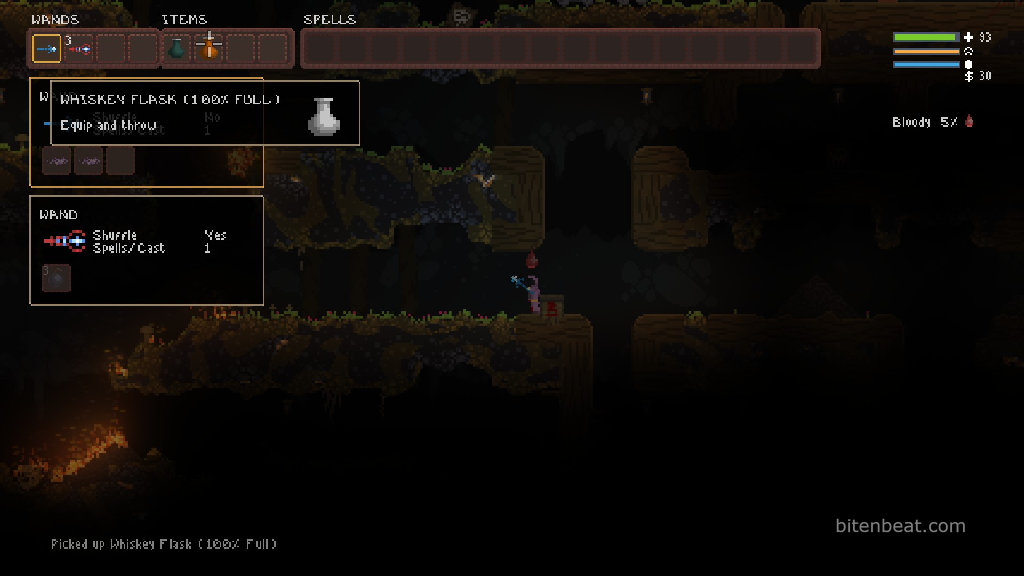
When you open the inventory and hover your mouse over an item, its description is displayed. At first, it’s not very clear what each item does, even with the descriptions. However, as you keep playing, you start to understand the effects of your spells and items.
I missed having a mini-map. It would be really useful if players could see which areas they’ve already explored in each level.
Soundtrack and Sound Effects
To be honest, the music and sound effects aren’t particularly remarkable. There’s nothing especially memorable that will stick with you.
That said, everything fits the game well. The calm sound design adds a lot of suspense and complements the game’s atmosphere.
Gameplay
You’ll need both mouse and keyboard to play. The keyboard controls are simple: W, A, S, and D for movement, E to equip items, and F to kick.
With the mouse, you aim your attacks, and when you hover over objects in the environment, their descriptions are displayed (water, oil, sand, etc.).
The entire game is based on physics, so every action has a reaction. Each object and enemy behaves differently. I found the physics system to be very well calibrated, even while the game was still in early access.
Only one bug caught my attention: when you destroy an anthill into multiple pieces, interacting with one piece causes all the others to react the same way.
The stages are procedurally generated, so the runs aren’t the same. Most of your progress depends on your skill, but luck also plays a significant role! Sometimes you’ll get great items, and other times you won’t.
When you die, everything you’ve gained is lost. However, the menu allows you to view statistics such as the percentage of enemies killed and the items, spells, and abilities you’ve unlocked.
Replayability and Game Retention
Despite the game’s difficulty, it’s hard not to feel motivated to try again. Each run presents a new challenge.
Every time I die, I’m left with the feeling of, “Okay, next time I’ll go even further”.
Believe me, this game is very difficult. I only recommend it to players who truly enjoy a challenge.