
Technical Information
Developer: KEMCO, dwango
Publisher: PQube Limited
Release Date: October 22, 2019
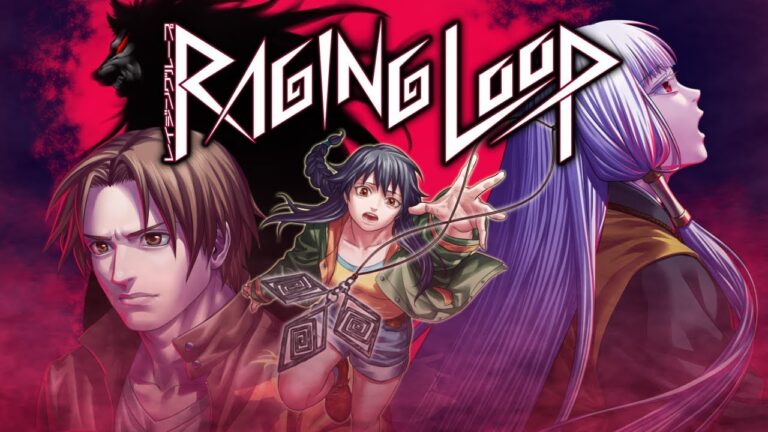
Raging Loop is an investigative visual novel.
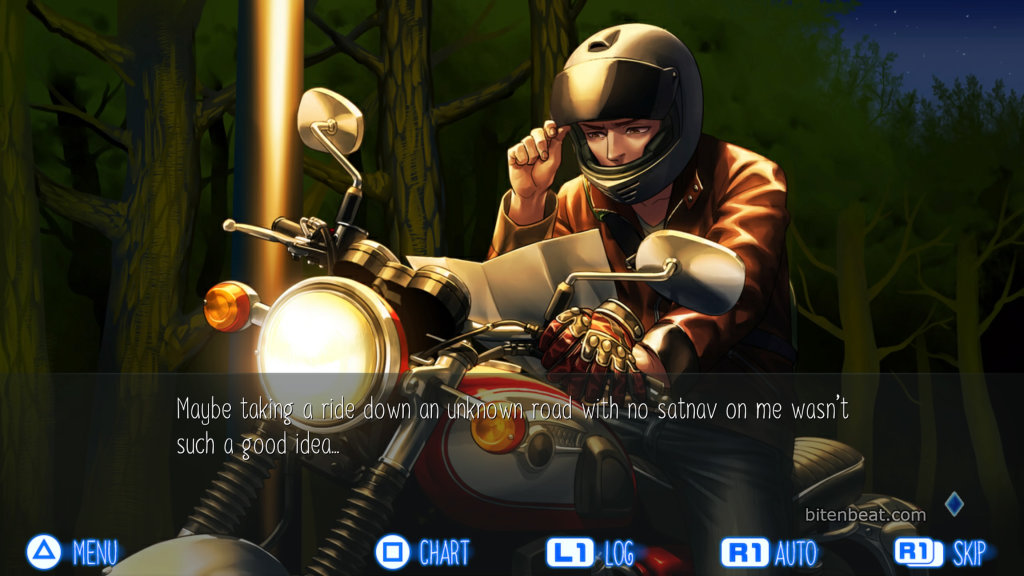
Haruaki Fujaishi is traveling on his motorcycle when he gets into an accident and, with few options left, temporarily settles in a village called Yasumizu.
However, a dense fog approaches, preventing anyone from leaving the area… but this fog is not an ordinary fog. It is a kind of curse that forces the people who live there to hunt wolves.
So far, nothing strange or scary, right? Wrong. The wolves are the villagers themselves.
Final Thoughts – Analyzing the Game as a Whole
Graphics and UI
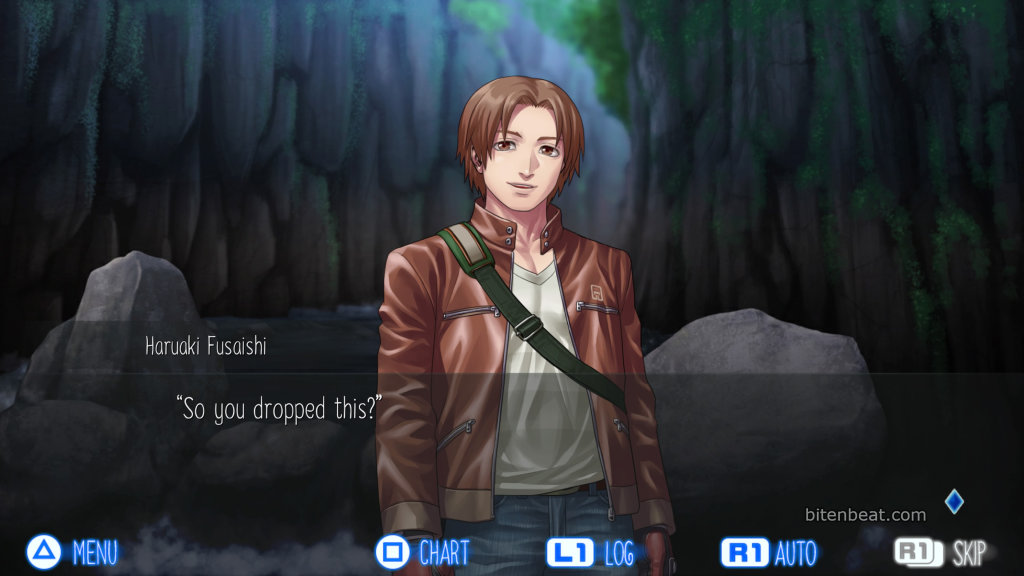
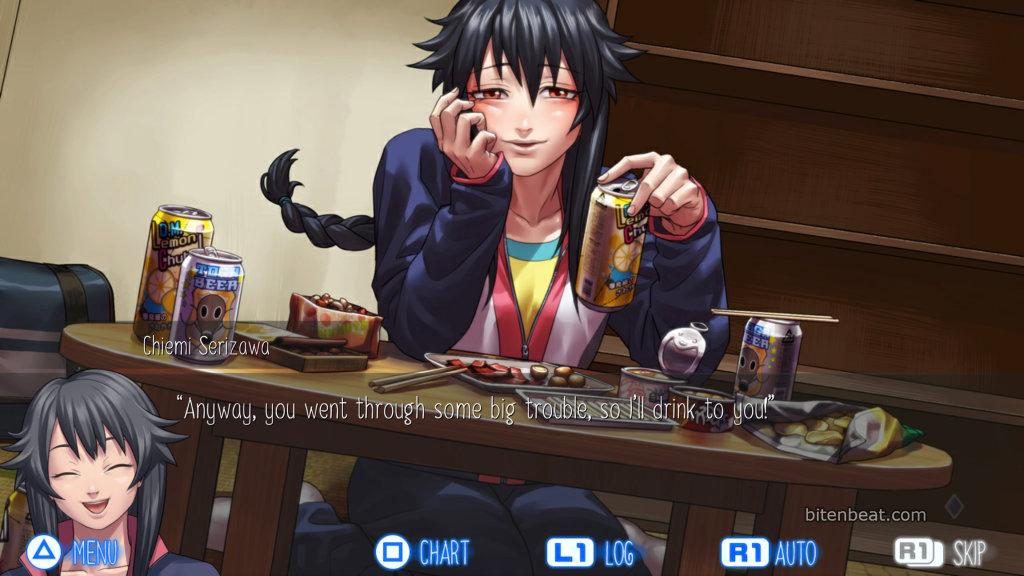
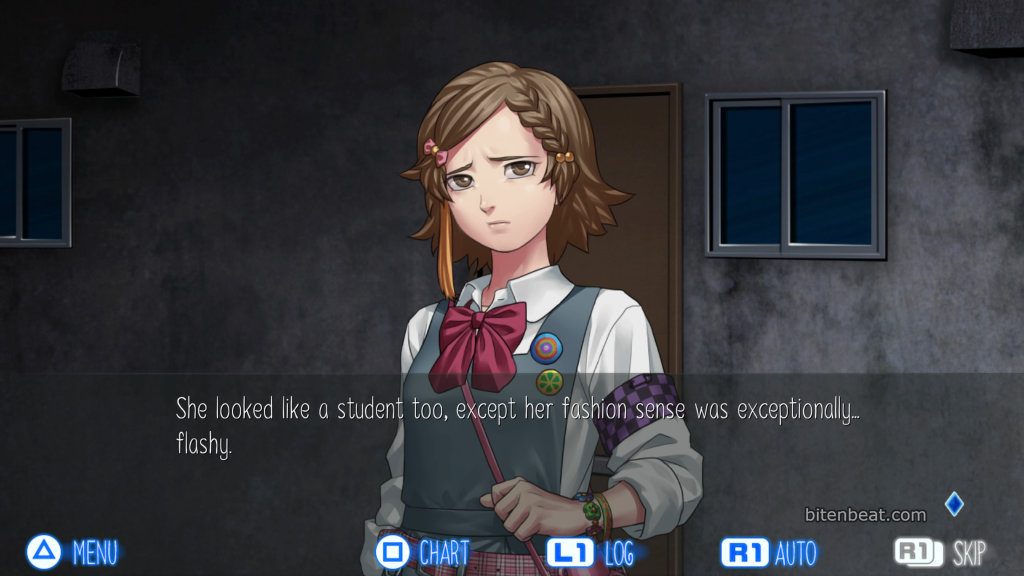
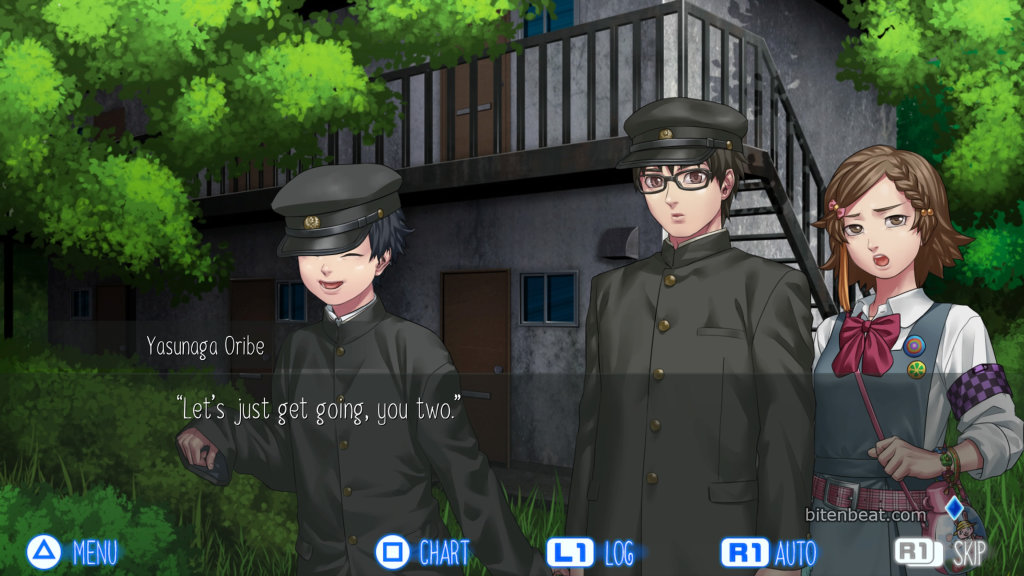
The illustrations are very well done. I absolutely loved the character composition and how they maintained the same art style for the environments.
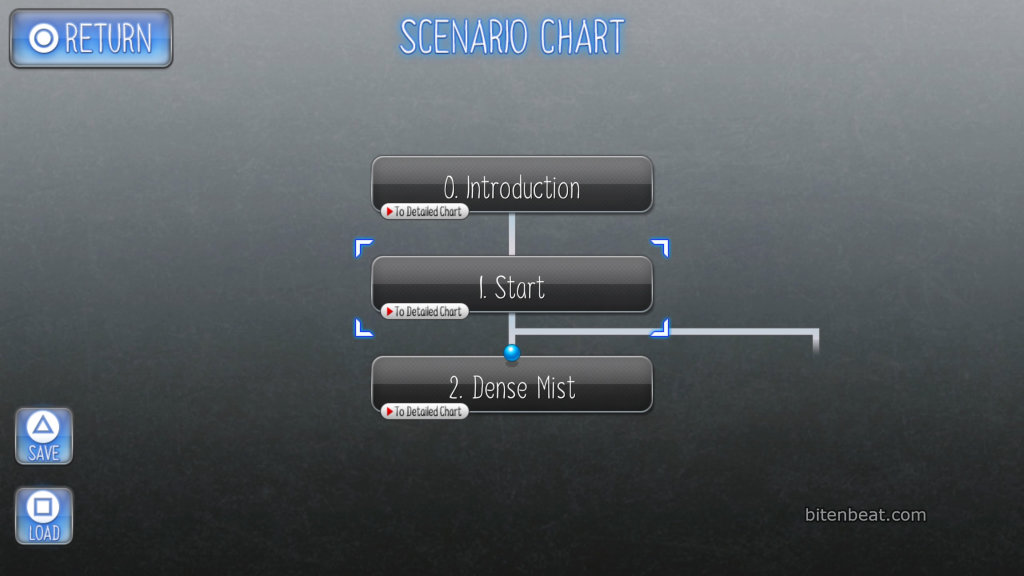
The UI and HUD are clean. The game features a kind of timeline that allows you to follow the story and your choices more precisely. You can even select any of these sections to start the game from that point (as long as it has already been unlocked, of course).
I did find it somewhat unnecessary to have so many save slots, since you already have the freedom to choose which moment of the game you want to start from or return to.
Soundtrack and Sound Effects
The music is very well suited to each situation in the game, effectively emphasizing the emotions of each character.
There is a large amount of voiced dialogue, which brings more immersion to the player during gameplay.
The only thing that bothered me was that when I played using headphones, one track sounded poorly equalized, with a somewhat abrupt volume cut in one of the instruments. It wasn’t something that ruined my experience, but I didn’t like it. That said, if you play using your TV’s speakers, this issue is barely noticeable.
Gameplay
The curse works like a sort of detective game. Each person can either receive a guardian animal or become a wolf.
The guardians can use their powers every night, but only on one person.
The Snake has the power to discover whether someone is human, a guardian, or a wolf. The Spider protects someone from being killed. There are two Monkeys, and their ability is simply to recognize each other (which seems useless, but if revealed, that’s two fewer suspects). The Crow can identify whether the person who died was a wolf or not. And finally, the Wolves (which can be up to three people), who must assassinate one person per night until the “game” ends.
The residents gather at a banquet, where they decide who will be hanged (in an attempt to eliminate the wolves).
At night, everyone stays isolated in their homes, and the wolves choose someone to kill.
This process repeats itself until either the humans or the wolves win. No one can try to escape or break the rules, otherwise, they will be consumed by what they call corruption and die shortly afterward.
The game’s plot isn’t just about helping people defeat the wolves, but also about investigating these supernatural phenomena and trying to free the small village from this sinister curse.
Haruaki has a unique ability… he doesn’t die. Every time he meets death, he returns to the starting point of the story, and this strange ability will be used to help the village of Yasumizu.
I found the story absolutely amazing, and from the very beginning I was extremely curious to find out what was really going on behind everything, from why the curse exists to the reason behind Haruaki’s time loops.
The game has thirty-one endings (!!!), but only five of them are true endings. The rest are simply bad endings where the protagonist dies.
The game’s flow is extremely smooth, and with every death you immediately want to restart and do everything differently to resolve things as quickly as possible. Some endings, once completed, unlock a key, and this key is required to access certain choices and follow different routes.
Once you achieve the true ending, a new game option becomes available. In it, you can see each character’s lines of thought and the explanations behind why everything is happening. I found this method fantastic, as it provided solid grounding for the story. It proved to me that there was deep research put into the script, without leaving any loose ends.
If you enjoy fourth-wall breaks, then you’ll love Raging Loop, as this happens quite frequently. This gave me a much stronger connection to the game, with a level of immersion far deeper than many other visual novels I’ve played.
I didn’t like the linearity of the choice order. All choices follow a pattern, and the last one is always the option that takes you further along. This made my actions somewhat predictable and honestly killed my excitement a bit, since I could already tell which answers would lead to death.
I really liked the true ending and all the explanations. In my view, there are some subtle critiques of human behavior, which end up making us reflect a little on life itself.
Replayability and Game Retention
You’ll want to see all the endings, trust me.
First, because you don’t need to restart the story from the very beginning (as mentioned earlier, you can select the section you want to start from). Second, because you’ll want to know what would happen if you did everything differently. And finally, because the trophies are tied to the endings.
After completing the true ending, you can also play five short stories outside the main plot.
Raging Loop is an extremely content-rich visual novel. Everything is very well made and structured — it’s genuinely a pleasure to play and appreciate.