
Technical Information
Developer: Nicalis Inc., Edmund McMillen
Publisher: Nicalis Inc.
Release Date: November 4, 2014
Control Isaac, a boy who is fleeing from his mother and hiding in the basement. Why? His mom is a religious fanatic who wants to sacrifice him.
Final Thoughts – Analyzing the Game as a Whole
Graphics and UI
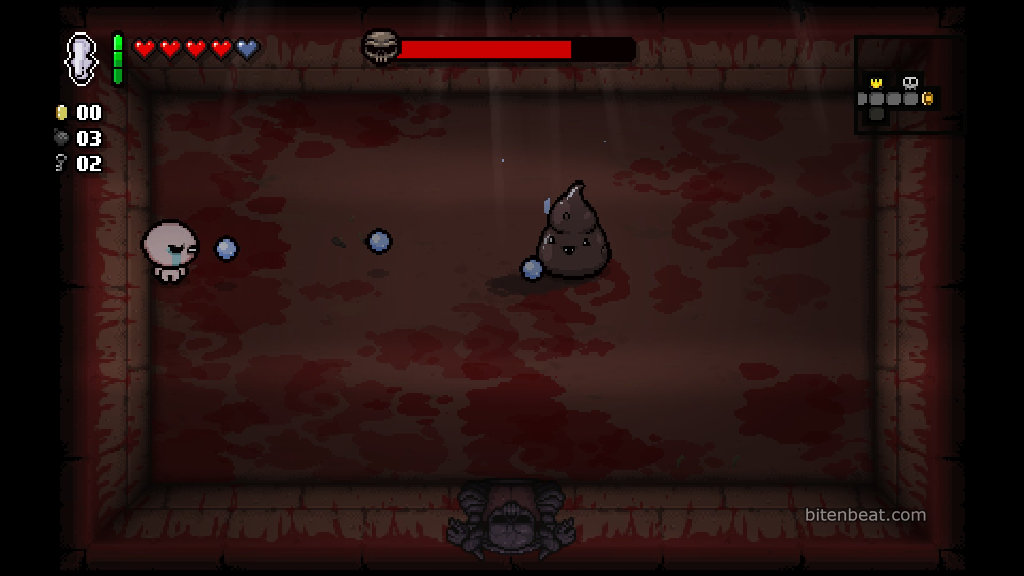
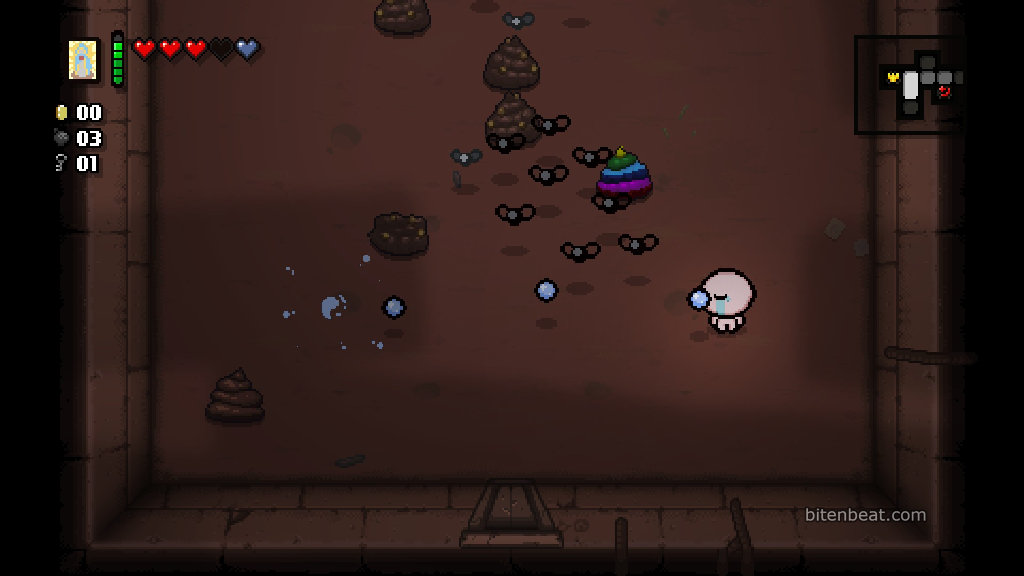
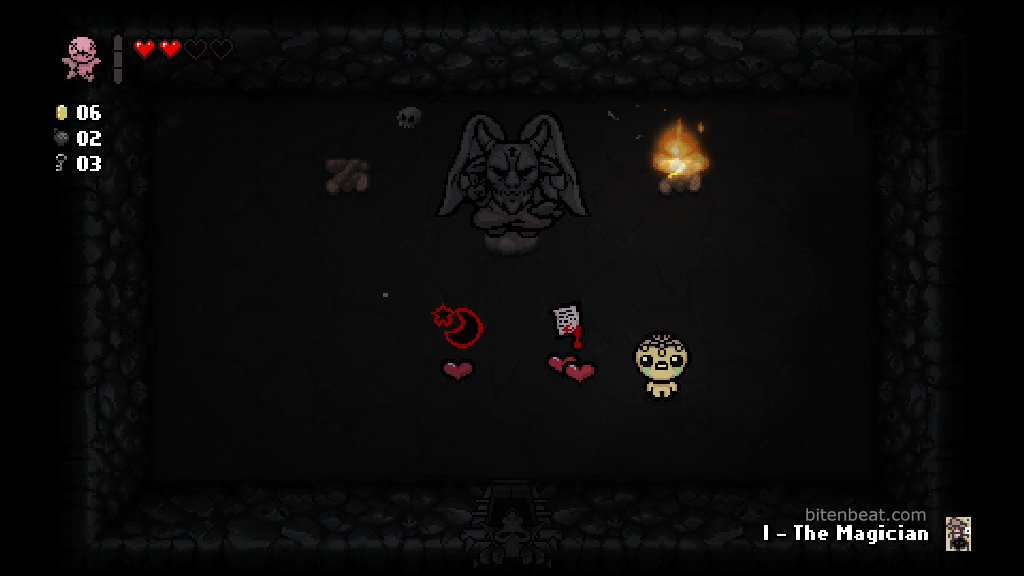
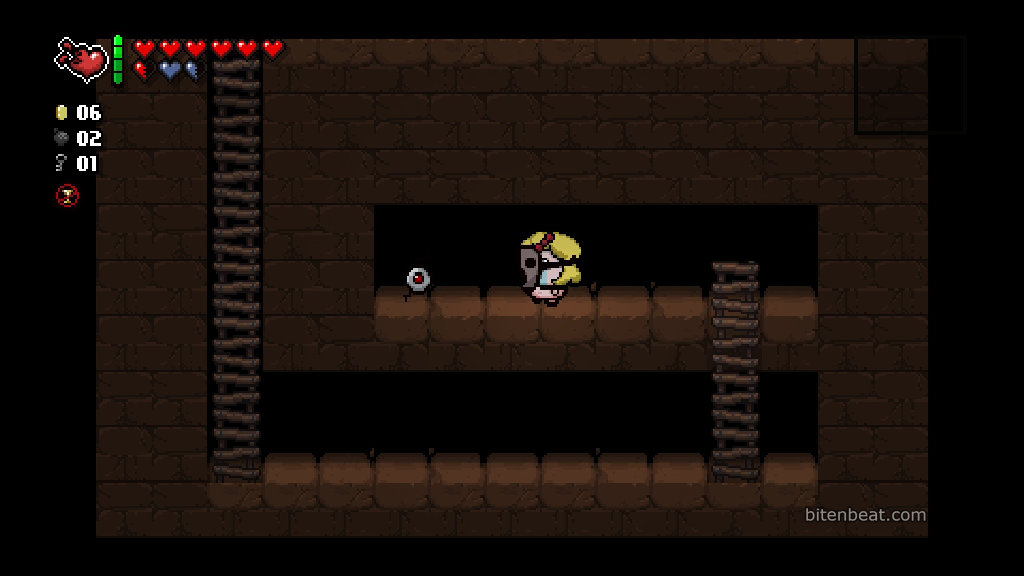
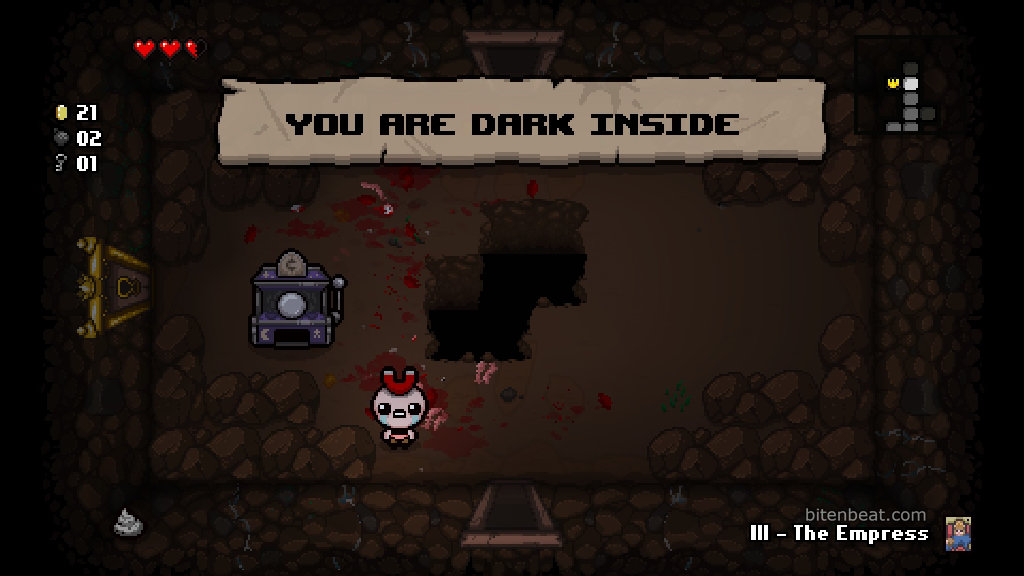
The game’s artwork is quite simple, I’d even say it’s kind of ugly in some aspects.
The cutscenes are very simple and give off a low-budget feel.
However, every single item changes Isaac’s appearance. This shows an impressive level of detail, since there are countless item combinations, each one making Isaac look unique.
Overall, I think this is the game’s weakest point, but after playing for a while, I stopped caring about it.
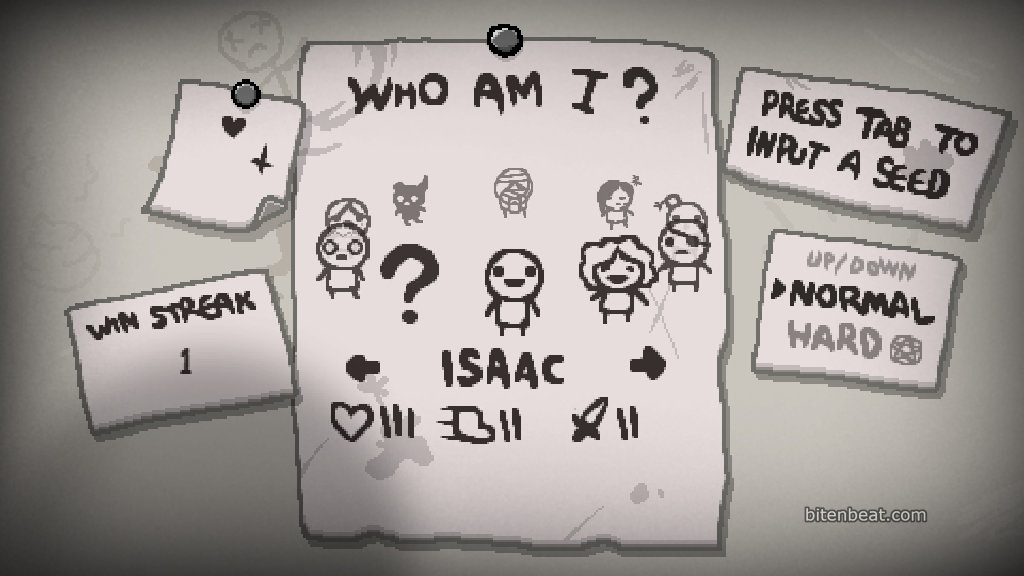
At first, the menus seem well explained, but when you take a closer look, you start noticing some UX problems.
The game has issues with the inventory interface, as it only shows unlocked items. It would be helpful if there were descriptions explaining what each item does, especially considering there are 341 items in total. That’s far too many to keep track of, and I’ve picked up bad items several times simply because I forgot what they did.
Another issue appears during gameplay. When you pick up an item, the description shown doesn’t always clearly explain its function. Many items have poetic (or cryptic) descriptions rather than informative ones.
You have to learn almost everything through trial and error. And honestly, there are still items I don’t fully understand.
Soundtrack and Sound Effects
I think the soundtrack is amazing. It’s very ominous and well balanced, even if you’re playing without headphones.
After a few hours of playtime, you’ll never forget your fanatic mother screaming “ISAAC!” or the music that transitions between phases. That alone shows how immersive the sound design is.
Gameplay
A roguelike that feels hard to control and somewhat confusing at first, but as you try and fail, you gradually learn (little by little, I’m still discovering new room secrets).
Your goal is to go deeper into the basement, and each map is procedurally generated, meaning nothing repeats and everything is randomized.
As I write this review, I have 39 hours played and have only managed to unlock five endings (including ending #12 today, which requires defeating Satan). There are 16 endings in total, but it took me around 15 hours just to unlock the prologue.
I try to avoid consulting the wiki because I prefer learning through experience. However, some mechanics aren’t clearly explained (Eden, seeds, item effects, etc.), and eventually I had to look a few things up.
There are countless items, characters, and bosses to unlock.
And I’ve noticed that the more you play, the easier the game becomes. You start recognizing patterns (like the slightly gray rock that can be bombed to reveal a Soul Heart) and make more efficient decisions. After all, in roguelikes, it’s common to have runs where you only get bad items.
Expect a macabre, scatological (yes, it’s gross and full of worms), gore-filled, and very satanic experience.
Macabre to the point where your weapon is your own tears, because Isaac cries constantly. I found that disturbing in a moral sense.
Enemies wail eerily and appear grotesque and deformed.
Replayability and Game Retention
Infinite replay value, no exaggeration.
There’s so much content to unlock that the more you play, the more you want to continue. The curiosity to see all endings, combined with the quick-run structure, makes the game incredibly compelling.
Besides Story Mode, there’s also Challenge Mode, where you must complete a run using a character with specific abilities and items.
Some challenges are quite complex, and because they deviate from the standard experience, they prevent the game from becoming repetitive.
The Binding of Isaac: Rebirth is extremely addictive, trust me.
And prepare yourself to die a lot… and to get very angry.