
Technical Information
Developer: Grasshopper Manufacture Inc.
Distributor: Grasshopper Manufacture Inc.
Release Date: October 6, 2016
This game is a remake of Shiruba Jiken, originally released for the PlayStation.
The Silver Case is a science fiction visual novel focused on criminal investigation, featuring some puzzles and interactive moments throughout the story.
Its objective is to investigate and hunt down a famous serial killer named Kamui Uehara. However, nobody knows exactly who (or what) he is.
The story is told from the point of view of two characters: an investigator from the department of Heinous Crimes and a freelance journalist.
Final Considerations – Analyzing the Work as a Whole
Graphics and UI
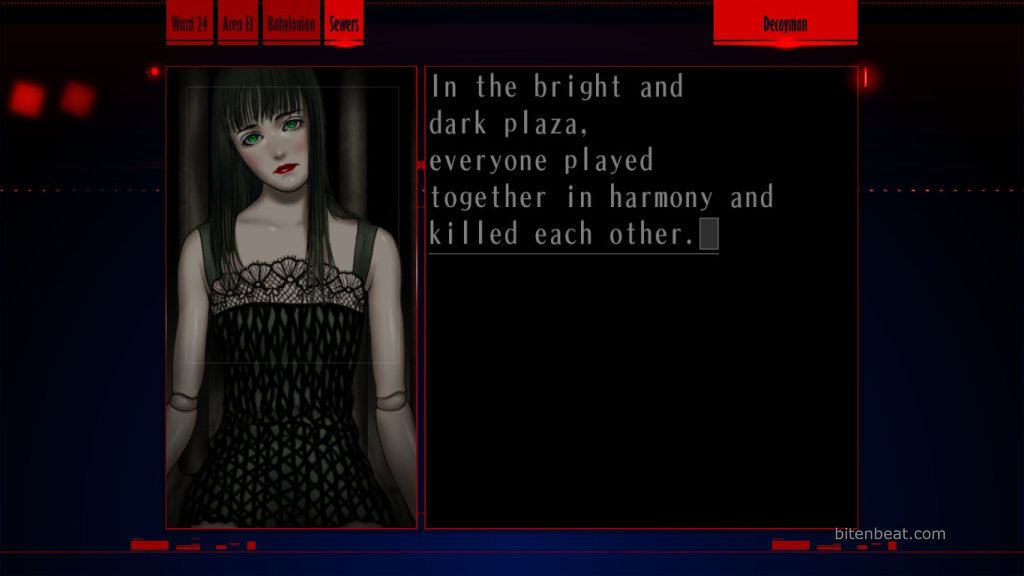
I really liked the game’s art style. The line work leans more toward realism, without anything cartoonish.
The 3D sections are quite rough, but that didn’t bother me at all.
The story is told through two viewpoints: Transmitter (investigator) and Placebo (journalist). Ideally, you should interleave the two as you progress, since they complement each other.
However, the game never explains this, leaving newcomer players vulnerable to the mistake of playing all the Transmitter chapters at once (which is exactly what I ended up doing until Chapter 2).
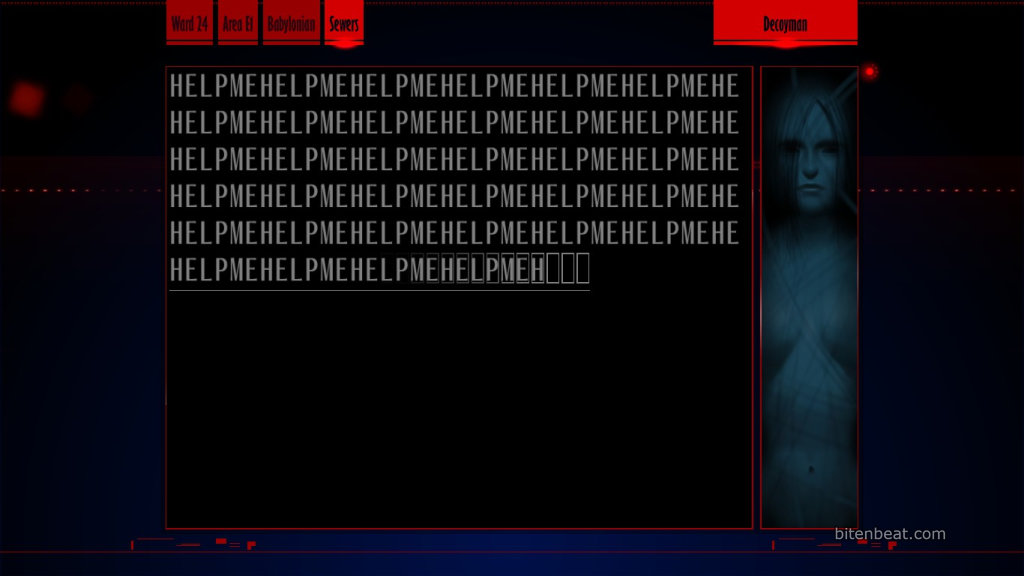
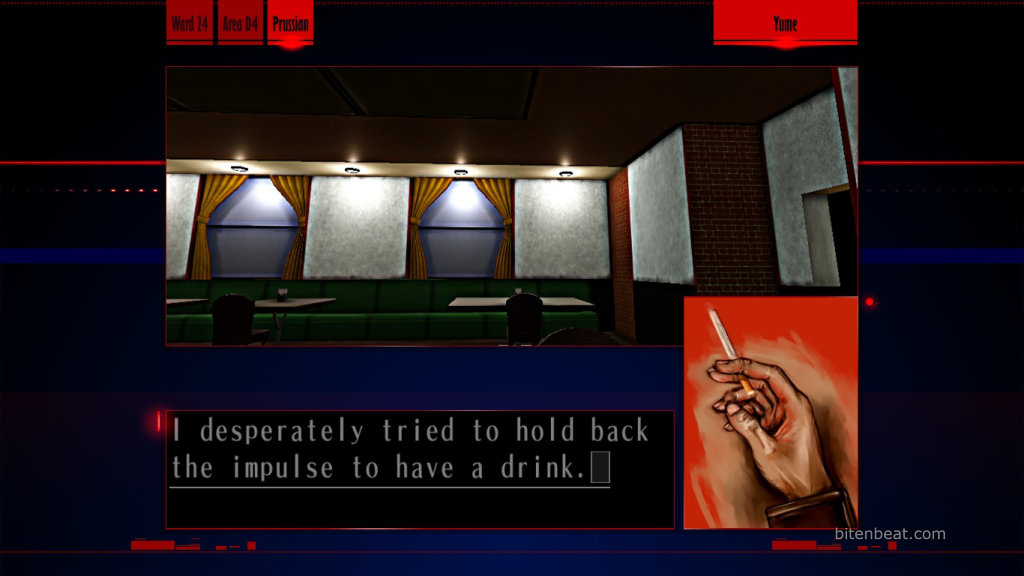
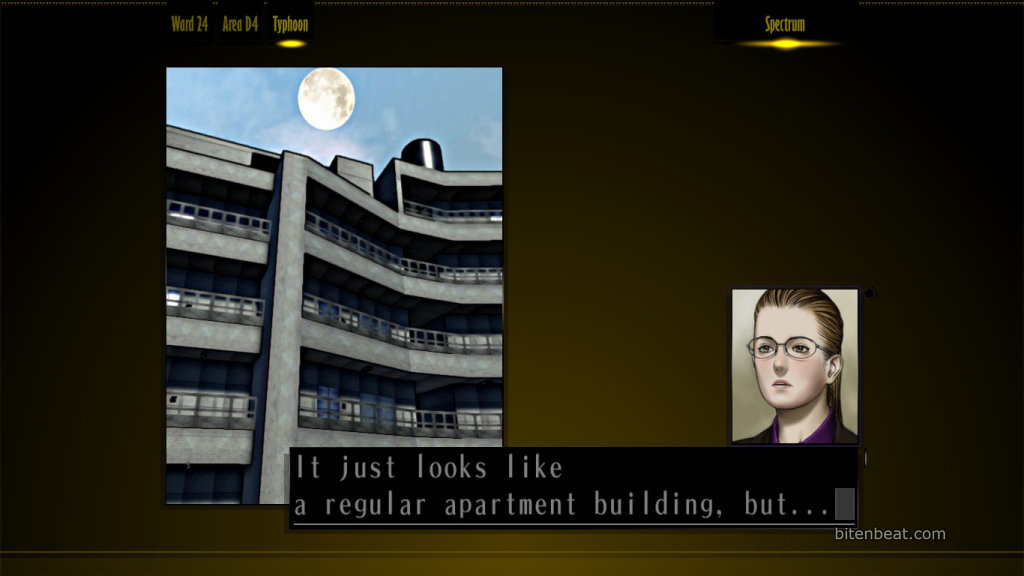
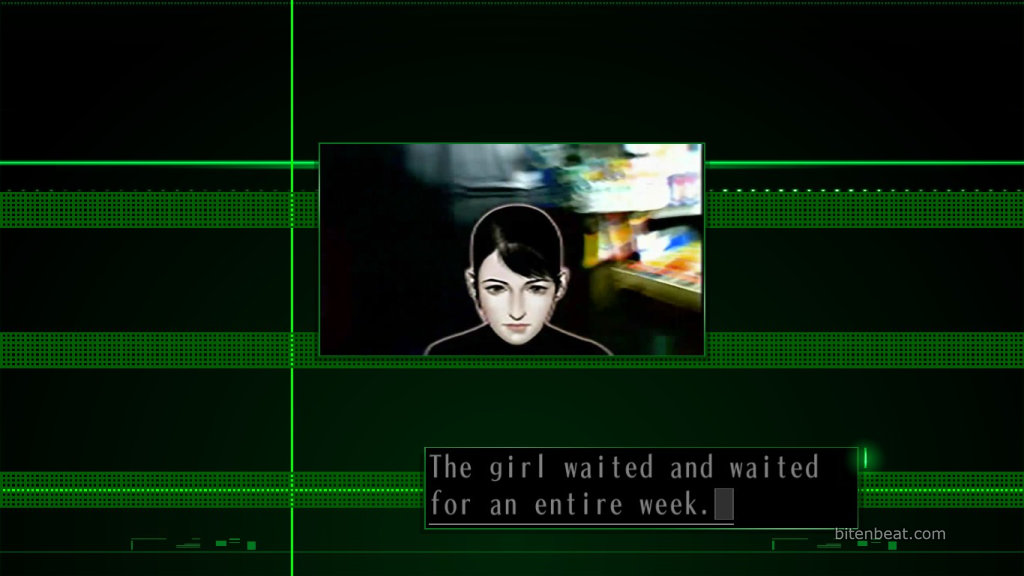
In fact, I didn’t even notice that there were complementary chapters at first, and I blame the UI design for not making this visually clear.
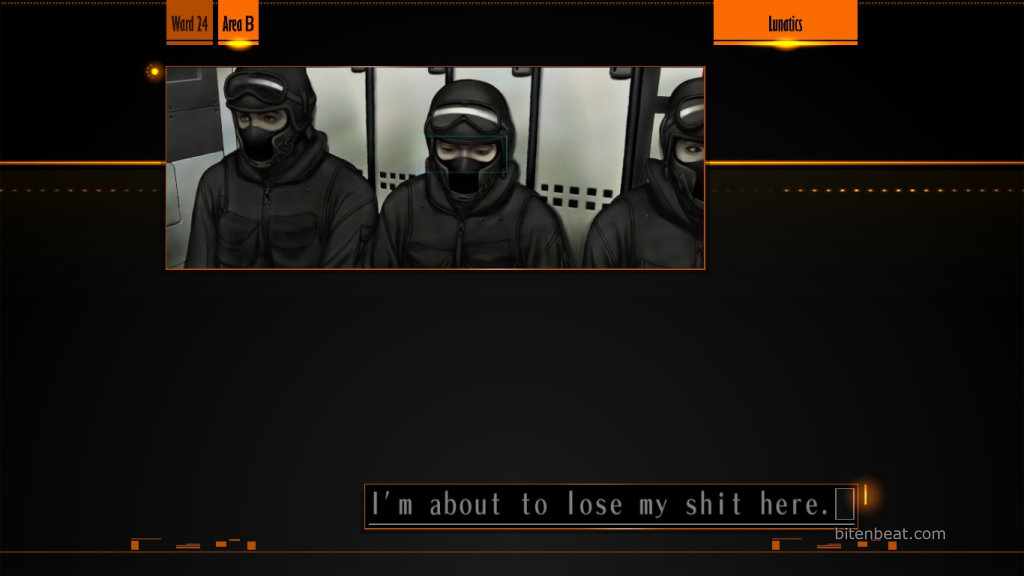
During dialogues, it’s not always possible to tell who is speaking just by looking at the illustration. To make matters worse, the character’s name appears in a font that’s almost impossible to read properly.
The dialogues themselves are already somewhat confusing, and this lack of visual clarity only makes things worse.
What saves the poorly designed UI is its unconventional approach, with illustrations and text boxes displayed in non-fixed positions and backgrounds that change every chapter. This adds a sense of dynamism to the reading experience and increases player immersion.
Soundtrack and Sound Effects
I must confess that I really enjoyed the music, and even the sound effect at the end of each in-game day became a hallmark of the experience for me.
The soundtrack isn’t unforgettable, but it’s pleasant.
Unfortunately, the game has no voice acting for the characters’ dialogues.
Gameplay
Everyone speaks very highly of this game, and I got really hyped to play it.
However, it’s light-years away from the genius that people praise so much.
Considering its story and narrative, it’s an extremely mediocre game — with poor game design on top of that.
In each chapter, you investigate an incident and eventually uncover some small detail about the serial killer who is the central figure of the story. The focus only truly shifts to him at the very end, until then, everything feels like padding.
The narrative often becomes extremely vague and confusing, constantly leaving you wondering what actually happened because nothing is explicitly stated. And since you can’t re-read dialogues, you’re always left questioning whether you really understood what was going on.
I had to make a real effort to stay interested, as the game is boring and, most of the time, sleep won that battle.
Sure, there were moments when the story got good and I felt excited, but then the chapter ended and everything became dull again.
I even had to look up explanations of the game’s story because it’s genuinely hard to understand the events as they’re presented. The information is delivered in such a confusing way that, by the time you reach the ending and realize how simple and unrewarding it actually is, you start wondering whether you misunderstood something or missed an important detail.
Think it can’t get any worse? It can.
The only moments where you can make choices are during puzzle sections, which are confusing, and in some cases, require a walkthrough to complete. If it weren’t for the puzzles and the few moments where you walk through the scenery, The Silver Case would be nothing more than a kinetic novel.
In Chapter 5, there are several moments where you’re forced to walk around aimlessly, watching CGs of your character moving at a snail’s pace. Be prepared for an excessive amount of padding.
And then you reach the ending, only to be hit with a sci-fi plot twist that is absolute garbage.
I’ve played plenty of games with silly stories, but when something is well-written and engaging, even the most cliché premise can be enjoyable.
If you truly love visual novels or crime investigation games, I wouldn’t recommend wasting your time on The Silver Case. For newcomers to these genres, however, it might still feel innovative and surprising.
Replayability and Game Retention
What kept me playing was the hope that the story and narrative would improve, which, unfortunately, they never did.
Many times, I grew tired of the lack of engagement and decided to stop playing for a while (days, even months).
Maybe if I play it again in the future, I’ll see everything with fresh eyes.
I believe what ultimately ruined my experience was the expectation of something incredible and genius, when in reality it’s just a game filled with problems stemming from the developers’ inexperience.