
Technical Information
Developer: Discovery Software
Publisher: Sega
Release Date: 1989
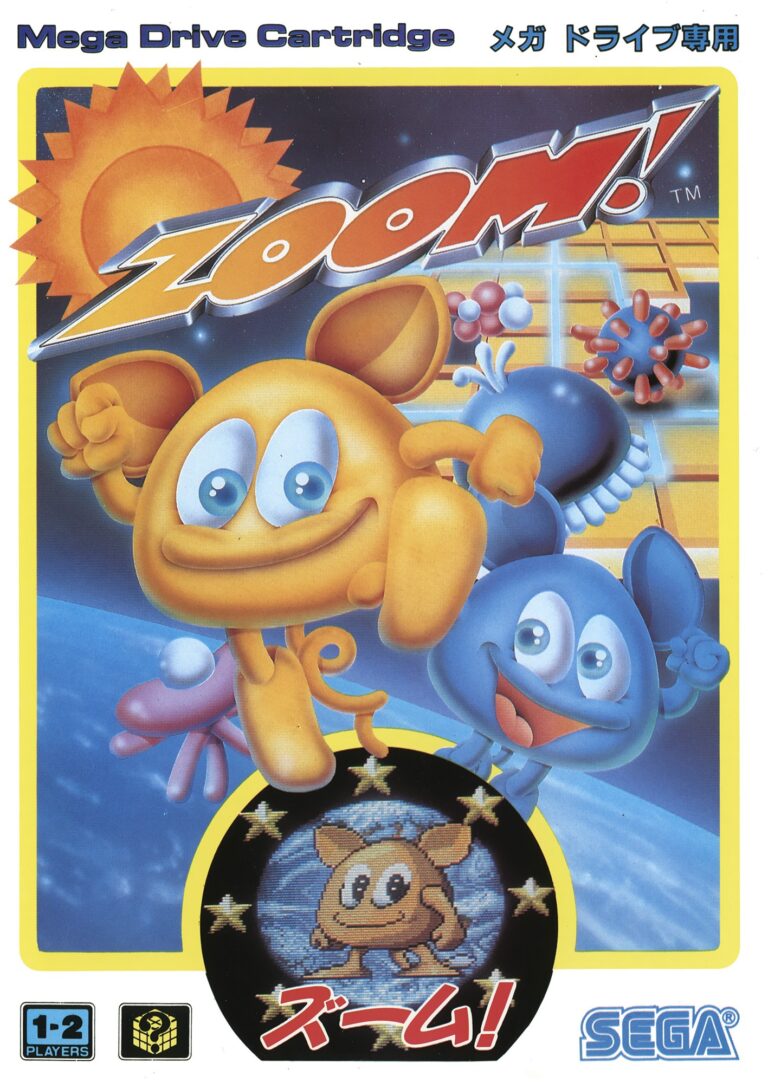
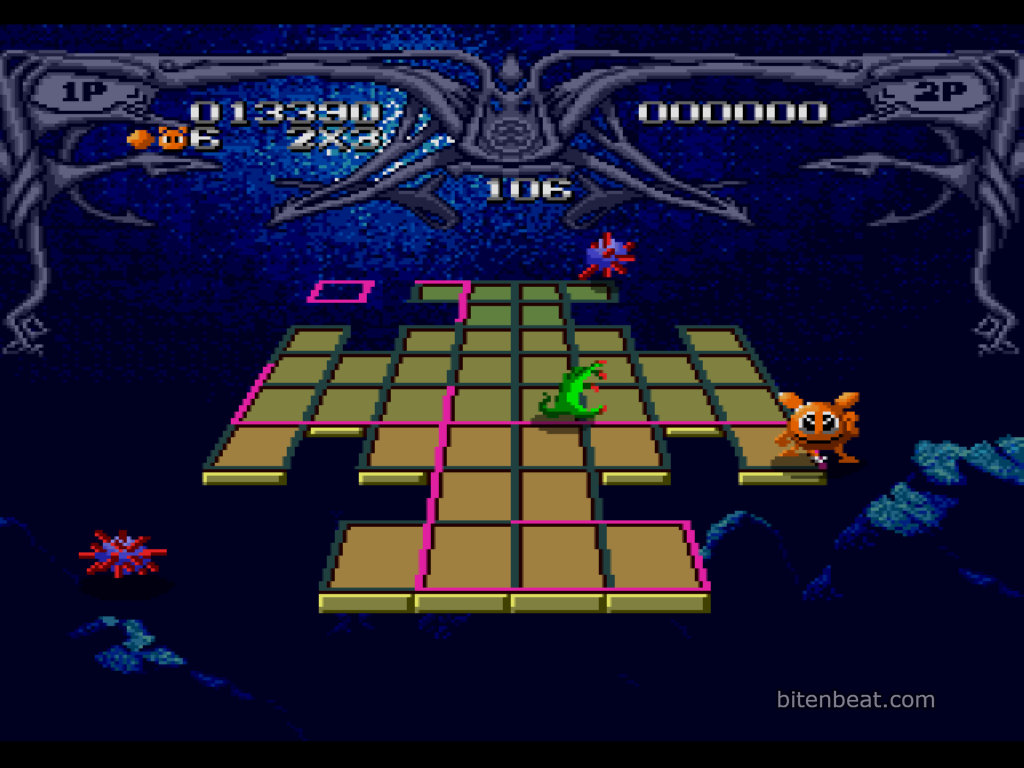
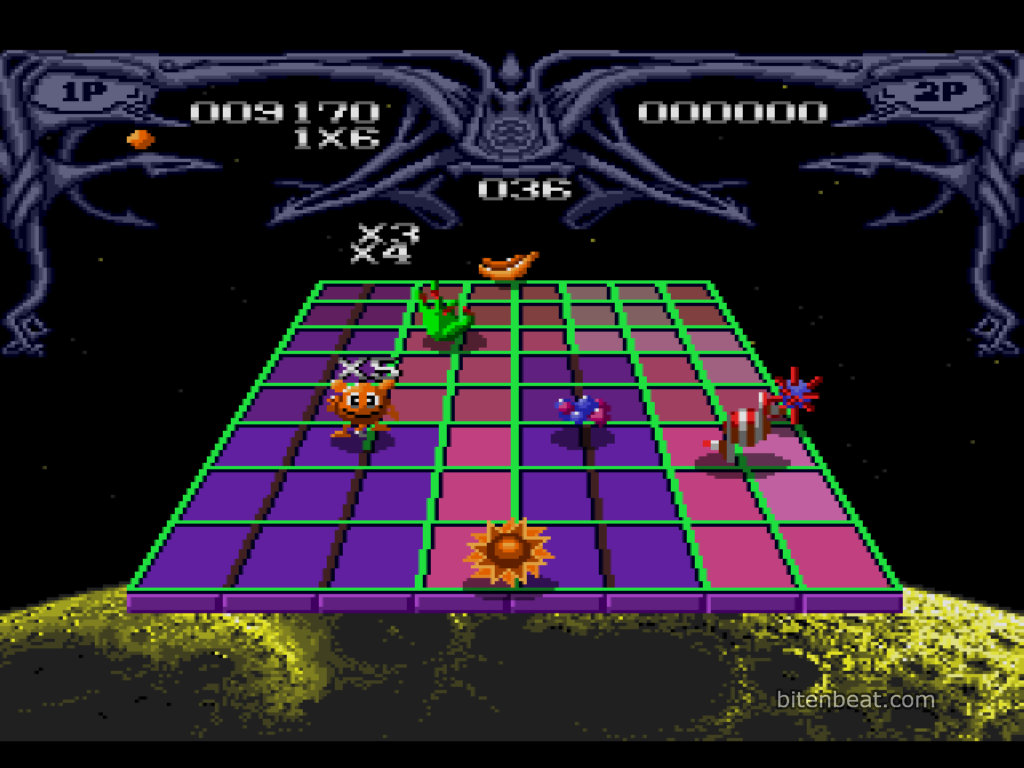
You control Mr. Smart, a strange little orange creature who, according to the manual, simply runs into battle against space ghosts, which are his enemies. Your goal is to fill in all the lines you pass through.
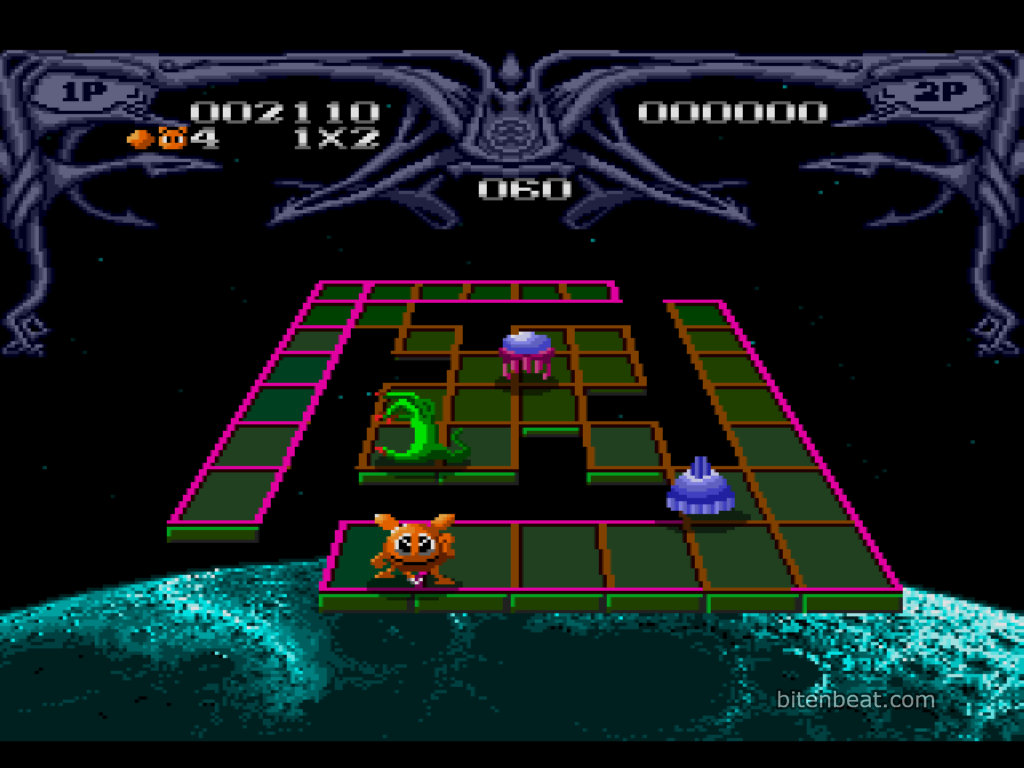
A game with a near-isometric perspective that, besides progressing through stages, also focuses on accumulating points.
Final Thoughts – Analyzing the Game as a Whole
Graphics and UI
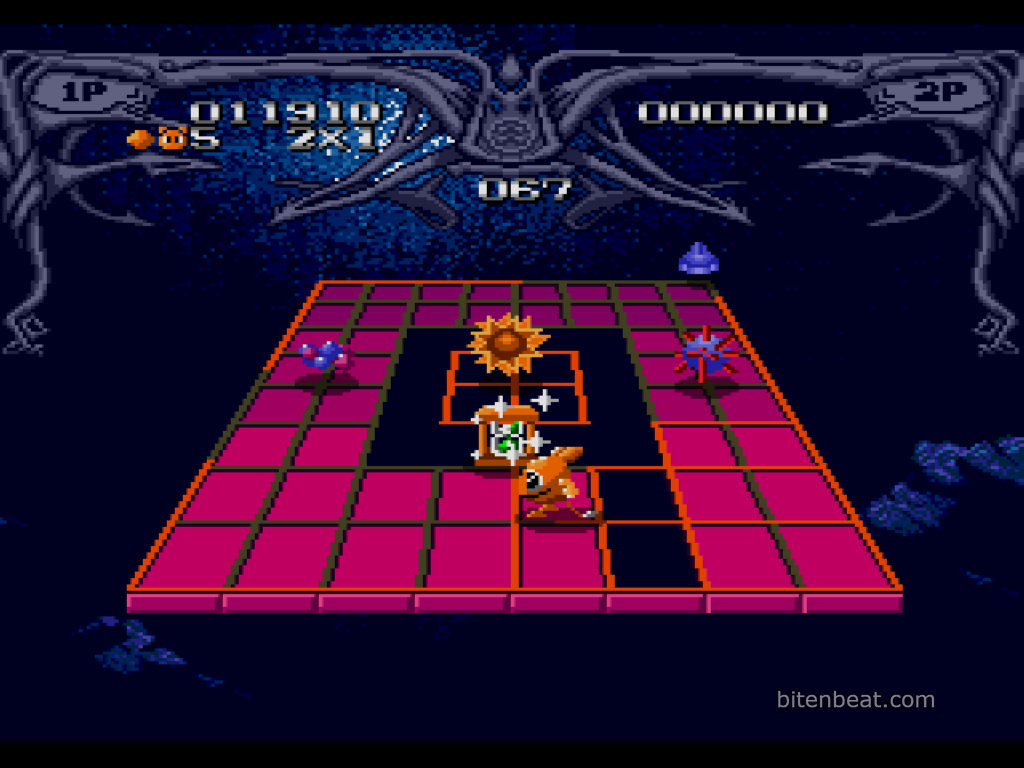
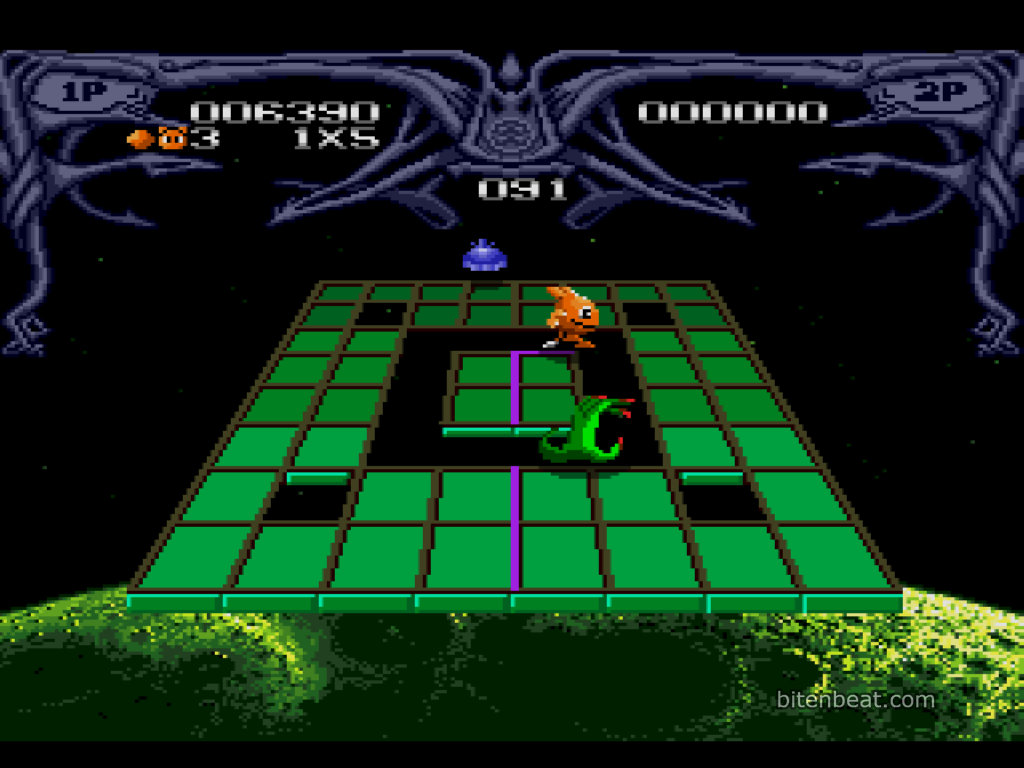
With each new stage, a new background image is displayed. However, as the stages progress, some platforms start to repeat.
Simplicity is a word that defines this game very well. The game features only five enemies. Each stage has a specific group of enemies and nothing beyond that.
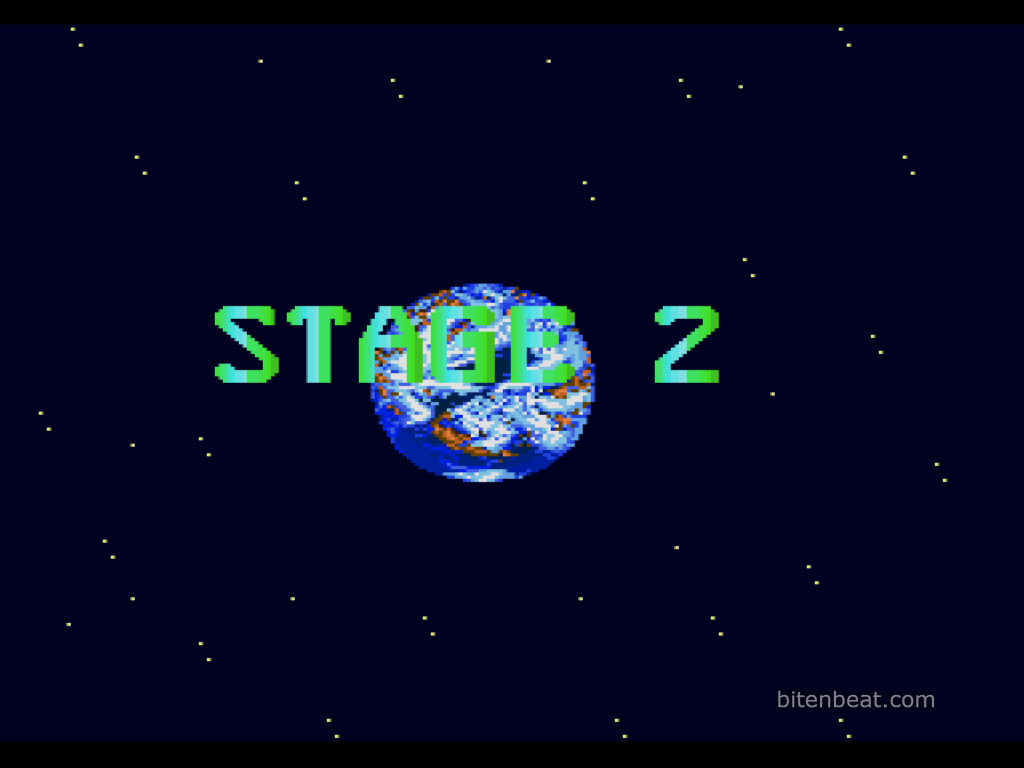
When advancing to a new stage, a transition animation is shown, displaying the stage number with planet Earth in the background. I think that with each new stage they could have used a different planet to create a better sense of progression.
For a game released in 1989, I think it looks quite charming, with well-done environments and animations and balanced colors. It’s a simplicity that worked well.
The game holds no mysteries. It’s very straightforward, and even without reading the manual it’s easy to figure out what everything on the HUD means.
At the beginning of the game, you choose whether you want to play solo or multiplayer.
During gameplay, the HUD stays centered and shows the player’s score, number of lives, stage/level number, and remaining time.
Soundtrack and Sound Effects
The music and sound effects are very limited, with noticeable repetition, and they become quite annoying after a certain amount of playtime.
At times, the sound effects feel slightly out of sync with the background music, becoming louder and somewhat shrill.
Gameplay
The game’s mechanics are extremely easy to understand. All you have to do is run across the platform and fill in all the lines without letting any enemy touch you, if that happens, you die.
The game has a total of six stages, each stage containing six levels. After completing all six stages, the game restarts, but with increased difficulty.
In each level, you have 120 seconds to complete it. When you finish a level, the remaining time is added to your score.
If time runs out, more enemies will appear to get in your way.
The gameplay is fluid, and besides moving across the platform, you can also jump and shoot rubber balls. The command response time seems to have a slight delay, but after a few minutes you get used to it.
When the attack balls hit enemies, they push them back, allowing you to escape if they’re too close. I always imagined those little balls were poop… and I don’t even need to explain why, right? But according to the manual, they are defined as rubber balls.
They are not infinite, the quantity is shown on the panel above, next to the life counter. The larger the ball icon shown there, the more rubber balls you have available to use.
At 1,000, 3,000, and 5,000 points, you earn an extra life.
One positive aspect of the game is that continues are infinite, however, after a game over, your score is reset.
The game features a multiplayer mode, allowing the player to choose between individual play (where Player 1 controls the orange Mr. Smart and Player 2 the blue one) or competitive mode. Only in competitive mode do both players share the same screen.
I always enjoyed playing competitive mode, and even though its purpose is purely to compete for points, I always saw it as a cooperative mode, where the goal was simply to finish the stages.
But of course, that’s a personal quirk of mine, since the real objective of competitive mode is already very clear in its name.
The game has no password system and no bosses. It’s a great game to kill some time, but completely empty in terms of story.
Retention and Game Retention
This game has a very strong nostalgic factor for me, but looking at it objectively, I understand that it’s a very niche title.
Unless you’ve never beaten it or you truly enjoy it, there aren’t many reasons to come back to it. It’s quite charming, but it becomes tiring very easily, as it’s a highly repetitive game with a very linear objective.