Bishoujo Senshi Sailor Moon S: Jougai Rantou!? Shuyaku Soudatsusen (Super Famicom)

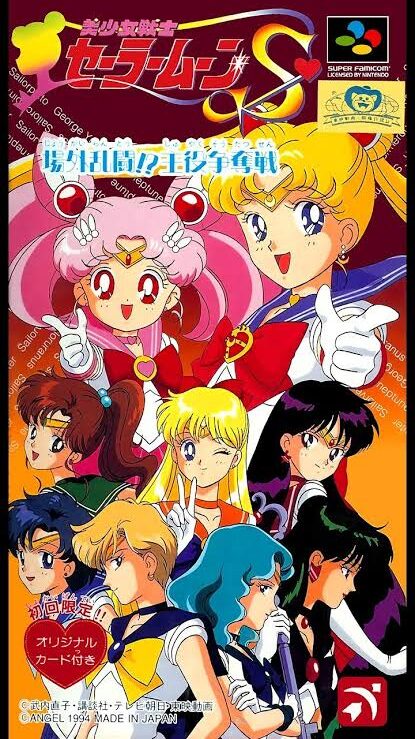
Technical Information
Developer: Arc System Works
Publisher: Angel
Release Date: December 16, 1994
A fighting game set during the Sailor Moon S season, where a new leader is about to be decided!
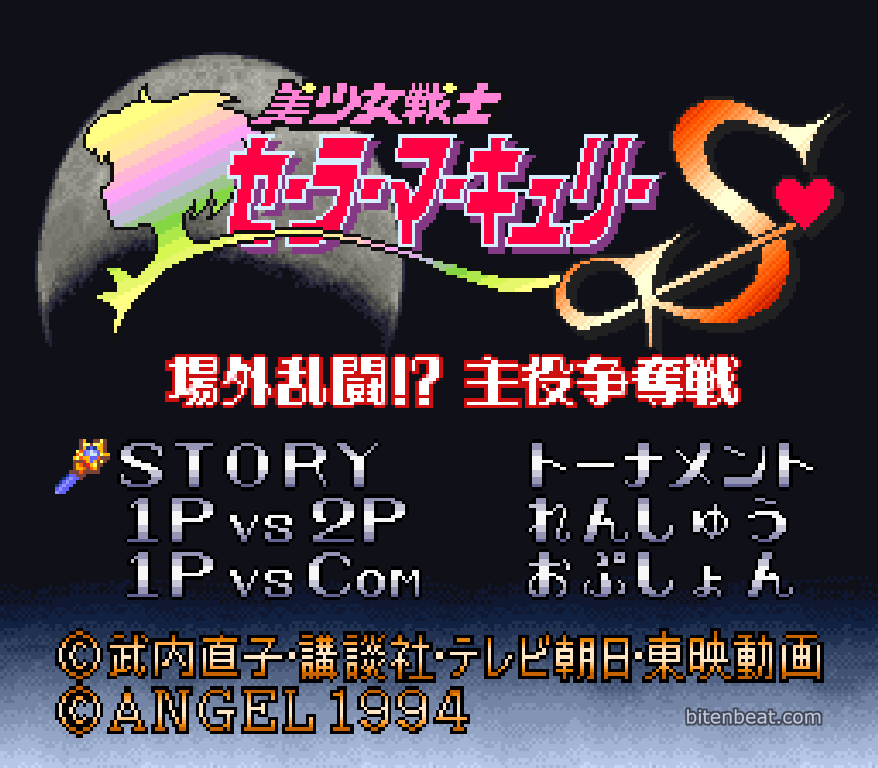
Face off against all the Sailors (except Saturn) and become the new protagonist of the series, with the option to have your name and silhouette displayed on the title screen!
Final Thoughts – Analyzing the Game as a Whole
Graphics and UI
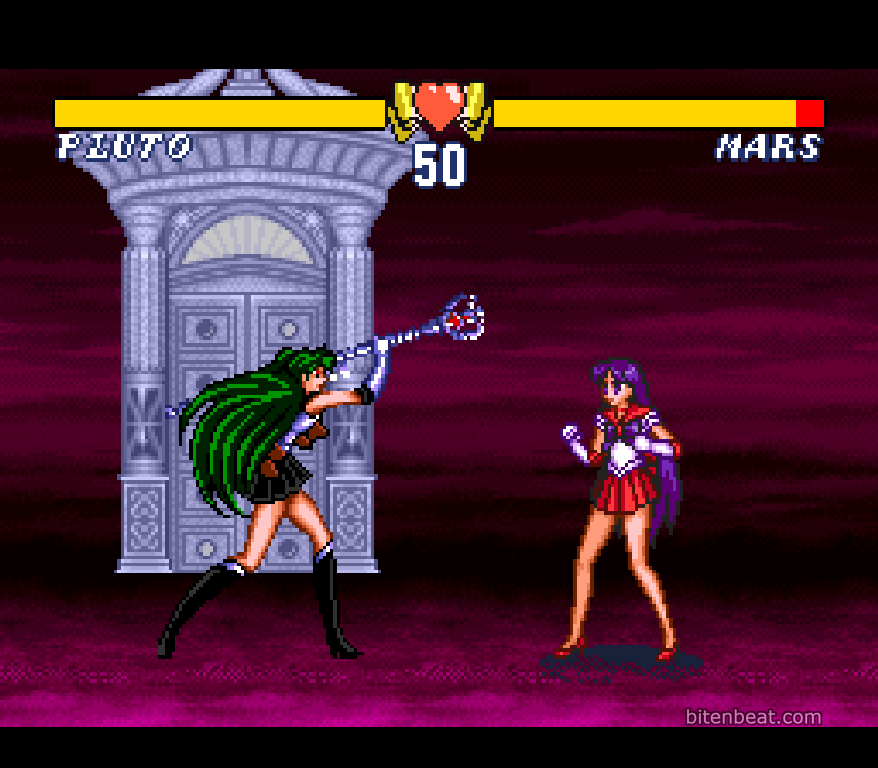
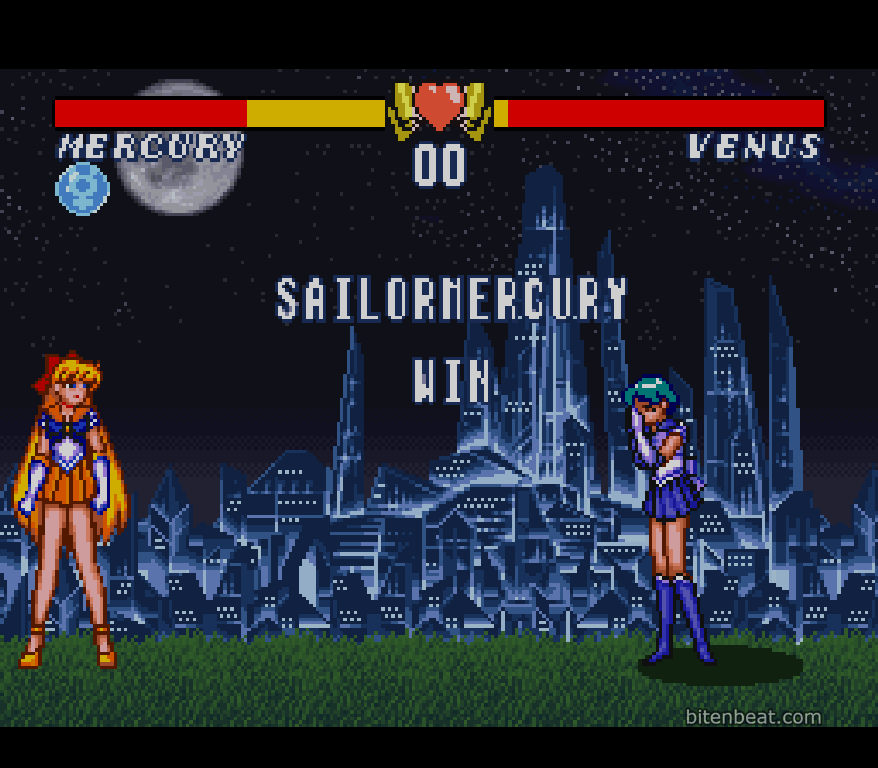
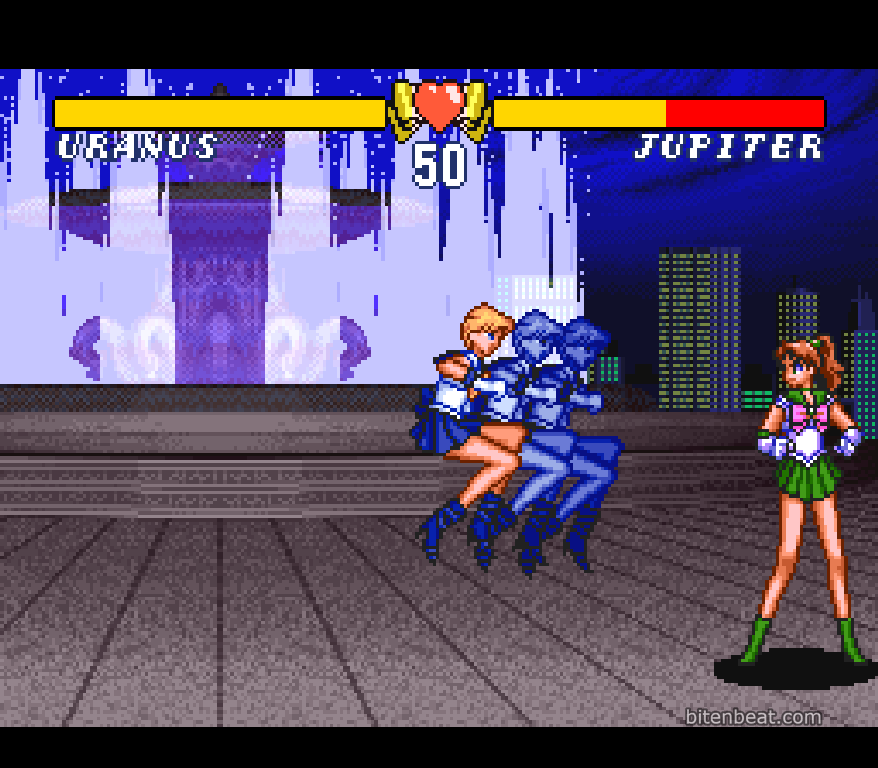
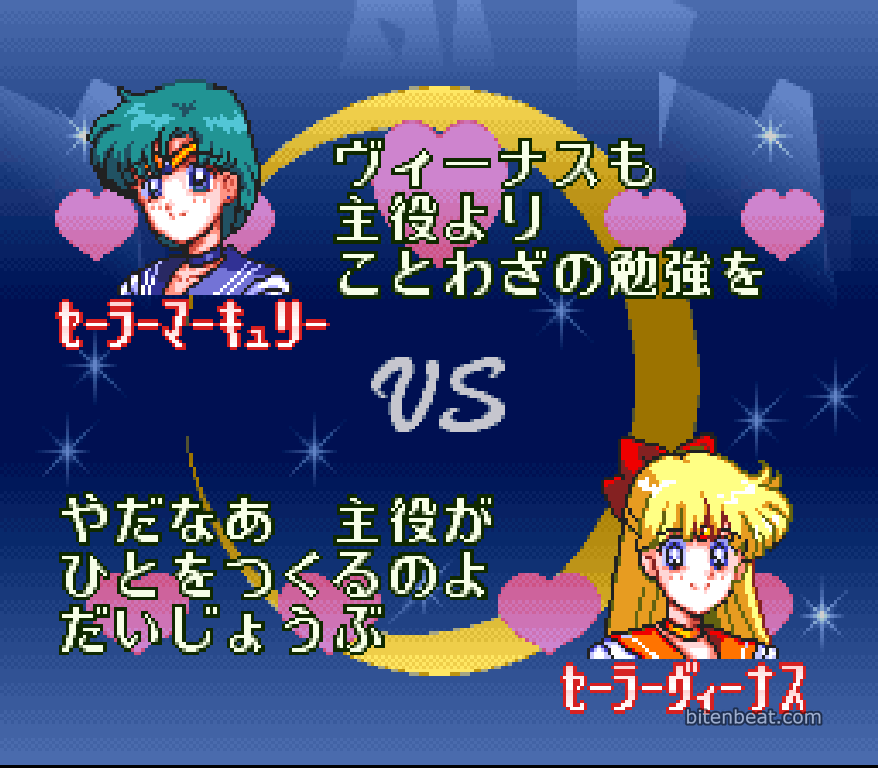
Beautiful graphics, packed with detail and making excellent use of the Super Famicom’s capabilities (and, most importantly, with absolutely no slowdown!).
The Sailors are extremely well done, featuring natural movements (with the exception of Sailor Moon, who moves her arms in a somewhat awkward way) and faithful animations of their powers.
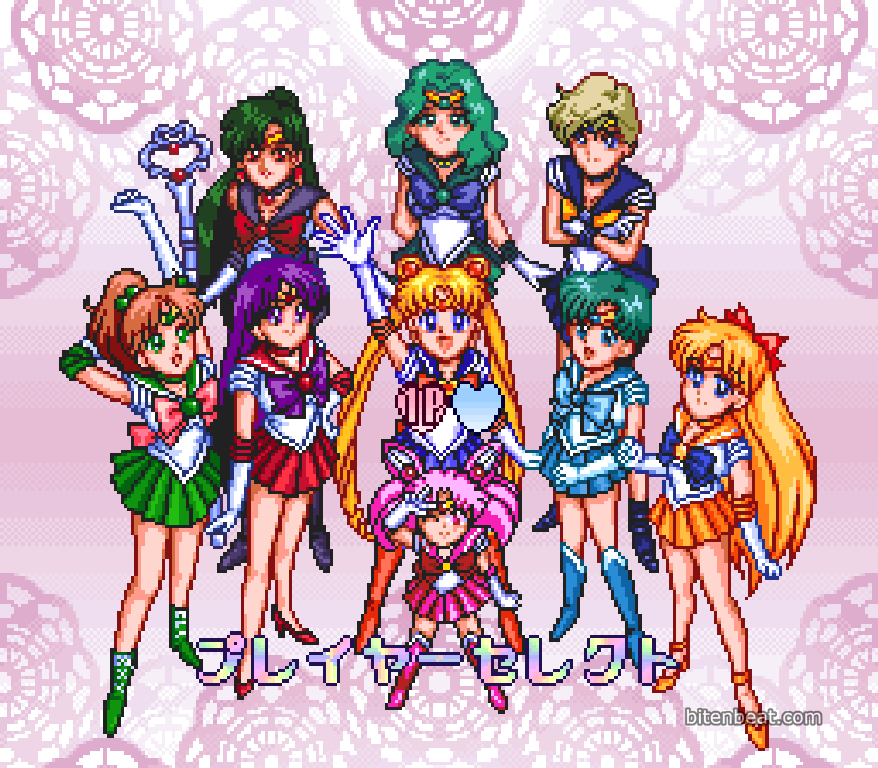
The character selection screen in tournament mode is incredible, showcasing all of them from head to toe through a very dynamic perspective.
The stages follow the same approach, filled with details and small animations that add a strong sense of liveliness to the game. During battles, small black bars were added to the top and bottom of the screen to provide a bit more visual emphasis to the action.
Despite the fact that the game is entirely in Japanese, the entire interface is easy to understand, and the text is displayed in large, readable fonts.
The only real flaw is the HP bar, which uses muddled colors. A subtle shadow effect would have added an extra touch of charm and matched the level of detail seen throughout the rest of the game’s visuals.
Soundtrack and Sound Effects
Notable tracks paired with very solid sound effects!
All the Sailors announce the name of their attack whenever they use a special move.
Gameplay
The first thing that caught my attention was the lack of care taken in balancing the game’s difficulty! hahahaha
Normal mode starts out somewhat challenging. For a difficulty level comparable to most fighting games, the “yasashii” (easy) setting is the most appropriate choice.
The available difficulty levels are: futsuu (normal), muzukashii (difficult), yasashii (easy), and nakayoshi (very easy).
Before each battle begins, it’s possible to distribute 10 points among the character’s stats: attack, defense, special, HP, and a question mark (“?”, which refers to a special attack that activates when the character’s HP is low).
There isn’t much variety in terms of powers, and unfortunately, almost all of the listed attacks are ridiculously easy to perform. :/
There is a practice screen where players can train their moves, and within a short time, it’s possible to learn how to play effectively with all the girls.
Unfortunately, Sailor Pluto, Neptune, and Uranus cannot be selected in story mode.
Upon completing this mode, the Sailor you chose receives an introduction, officially becoming the main character of the game and earning their name and silhouette on the title screen.
As expected, there is also a PvP mode that can be played against another player or the CPU.
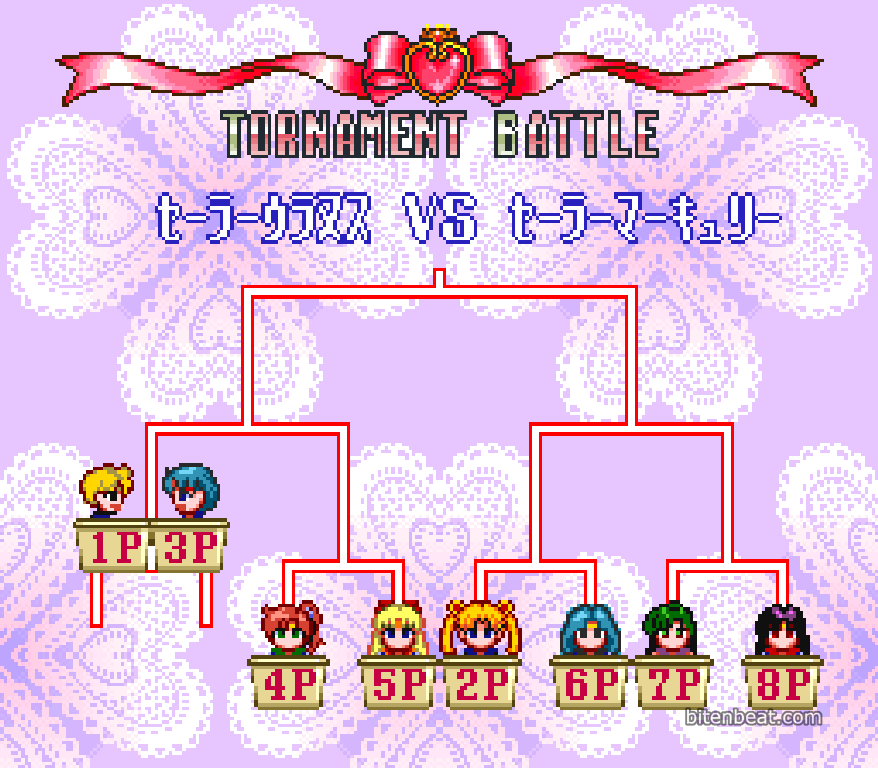
There is a tournament mode as well, which essentially functions as PvP with additional matches. In this mode, all characters are available. It’s possible to set them all as CPU-controlled, but in that case, the battles are not shown on screen—which is a shame, since it would at least be fun to bet on the outcomes with friends! hahaha
Replayability and Game Retention
In addition to the story mode (and its multiple difficulty levels), players can spend time enjoying tournament matches or simple PvP battles. Overall, it’s a fun fighting game that successfully met the expectations of its time.