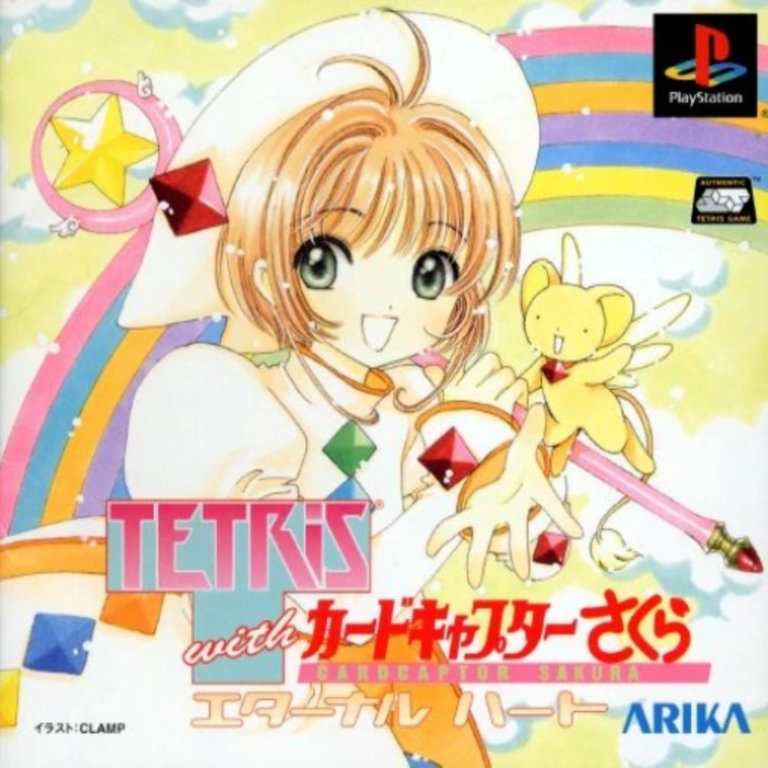
Tetris with Cardcaptor Sakura: Eternal Heart (PlayStation)

Technical Information
Developer: Affect, Arika
Publisher: Arika
Release Date: August 10, 2000
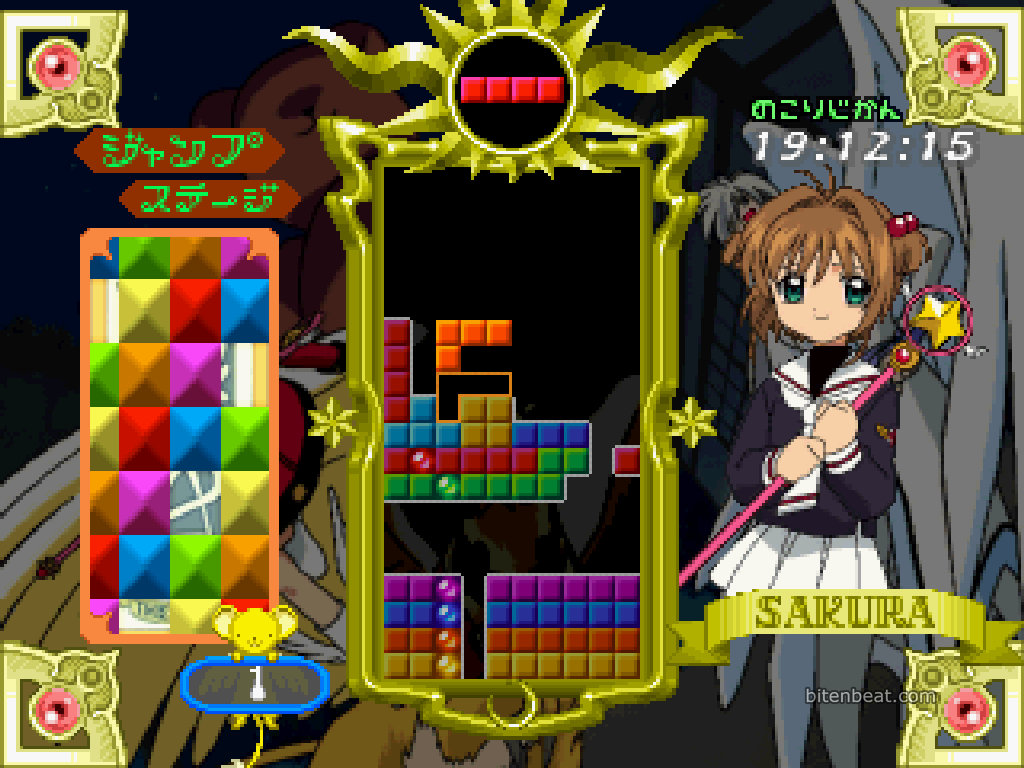
As the title suggests, this is a Sakura-themed Tetris game.
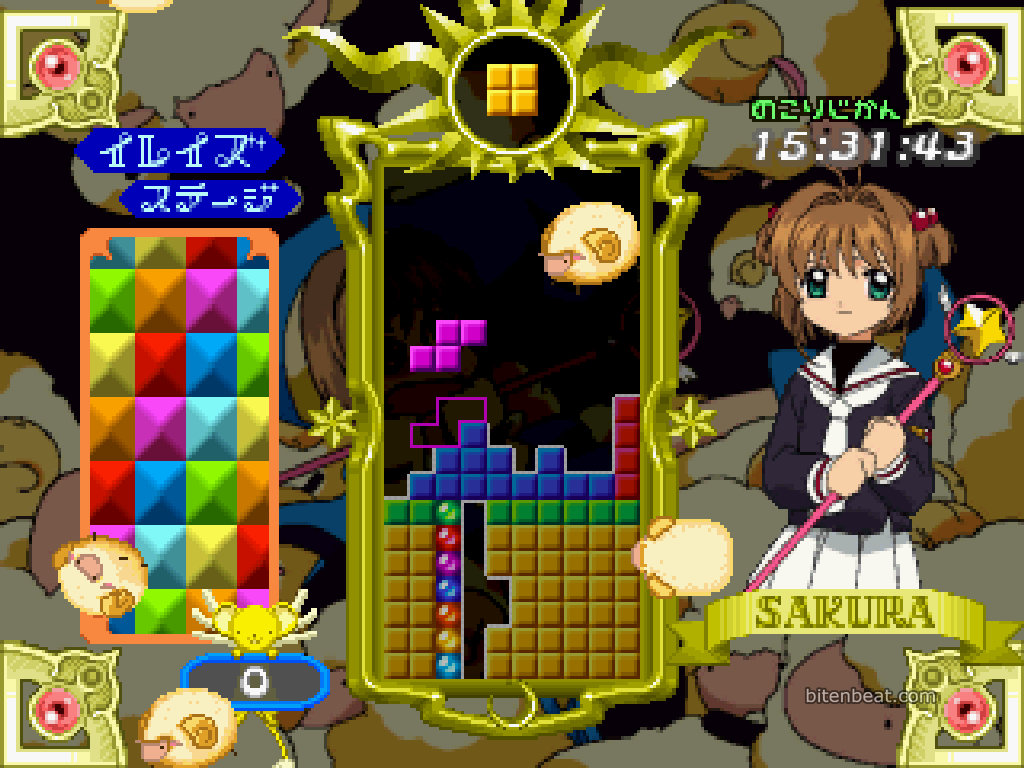
But instead of being a simple score-focused experience, here you must solve puzzles by clearing specific lines within a limited amount of time.

Final Thoughts – Analyzing the Game as a Whole
Graphics and UI
I really liked the way the graphics were designed. The art uses pixel art style, featuring simple (yet functional!) and cute animations.
Each Tetris piece has its own color, which helps you make quick decisions during critical moments.
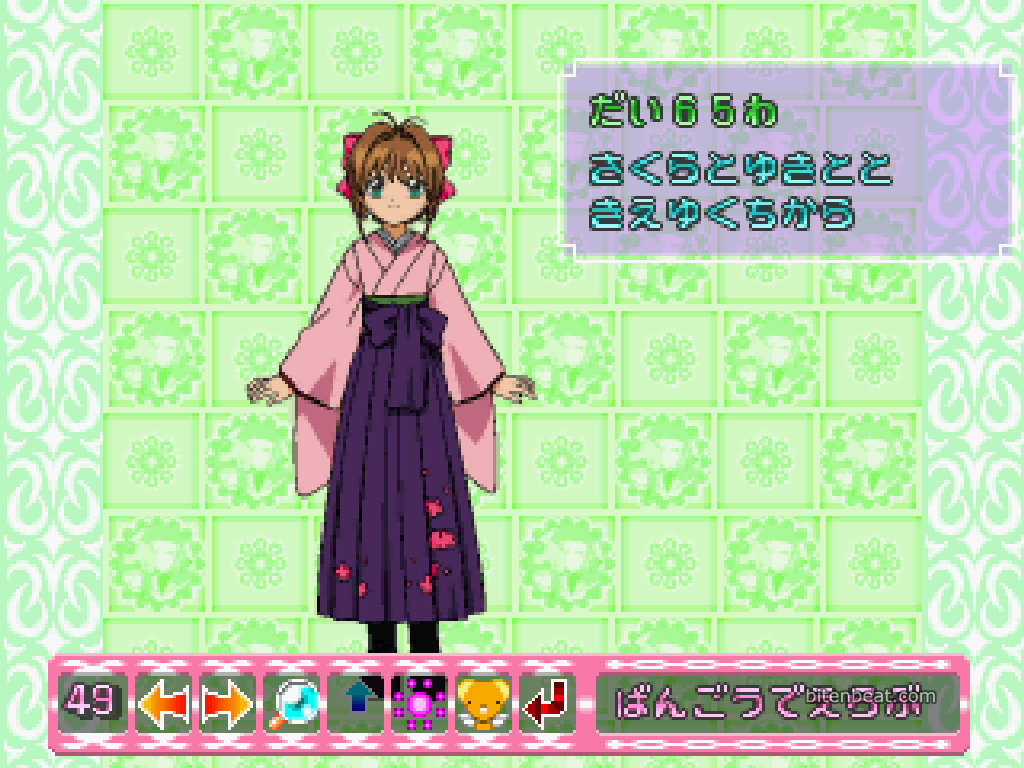
There are many Sakura-themed outfits available in the art gallery. Everything ties into Sakura’s universe, creating a deep and immersive experience for those familiar with the anime.
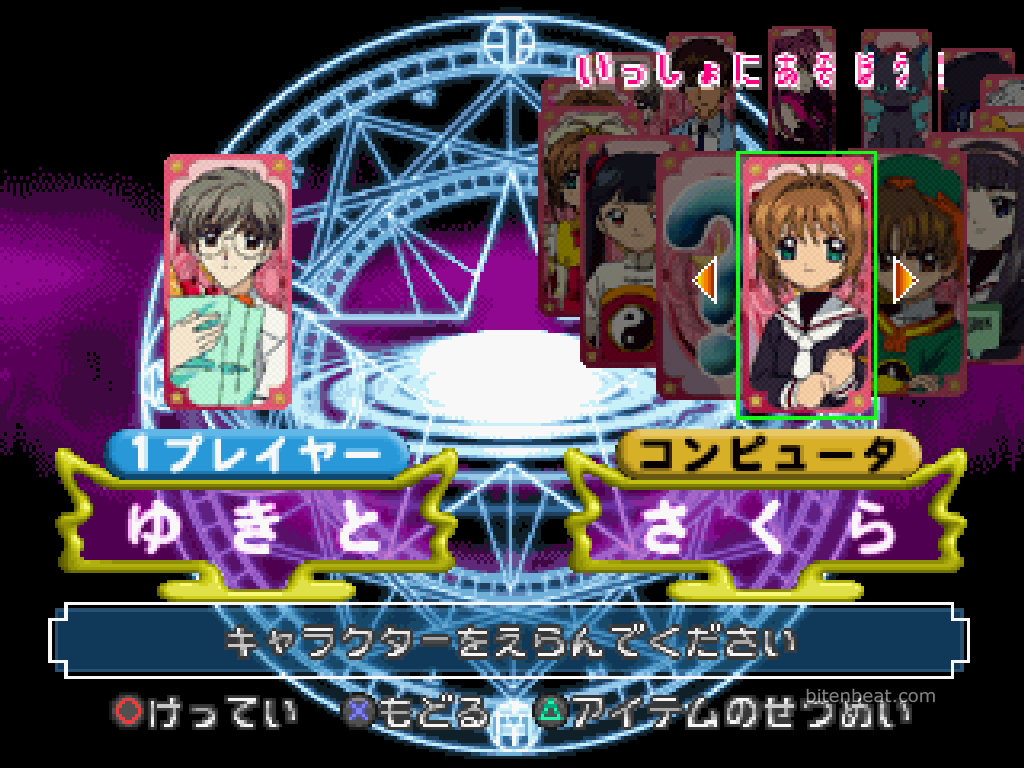
The game is in Japanese, which may be a problem for those who aren’t familiar with the language. It’s not really an obstacle, after just a few minutes navigating through the menus, it’s totally possible to memorize what the options mean and how to save your progress.
Soundtrack and Sound Effects
I loved the soundtrack!
To unlock all the artwork, I had to play the game thousands and thousands of times. And that was enough to create an emotional connection to the songs. None of them are boring or repetitive.
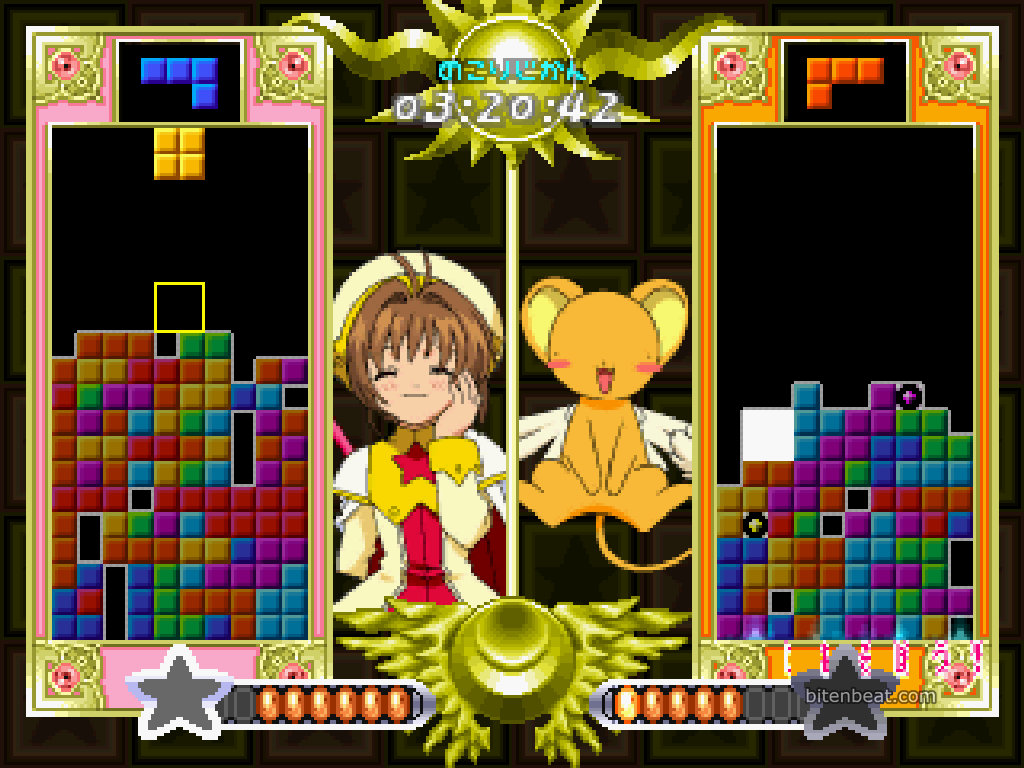
In Versus Mode, all the characters have voice acting. Some of them can be a bit annoying (especially Tomoyo’s sounds).
Each menu option also has voice acting. Sakura says the name of the selected option, which makes this part of the game oddly cute.
Gameplay
The game has two modes: Story Mode and Versus Mode.
Story Mode has two difficulty settings: Easy and Normal. I highly recommend starting with Easy to better understand the game mechanics.
Unfortunately, I started on Normal because I didn’t know how the game worked.
You have twenty (yes, I said twenty!) minutes to complete eighteen puzzle stages. You must clear the lines that contain glowing pieces. Each level has its own challenge, some are easy, others are not.
For each stage you complete, the total time you spent is added to your overall record. However, you can retry a completed stage multiple times until you achieve the “perfect record”.
At first glance, the game looks complex and difficult. Not gonna lie — it really is! But once you understand which stages you need to improve your record on, the game becomes less punishing.
You have two ways to retry a match: with random Tetris pieces or with the same sequence (based on the last match you played). This helps you develop interesting strategies, even though the process is largely trial and error. The second option was essential for me to achieve good records on certain stages.
On the other hand, Easy Mode is very accessible and perfect for practicing until you feel ready for the real challenge.
This mode doesn’t count toward your overall record.
Versus Mode has three difficulty levels (Easy, Normal, and Hard).
As you clear lines, you use special abilities to disrupt your opponent’s game. Each character has unique powers.
Replayability and Game Retention
There are many unlockable artworks and characters to use in Versus Mode.
In these terms, it’s a content-rich game with high replay value.
For those who love Tetris or puzzle games, I’m sure this is a great choice. However, the difficulty of Story Mode may be a challenge for rookies.
I loved this game. I loved it so much that I felt motivated not only to beat Story Mode but also to unlock everything (and master it on RetroAchievements). It took me around 35 hours.
The hardest part was unlocking artworks 41 and 42… but I did it! <3