#bookmark-btn:hover {
transform: scale(1.25);
color: gold;
}
document.getElementById("bookmark-btn").addEventListener("click", function() {
let isMac = navigator.platform.toUpperCase().indexOf('MAC') >= 0;
if(isMac){
alert("Press Cmd + D to add this page to your favorites.");
}else{
alert("Press Ctrl + D to add this page to your favorites.");
}
});
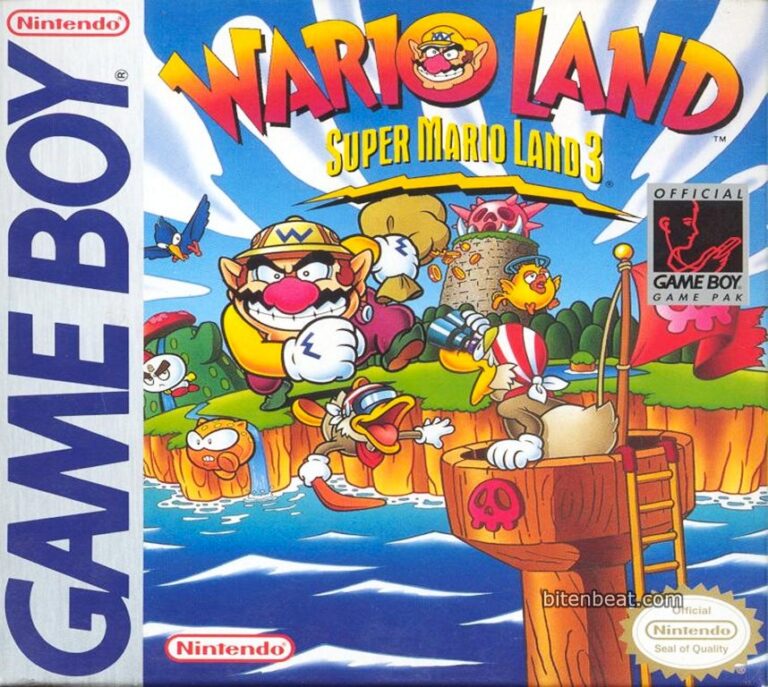
Wario Land: Super Mario Land 3 (Game Boy)

Technical Information
Developer: Nintendo R&D1
Publisher: Nintendo
Release Date: January 21, 1994
Wario Land: Super Mario Land 3 is a direct sequel to Super Mario Land 2: 6 Golden Coins. However, the protagonist this time is Wario, who was the final boss in the previous game.
Wario’s goal is to recover the castle he lost in the previous game, but to do that he needs money, a looooot of money.
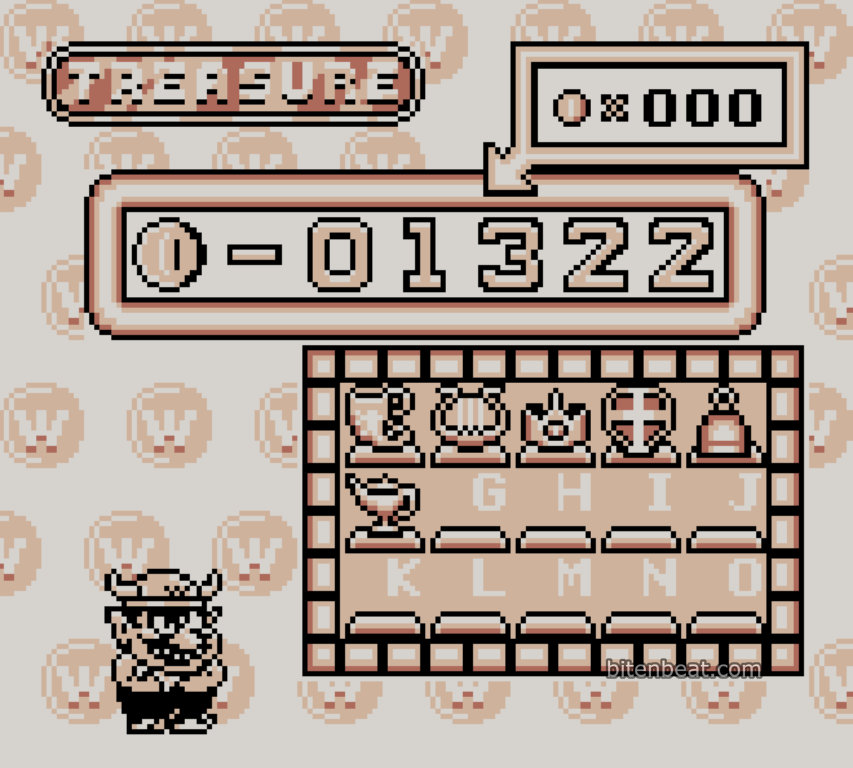
To achieve his goal, Wario must collect coins, find treasures, and manage to steal the golden statue of Princess Peach.
Final Considerations – Analyzing the Game as a Whole
Graphics and UI
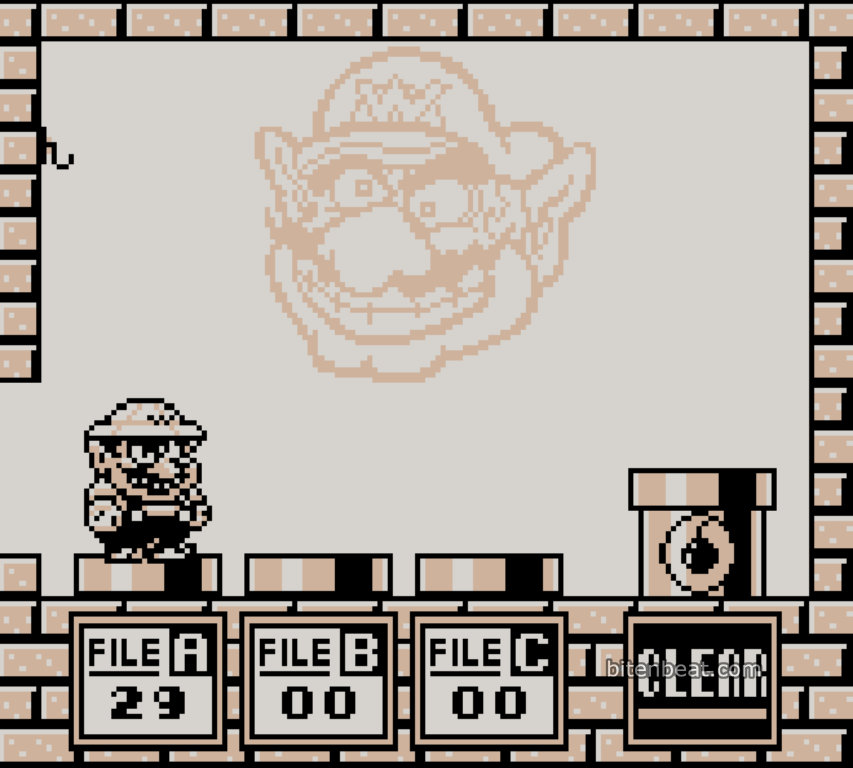
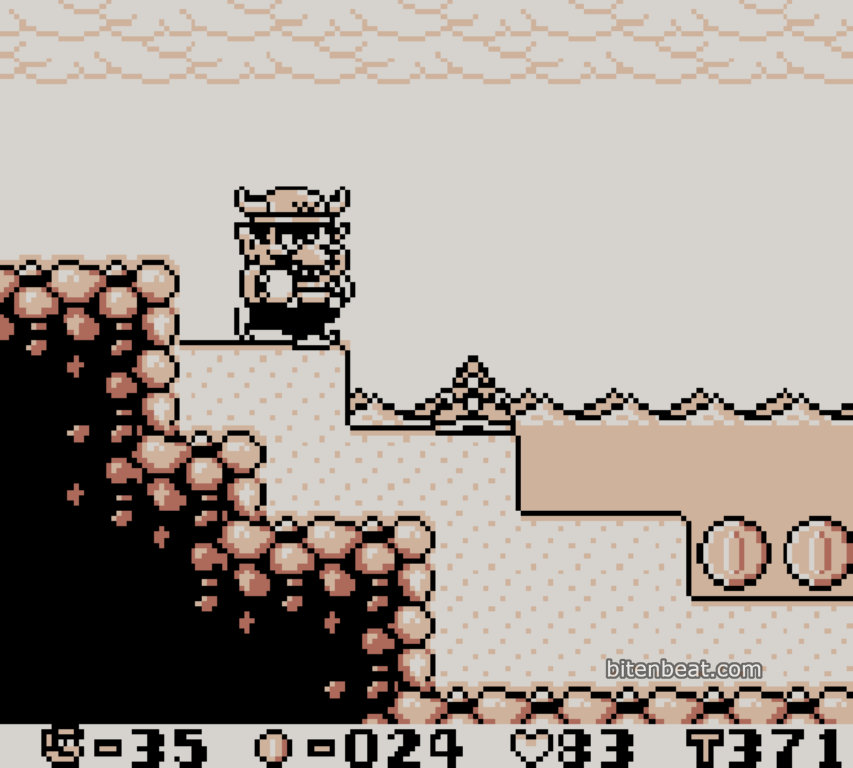
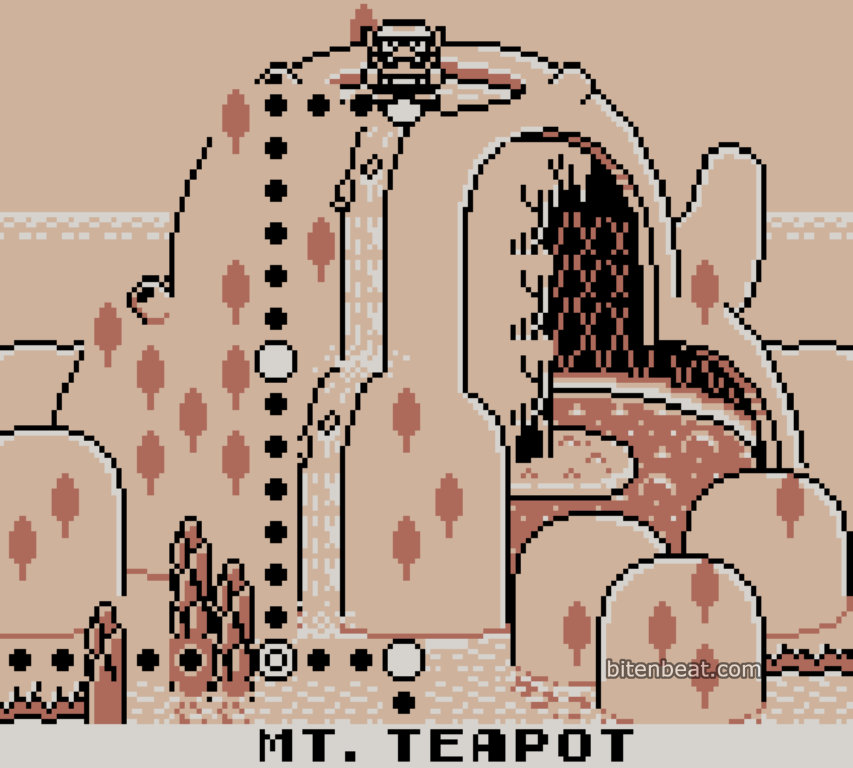
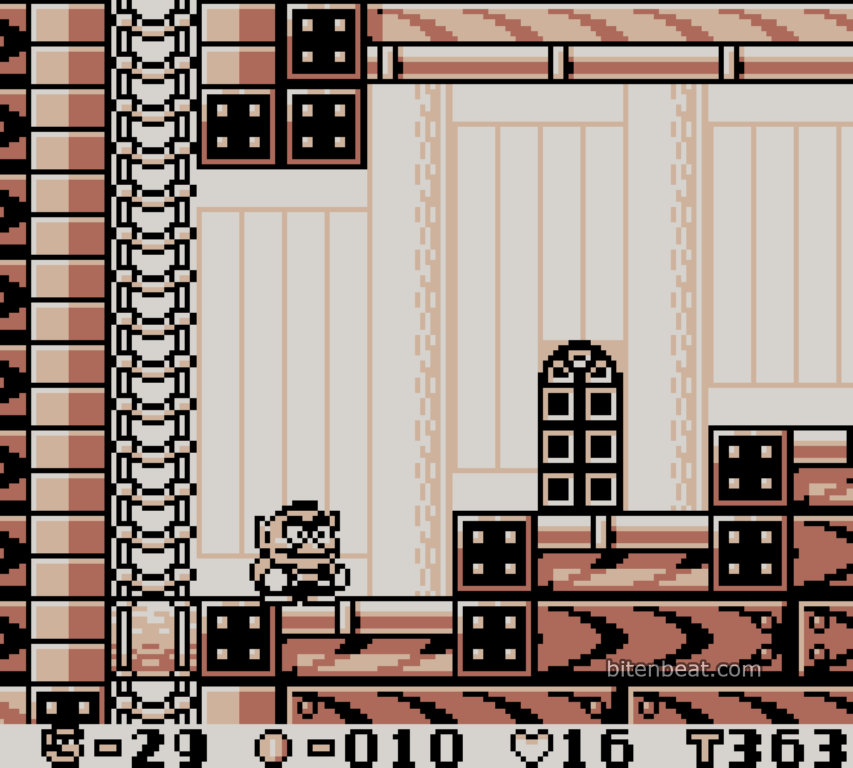
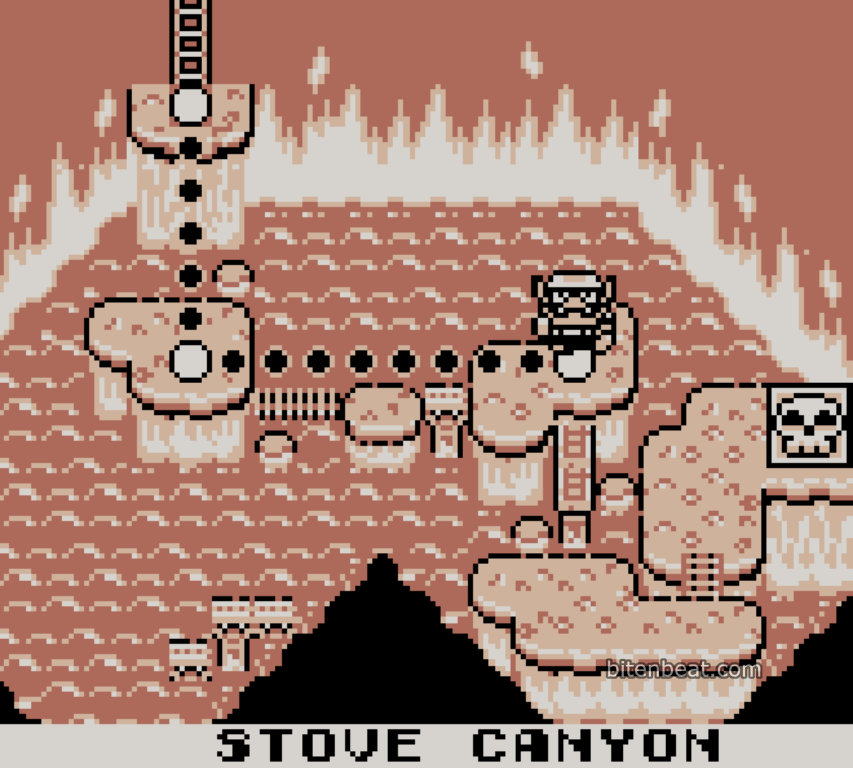
Wario Land is living proof that it was possible to have beautiful games on the classic Game Boy.
Even though everything in the stages appears large, the character sprites are well-drawn and detailed.
The environments end up being simpler, but they still maintain the game’s visual charm.
The maps were designed with fewer details to give Wario more room to move and to create the feeling that there is a lot to explore.
The entire art style of the game has a cartoonish, somewhat caricature-like look. I think that fits the protagonist’s personality very well.
Soundtrack and Sound Effects
I really like the music and sound effects in this game. But I believe the reason they’ve stuck with me for so long is that I played it a lot during my childhood.
The music has a charismatic and fun tone, even during the boss battles.
Gameplay
This was one of the games I played the most during my childhood, and it remains one of my favorites to this day.
The last time I beat it was around 2002, but it was interesting to see that even after so many years, I still remembered practically all the secret stages and how to defeat the bosses. Another interesting point is that back then it took me months to discover everything and reach the true ending… and in this latest playthrough, I finished the game in about seven hours and discovered that there was an ending even better than the one I believed was the true one! hahaha
Wario Land has simple gameplay: you move around, use one button to attack, and another to jump.
Even though the stages are simple, they are quite different from one another and present distinct challenges. Some stages focus on agility mechanics, others involve gravity changes (areas with water), and others revolve around discovering secret areas.
On top of that, your goal is to accumulate wealth. So collecting every treasure and every single coin is essential if you want to see the true ending.
At the end of each stage, you can choose between two mini-games: one to try to double the gold you collected, and another to earn hearts (and rack up extra lives!).
Wario has three different power-ups, allowing him to fly and move quickly, breathe fire, or strengthen his attacks.
There are specific stages that require the correct power-up to be completed more quickly, as well as to access certain areas.
The bosses are not very difficult, and their attack patterns are easy to memorize.
The game includes three save slots, and you can revisit stages that have already been completed.
Overall, it’s a very enjoyable platformer with a friendly difficulty level, especially for people who aren’t used to this type of game.
Replayability and Game Retention
It’s a simple game, so I strongly recommend playing it without looking up any guides, discovering everything on your own.
It took me many years (many years indeed! hahaha) to beat it again, but I never forgot how much this little game marked my life and entertained me.
In my nostalgic memory, it was more difficult and longer, but after this latest playthrough I realized it’s actually short and easy.
All of its simple and charismatic presentation makes it a great gateway game for anyone who has never played it before, giving them a reason to try it and stick with it until the end. ❤️