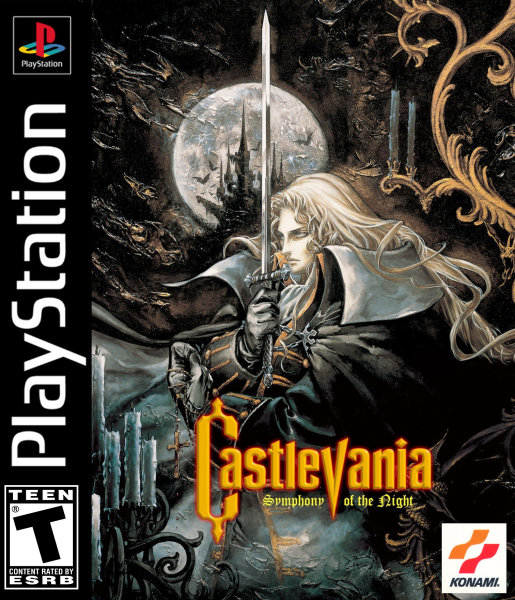
Castlevania: Symphony of the Night (PlayStation)

Technical Information
Developer: KCET (Konami Computer Entertainment Tokyo)
Publisher: Konami
Release Date: March 20, 1997
The story begins with Richter Belmont defeating Dracula. Four years later, Richter mysteriously disappears, and Dracula’s Castle reappears. As a result, Alucard awakens from his self-induced slumber to investigate what is happening.
Final Thoughts – Analyzing the Game as a Whole
Graphics and UI
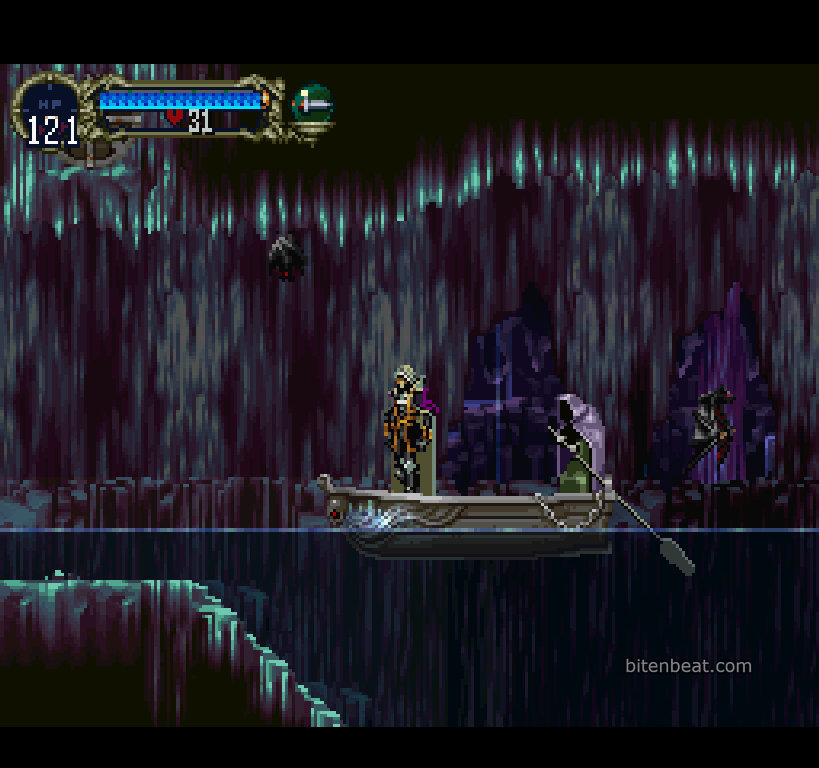
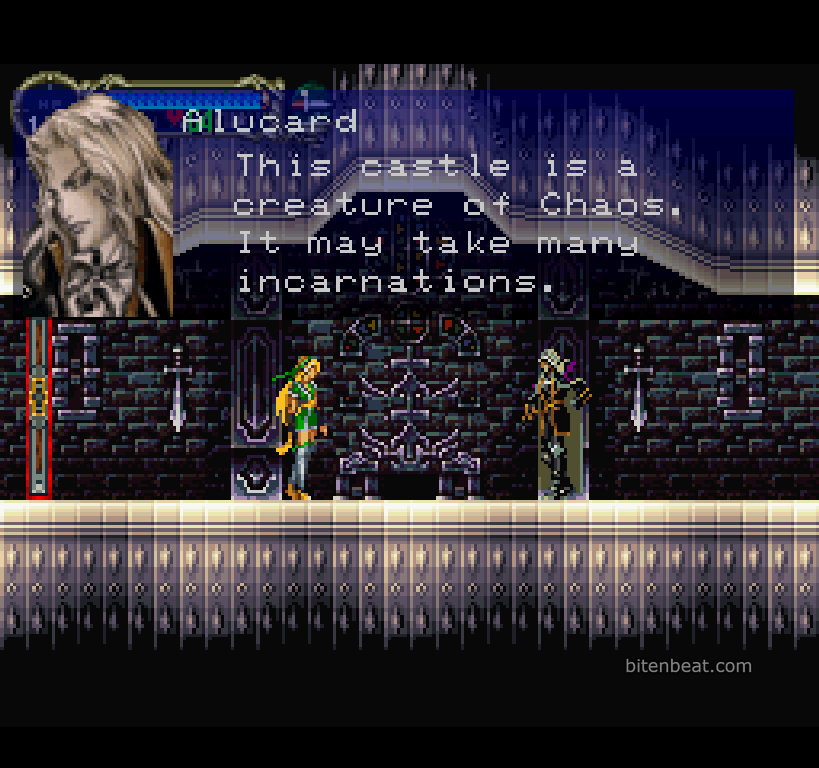
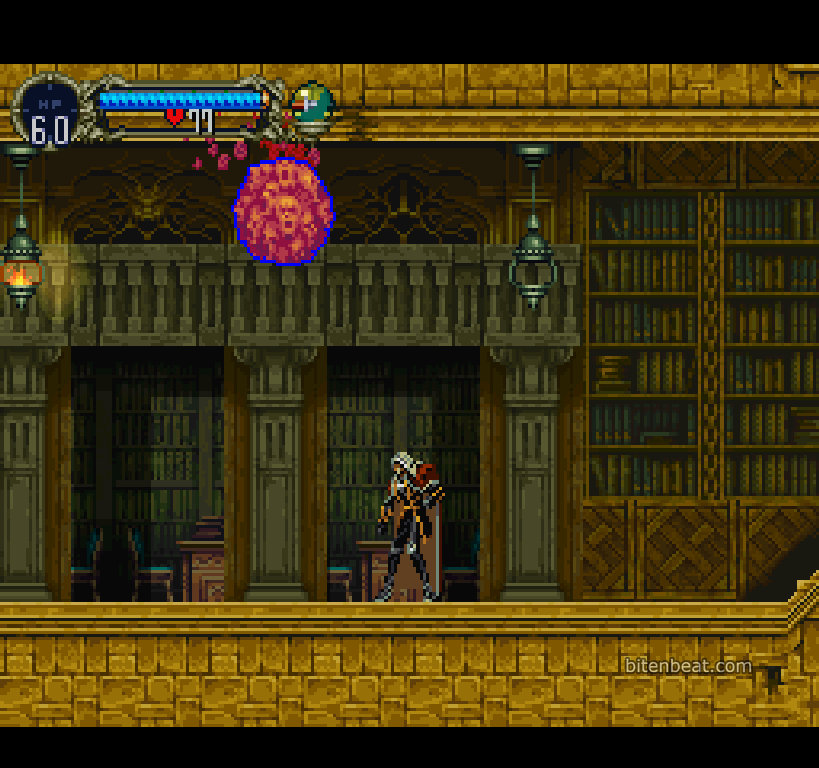
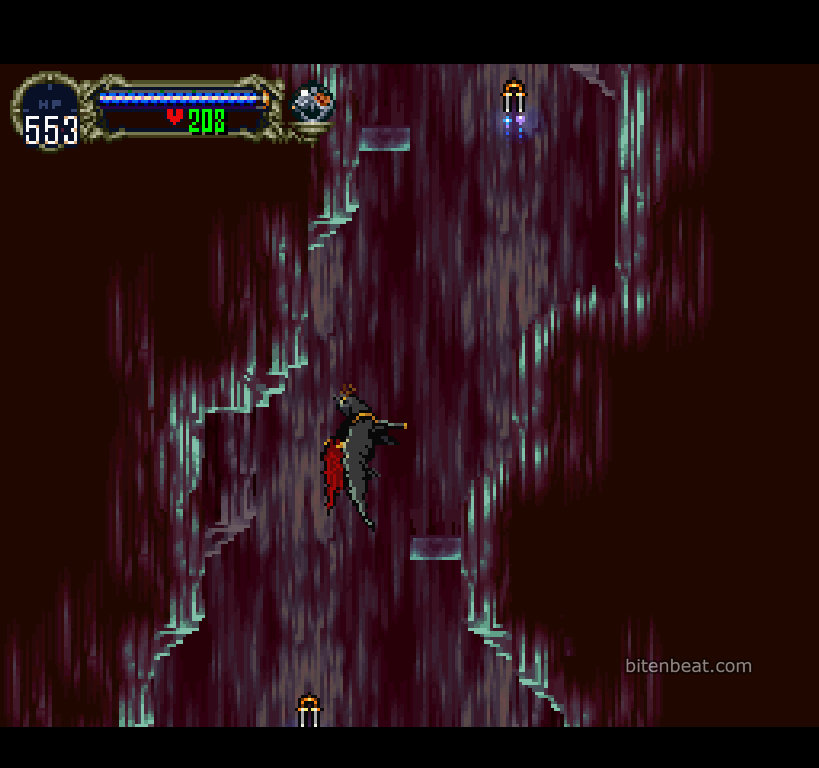
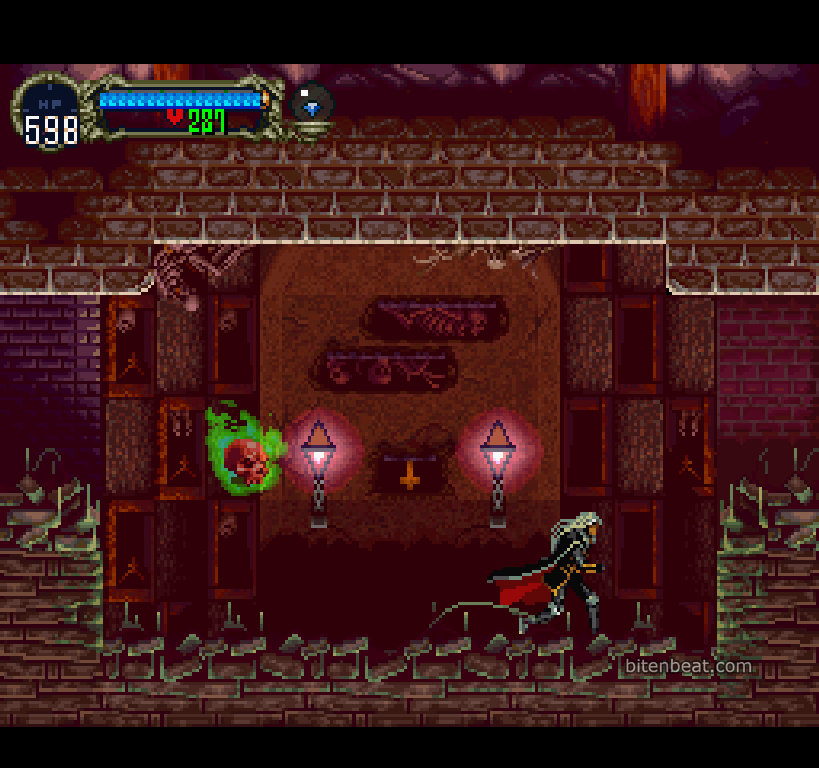
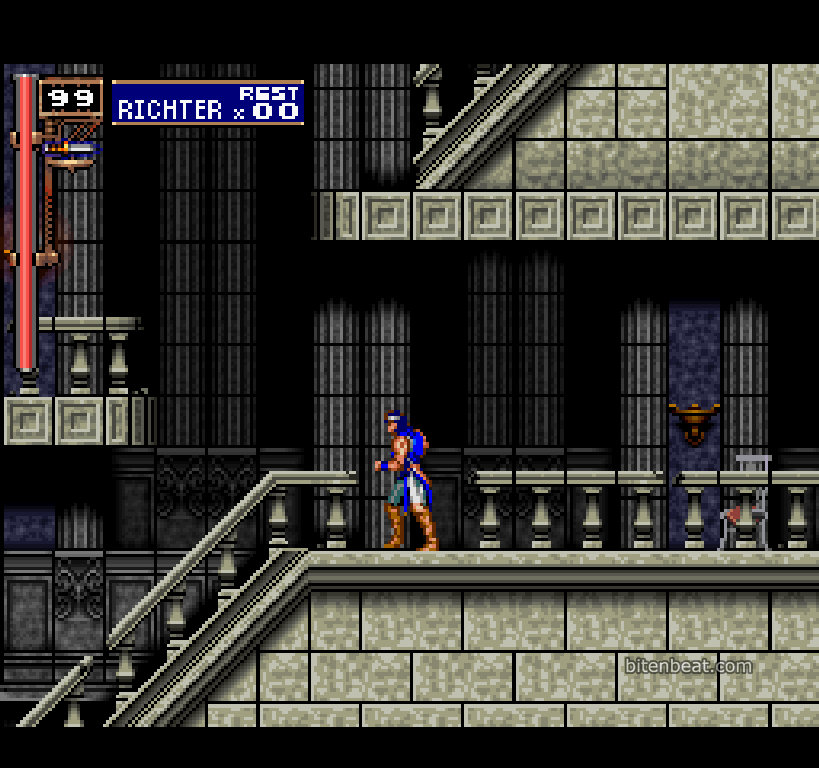
The graphics are incredibly detailed, featuring beautiful environments and charming parallax effects. Some elements use 3D effects (such as the books in the library and the save points), possibly as an attempt to showcase the power and versatility of the PlayStation.
The animations are also outstanding, demonstrating just how much effort the development team put into the game.
Each area of the castle has its own distinct identity, combining harmonious colors, creative visual compositions, and enemies that perfectly fit the environment.
Soundtrack and Sound Effects
It’s impossible to talk about this game without mentioning its soundtrack! The music is fantastic and unforgettable. In my opinion, it has one of the best OSTs of all time! <3
The songs perfectly capture the atmosphere of each location, making every area feel unique and memorable.
On the other hand, I don’t think the voice acting is nearly as impressive. The dialogue delivery often sounds stiff and somewhat artificial. Personally, I prefer the voices from the Sega Saturn version, as they convey much more emotion and intensity.
Gameplay
The gameplay combines platforming and RPG elements, resembling a Super Metroid game on steroids! Hahaha That’s one of the reasons why it’s considered one of the pillars of the Metroidvania genre.
The game features a massive map filled with save points and teleportation rooms placed throughout the castle.
The difficulty gradually increases as you defeat bosses and explore new areas. However, if a section feels too challenging, you can always gain a few levels before moving forward. This flexibility makes progression feel rewarding rather than frustrating.
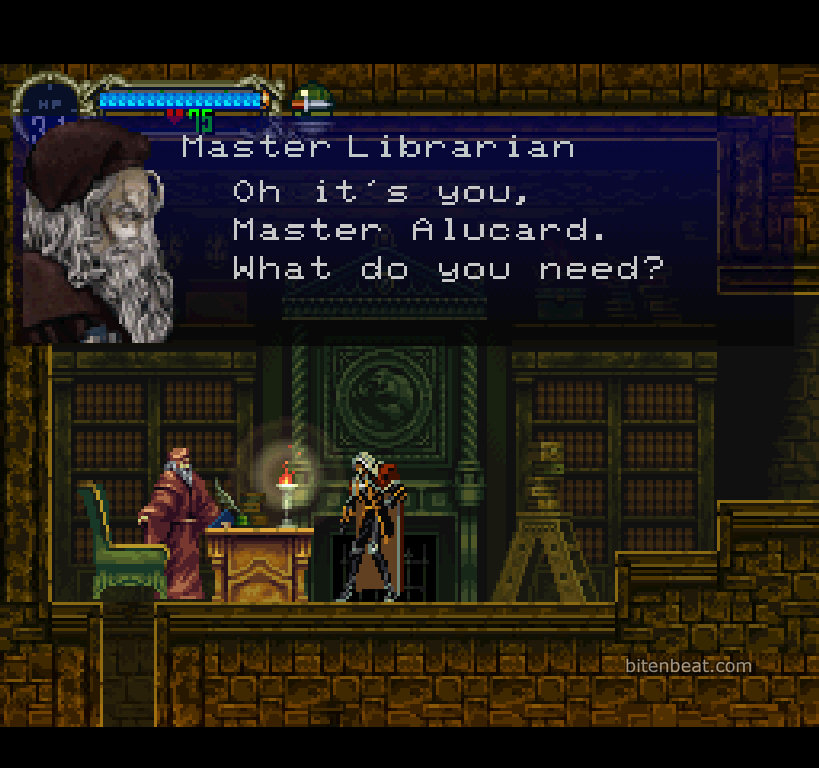
To make the world feel more immersive, there’s even a merchant who sells various items, ranging from health-restoring consumables to equipment and stat-enhancing items.
Certain sections require specific actions or discoveries to unlock new paths, adding a light puzzle-solving element to the experience. I personally enjoy this aspect because it prevents the game from focusing solely on combat and character progression.
Every enemy can drop items, and many of them are genuinely useful. This system contributes to a fair and balanced level of difficulty while rewarding exploration and persistence.
After completing the game, it’s possible to play as Richter Belmont. However, his mode is much more limited, featuring fewer gameplay mechanics and access to only part of the castle.
Replayability and Game Retention
Symphony of the Night is one of my favorite games of all time, and that’s not just nostalgia talking. The first time I played it was around 2009, and I finally completed it in 2012 on my physical Sega Saturn copy.
This wasn’t a game from my childhood, yet I fell in love with it from the very first playthrough.
Its excellent gameplay, balanced challenge, and incredible soundtrack make this Castlevania a true piece of art.
I can replay it over and over again and never get tired of it.
For anyone who enjoys platformers and RPGs, this game is definitely a must-play.