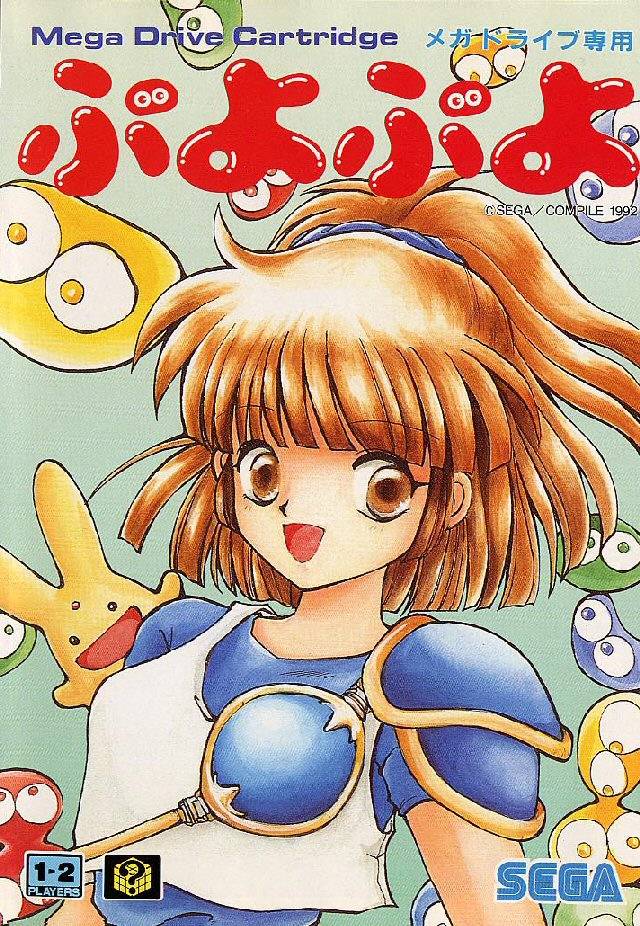
Puyo Puyo (Mega Drive)

Technical Information
Developer: Compile
Publisher: Compile/Sega
Release Date: December 18th, 1992
One of the most classic puzzle games of the 90s, control and help Arle Nadja to prevent Satan from dominating the world.
There are other versions of this game, with only minor changes in characters and some small details: Dr. Robotnik’s Mean Bean Machine (also for Mega Drive) and Kirby’s Avalanche (SNES), both released in the West.
Final Thoughts – Analyzing the Game as a Whole
Graphics and UI
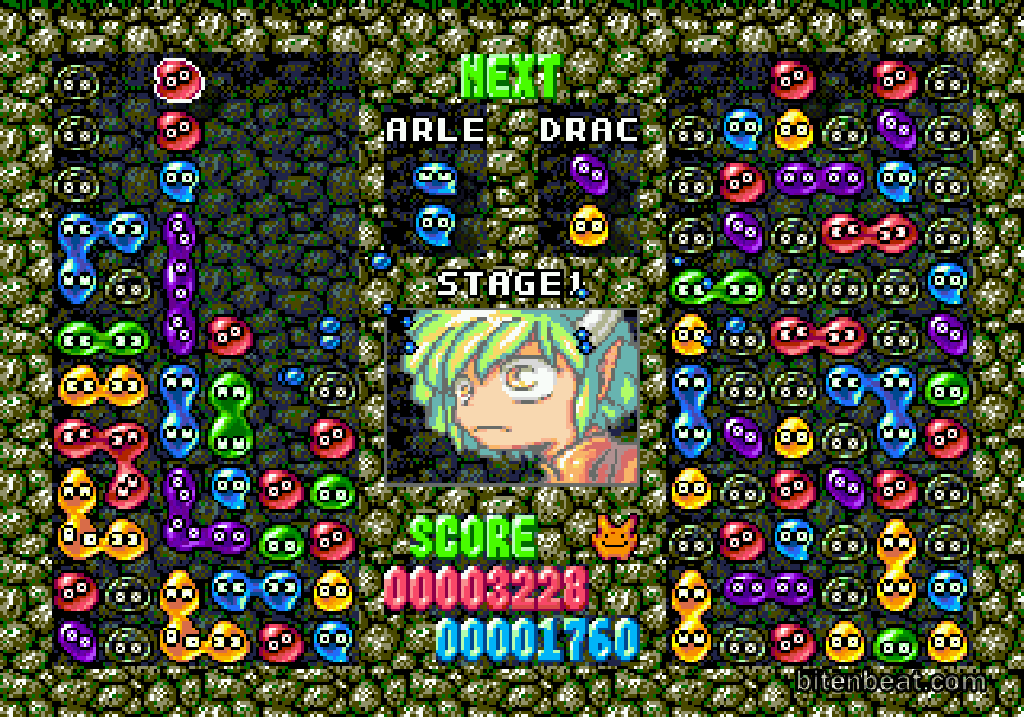
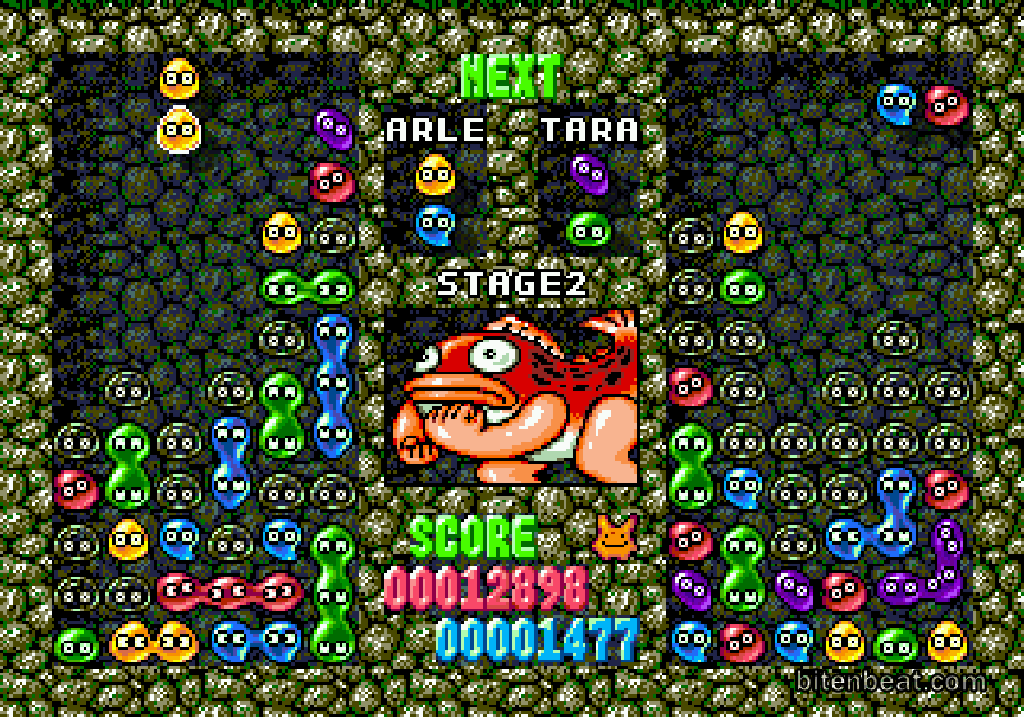
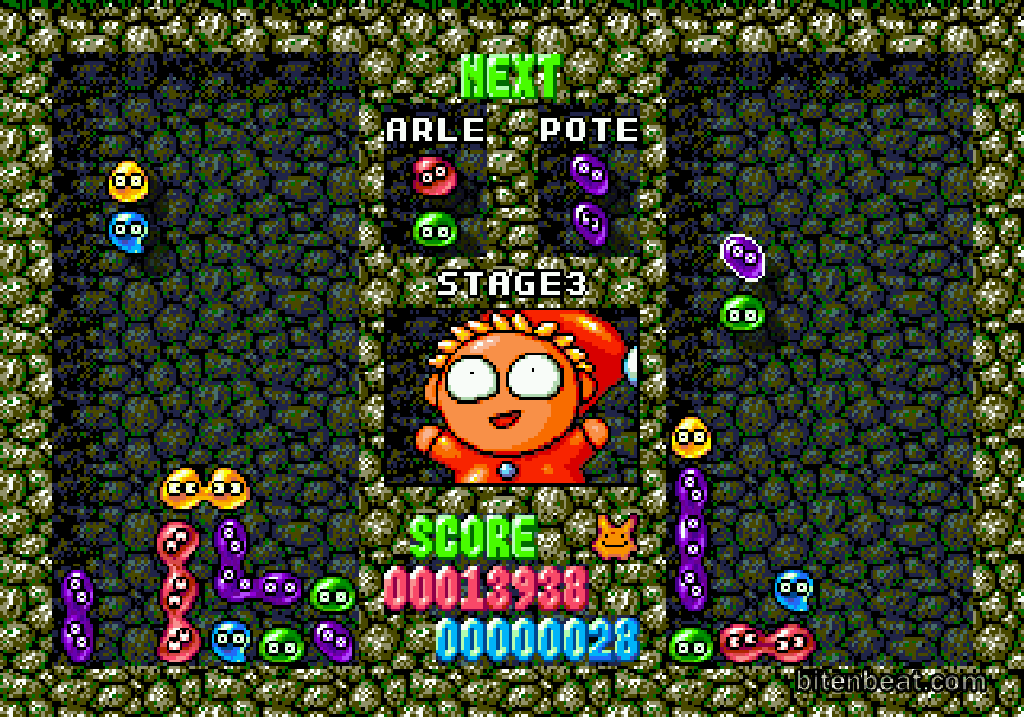
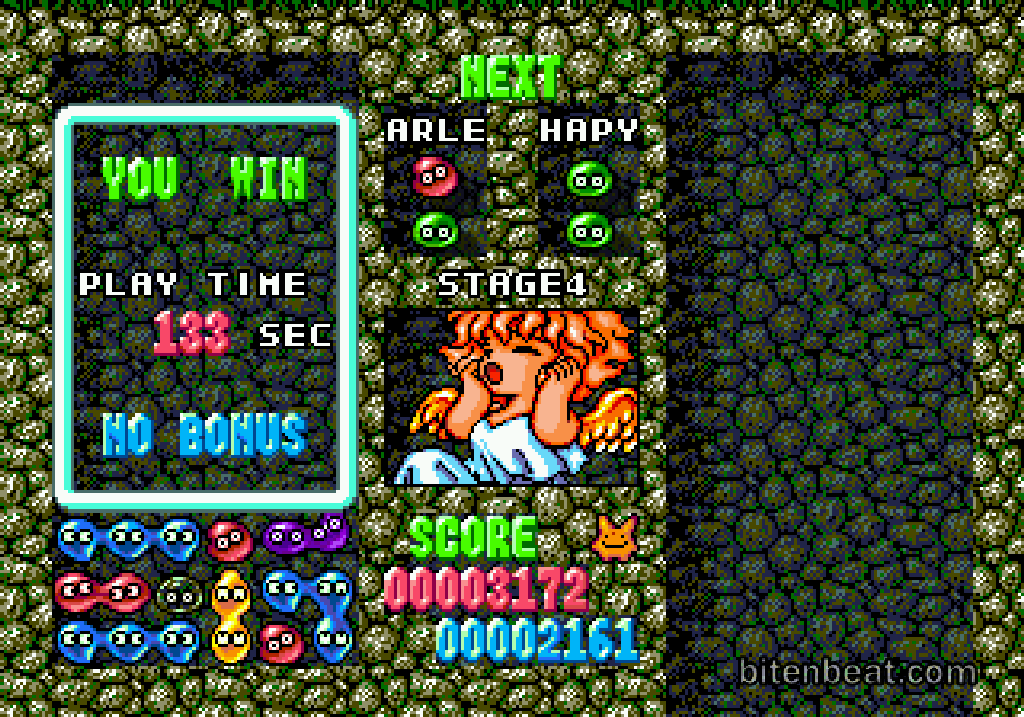
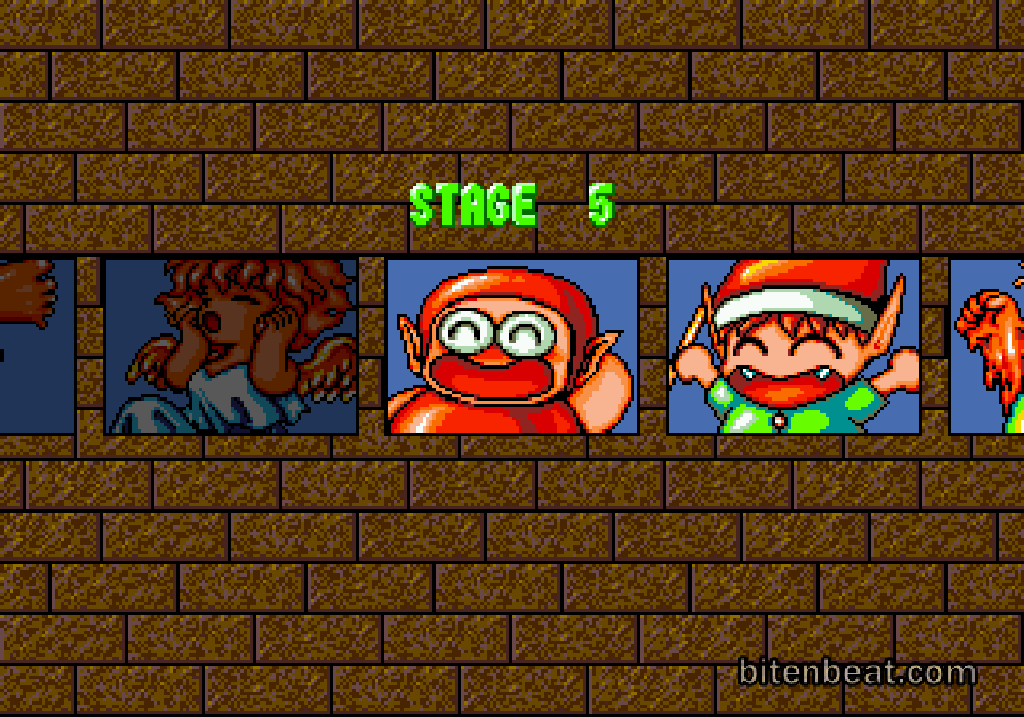
Nice sprites, but I personally think the backgrounds of the early stages are a bit polluted. I like that your opponent’s avatar stays centered, which makes it easier to visualize. In the SNES version, for example, the avatar appears on the opponent’s screen and as the beans fill up the screen, they cover the image.
The UI is easy to understand (even for those who don’t speak Japanese), instinctively you can start playing. The HUD is simple, showing scores, your opponent’s name, the next beans, and the stage number in a clear and non-polluting way.
Soundtrack and Sound Effects
Notable music, but after some time playing, the sound effects of voices become annoying (especially after losing several times in a row).
Gameplay
The gameplay is simple: beans start falling on the screen, and you have to group four or more of the same color together. The more identical colored beans are grouped, the more stones are sent to your opponent’s screen.
The game ends when one of the players fills their screen, making it impossible for them to make any moves.
At first, it seems like a difficult and even boring game, but it becomes quite addictive once you get the hang of it.
It can be difficult to master the game and consistently string together multiple combos.
This first version of the game has somewhat sticky controls, while later games (Puyo Puyo 2 and Puyo Puyo Sun, for example) have much more responsive controls that allow you to move pieces a few milliseconds after they hit something on your screen.
Replayability and Game Retention
In addition to the 13 opponents in the story mode, it’s possible to play solo mode where your goal is just to accumulate points. And there’s multiplayer! Extremely high replay value, especially considering how casual the game is.