
Technical Information
Developer: Rapha Chiavegati
Publisher: Siamese Cat Studio
Release Date: September 9, 2019
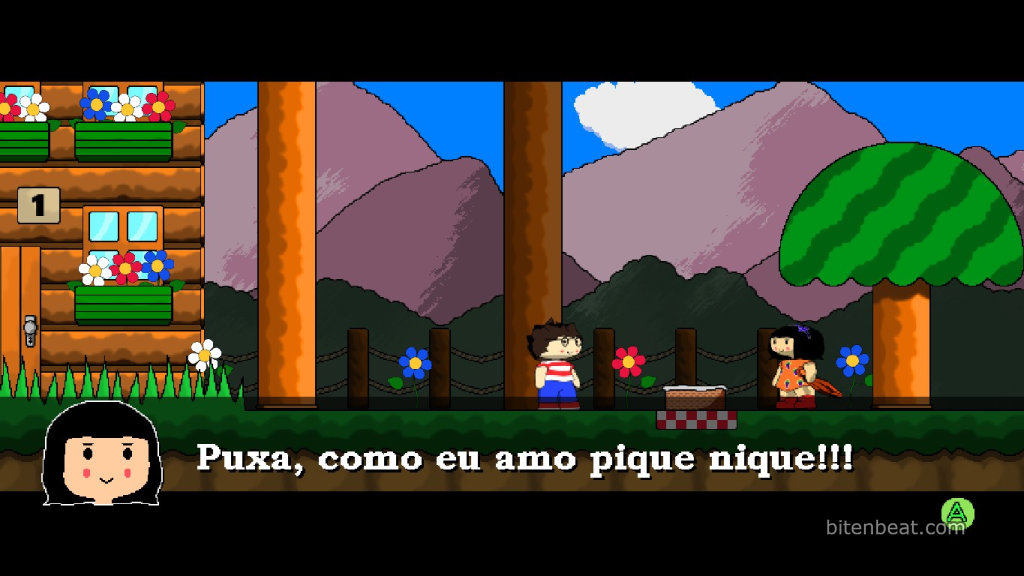
Amora Crystal is a platformer game inspired by the classics of the 16-bit era.
You play as Amora, a guardian who protects the forest and animals using the power of crystals. However, the villain M wants to obtain the power of these crystals and kidnaps Amorinho, Amora’s great love. Your mission is to rescue him and prevent M from gaining the crystal power.
Final Thoughts – Analyzing the Game as a Whole
Graphics and UI
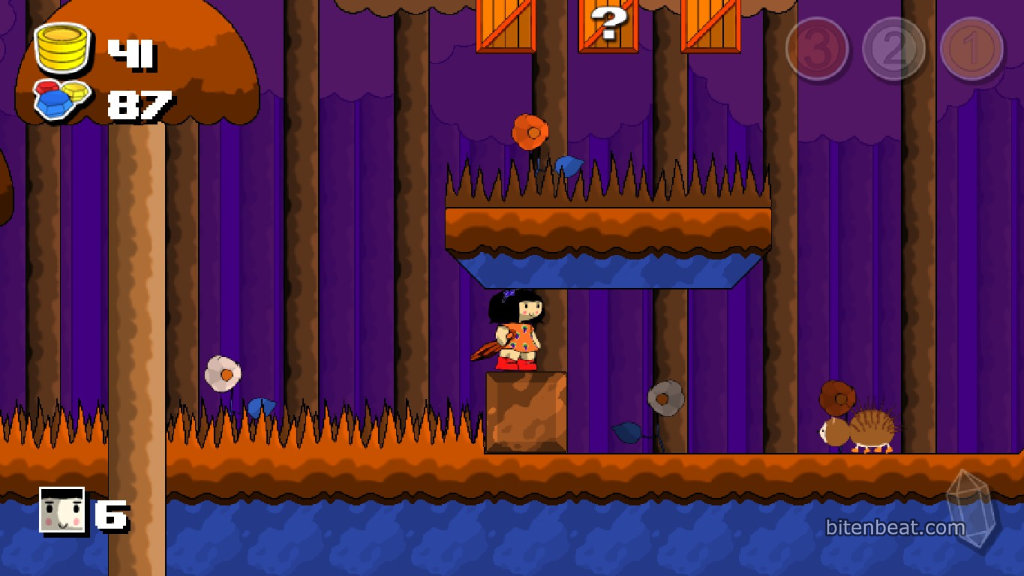
Although the animations are good, I personally didn’t like the game’s art style.
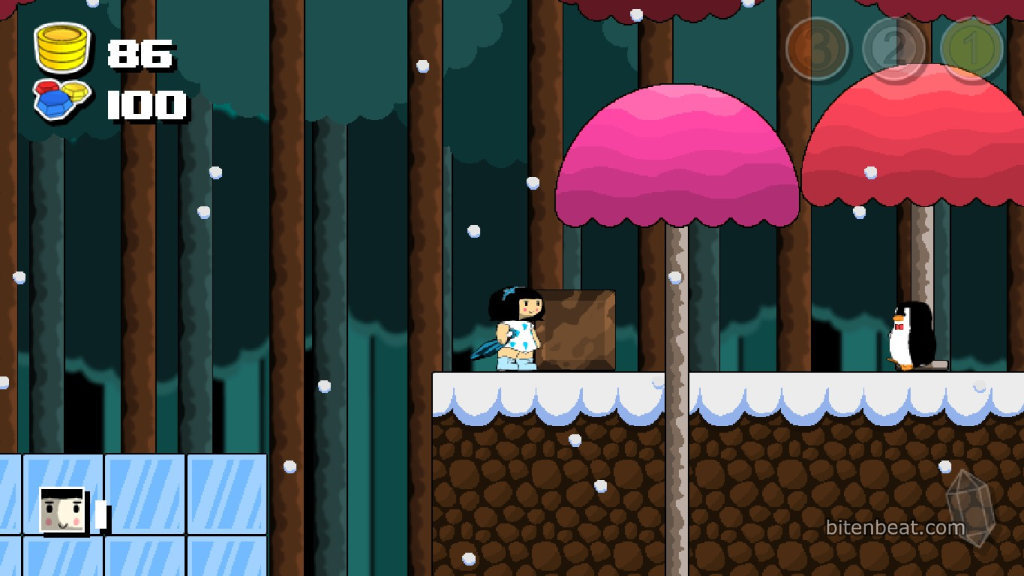
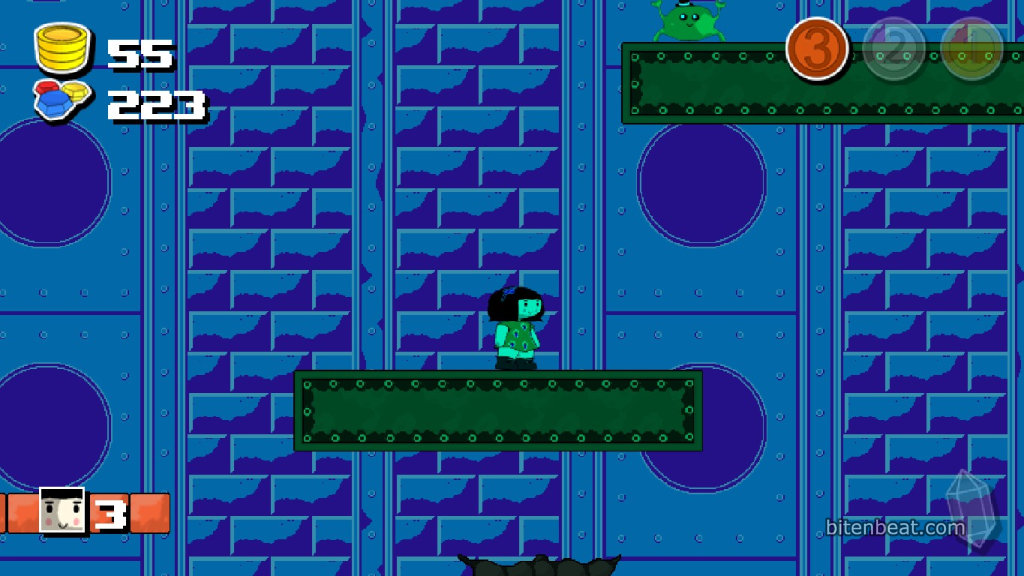
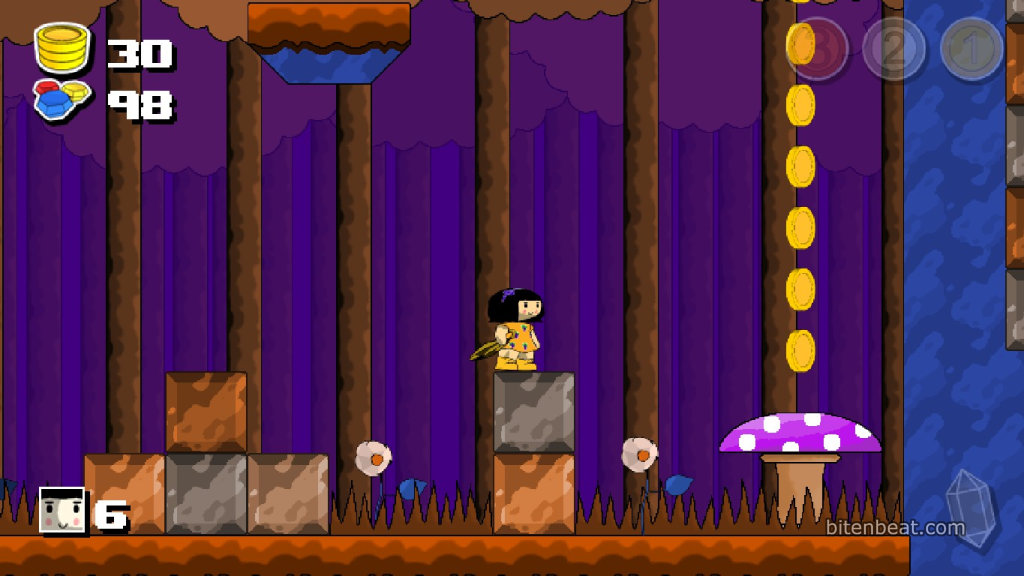
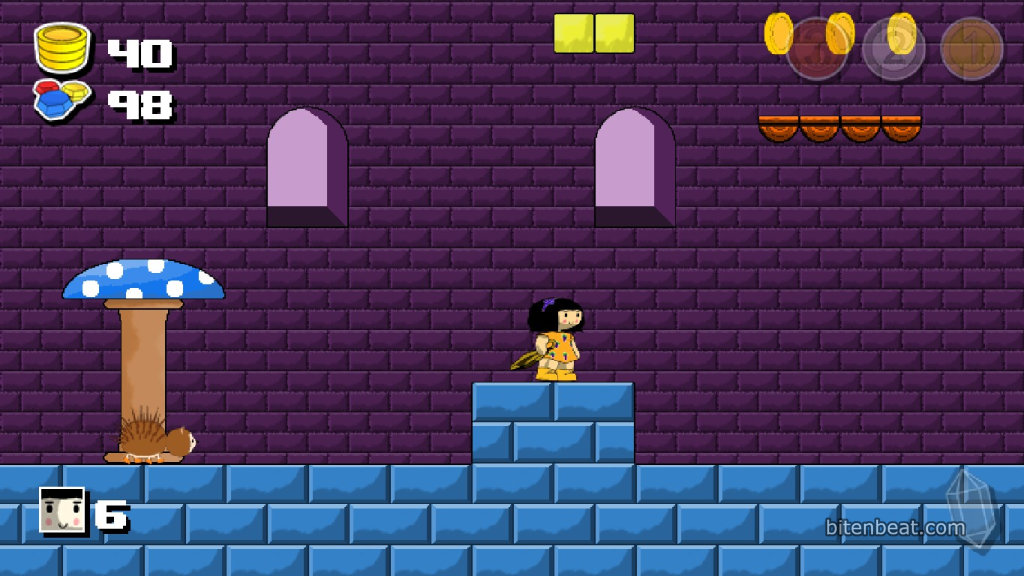
The game combines 2D with 3D (a common aesthetic in PlayStation and Sega Saturn games), which brings a retro feel. However, the scene compositions use very bold colors and simple shapes, giving the impression that they were drawn using Paint.
I think the platform design is quite square, more organic forms and slightly rounded corners on blocks could give it a friendlier appearance.
The UI and HUD are clean, and it’s possible to change the game’s language.
At the end of each stage, you’re shown the total number of coins, diamonds, dead animals, and whether or not a dove has been released.
During stages, you can collect diamonds, but I didn’t understand whether they have any utility (such as granting an extra life after completing a stage) or if they’re just collectibles.
Regarding animal deaths, the label “Total Assassinations” is used. I personally found this heavy-handed considering the game’s aesthetic and childlike atmosphere, as it places the protagonist in the role of a killer, which doesn’t match her friendly personality. I understand there may be an underlying critique about fauna preservation or a message in support of veganism, but I think the term was used incoherently and could have been less aggressive, considering the game’s atmosphere and Amora’s personality.
Soundtrack and Sound Effects
The music is super catchy and charismatic, giving the game a childlike feel.
The songs are not annoying and represent the game’s visual identity well. In fact, I think the whole game has an aura of innocence.
Gameplay
The physics are well calibrated (except for the water stage, which is frustratingly slow). The level design is creative, and the stages gradually become more difficult.
I found it very problematic that the stages are too long.
Even with checkpoints, the game’s difficulty increases a lot, and after a game over, it’s extremely frustrating to have to start all over again. Most of the difficulty comes from having to calculate jumps with millimeter precision. I got stuck for a long time in the snow and water stages, which made me want to give up playing numerous times.
I believe shorter but more frequent stages would make the difficulty feel less frustrating.
I experienced slowdowns in certain parts, but the worst was in the final stage, where performance issues were constant throughout the entire level, making gameplay very bad and preventing me from finishing it.
Another issue I encountered was the lack of precision in the hitboxes of some rotating currents. In certain sections, even when I was exactly in a position where the thorn ball shouldn’t touch me, I still ended up dying.
The biggest challenge in the game (besides finishing it) is completing stages without killing any animals. If you manage to do this, the ending changes. At first, I tried to complete stages without killing any animals, but after dying so many times in later stages, compassion turned into frustration. Since the animals attack without hesitation, I ended up moving forward mercilessly.
The game offers more to do than simply reaching the end, as each stage includes a dove to release and three coins to collect. Considering these additional challenges, the difficulty increases even further.
Boss patterns are quite easy to learn compared to the stages themselves, making boss fights relatively low in difficulty.
Throughout my playthrough, I encountered only one bug: in stage 10, if you collect more than one crystal power, after dying you’re unable to activate it again. The activation button only becomes available near the end of the stage.
The game features three save slots, autosaves after each boss, and supports joystick controls. In addition to the main story mode, there are optional challenges to complete.
Replayability and Game Retention
If you enjoy platformers, you can play without fear that this game won’t provide several hours of gameplay — especially if you’re a completionist aiming for 100%.
Unfortunately, I couldn’t finish the game due to the performance drop in the final stage. To be completely honest, I also didn’t feel motivated to replay it to achieve the no-deaths ending. This wasn’t due to any specific issue, but rather a lack of patience, as the stages are long and the game is quite punishing.