
Technical Information
Developer: ArtPlay
Publisher: 505 Games
Release Date: June 18, 2019
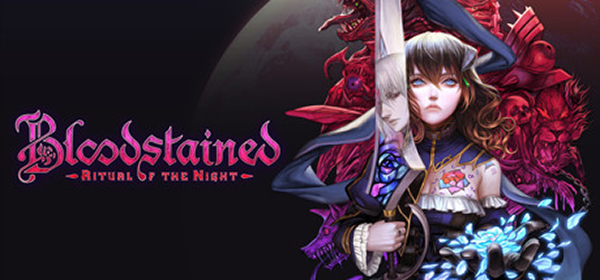
Around the year 1700, a group of alchemists decide to summon demons because they fear that humanity will completely lose its belief in the spiritual. They then fuse magical crystals into an orphan named Miriam in order to attract these demons.
However, Miriam falls into a coma and ends up becoming useless. The alchemists replace her with Gebel and manage to complete their mission.
Gebel survives the ritual and takes revenge on the alchemists, destroying their guild. Ten years later, Miriam awakens from her coma, but the world is no longer the same… the alchemists’ guild has turned into a castle, and that’s where the adventure begins!
The game was produced by Koji Igarashi, known for producing Castlevania: Symphony of the Night (and several other titles in the franchise) and for creating the genre we now know as metroidvania (a game style that mixes the map and exploration system of Super Metroid with Castlevania, while also adding a character level progression system. Roughly speaking, it’s basically a platformer mixed with RPG elements).
Final Thoughts – Analyzing the Game as a Whole
Graphics and UI
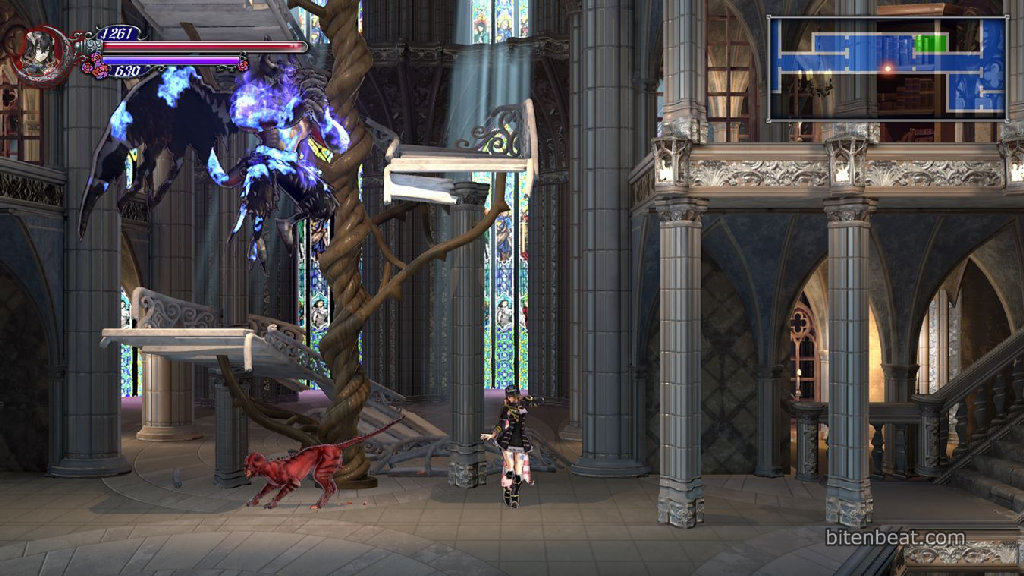
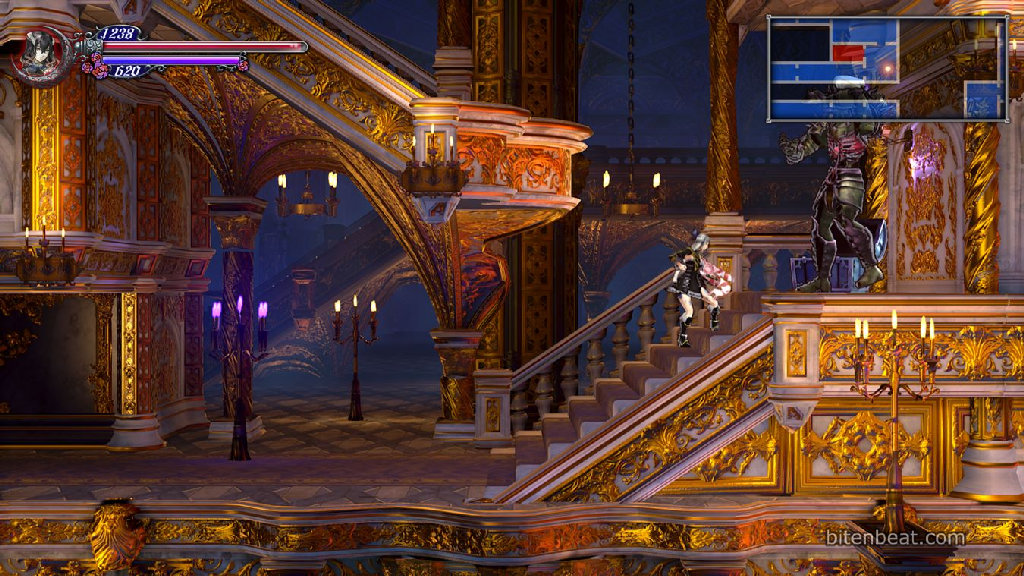
I’ll admit that I found the game’s 2.5D style a bit strange at first. Was it bad? No. Actually, it looks pretty cool in some parts, since it breaks the flat plane linearity of a traditional 2D game. That said, I’m part of that nostalgic-as-hell crowd that not only loves pixel art but also Castlevania: Symphony of the Night and the Game Boy Advance and Nintendo DS trilogies, so for me, that kind of art style would have added a special flavor to the game.
I liked the character models, but I found the color palette of some environments to be very similar to one another, especially the color blue, which is used excessively in most areas.
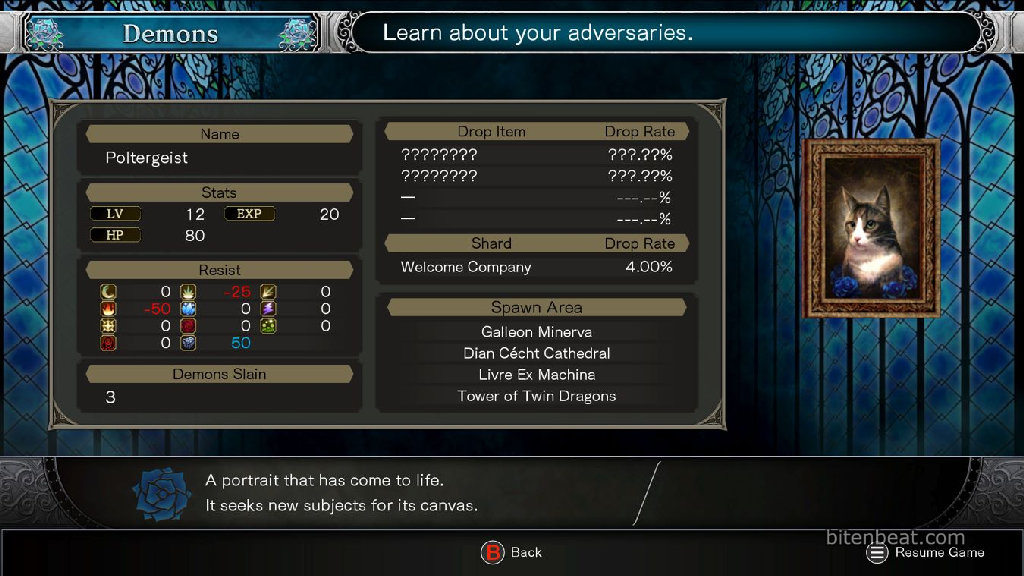
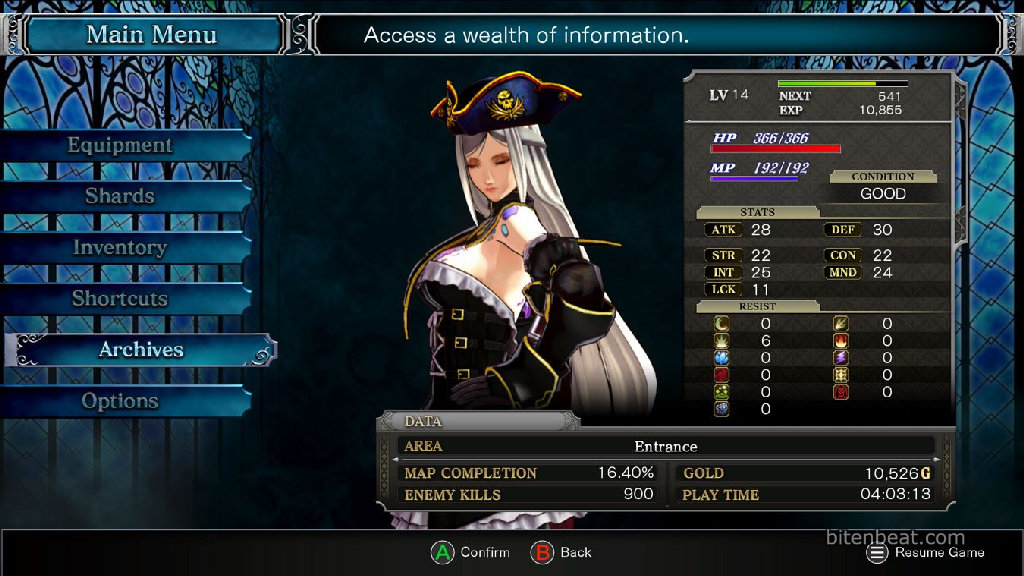
At first glance, the game’s menus reminded me a lot of a standard RPG Maker UI. Everything is easy to understand, even with a lot of little things to view and customize, but I personally found the design ugly (though the serif font fits the game perfectly! hahaha).
I also didn’t like the red outline around Miriam on the HP bar. It looks tacky!
The game has a lot of content, and the way everything is categorized and divided is very well done.
When opening the map, you can expand it and mark areas you think are important. This helps a lot when remembering where to return after obtaining a specific skill (double jump, for example).
Soundtrack and Sound Effects
Amazing soundtrack and voice acting!
I played the entire game in Japanese and loved it!
The music is incredible and reminded me a lot of Castlevania: Order of Ecclesia. The compositions have the same overall vibe.
Gameplay
The gameplay is very smooth and easy to adapt to. When you defeat certain enemies, they drop shards. These shards turn into specific abilities, which can be used according to the player’s preference (it’s exactly like the soul system that Soma absorbs in Aria of Sorrow and Dawn of Sorrow).
I really like this type of system, because it allows you to use the abilities you’re most comfortable with and/or find the most useful.
The level design of each area on the map is well balanced, but unfortunately I can’t say the same about the bosses. The vast majority of them are very easy, and I defeated almost all of them on the first or second try. More complex attack and movement patterns would have made the game more challenging and, consequently, more interesting.
Just like in Castlevania: Order of Ecclesia, the game features side quests. When you complete a side quest, you’re rewarded with an item.
It’s a great way to clear your head without losing interest in the game, especially when you’re stuck in a certain part or simply want to farm.
Miriam’s appearance is customizable, and this was one of the things I liked the most! You can change her hairstyle, hair color, eyes, and outfit.
Equipping certain items also changes her appearance!
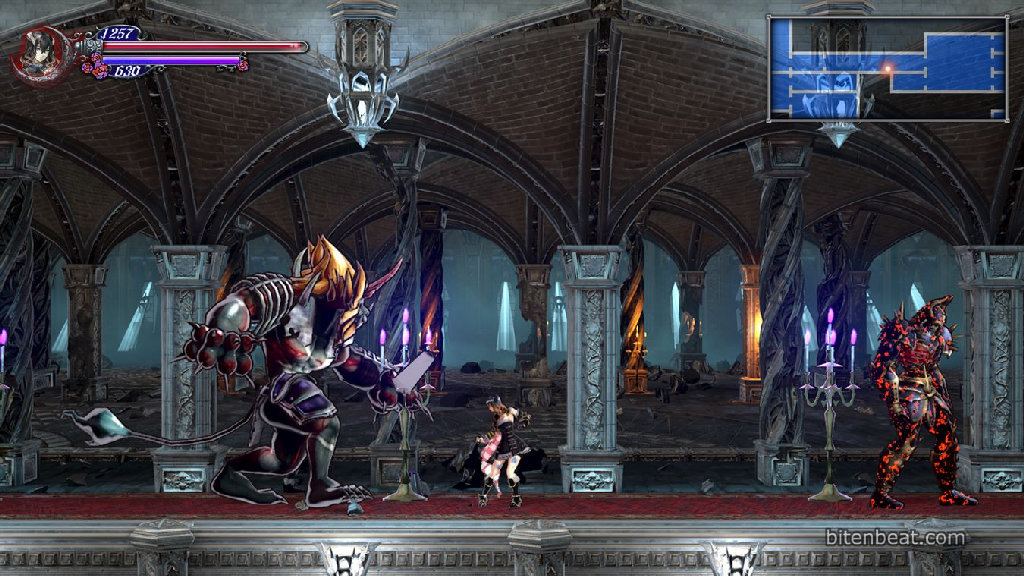
I really liked the creatures chosen as enemies. With each new area, I kept recognizing enemies that had already appeared in previous Castlevania games. The famous Medusa Head was replaced by an enemy called Dullahammer Head. It’s very interesting how traditional Castlevania creatures were easily replaced, this clearly shows how Igarashi managed to adapt a new universe to his classic ideas.
Sadly, there were no Diplocephalus/Amphisbaena (two creatures that I really like).
Unfortunately, I ran into a few very minor bugs during my playthrough (for example, when I kill an enemy too close to a wall, it’s impossible to pick up the dropped item), some slowdown (the Xbox I used for this run is the first model, but that’s no excuse for poor optimization), and one crash (minimizing the game in Johannes’ area, returning to the game, and then leaving that section of the map causes a crash).
The game needed a bit more polish. None of these issues are game-breaking (except for the crash), but they did affect my experience.
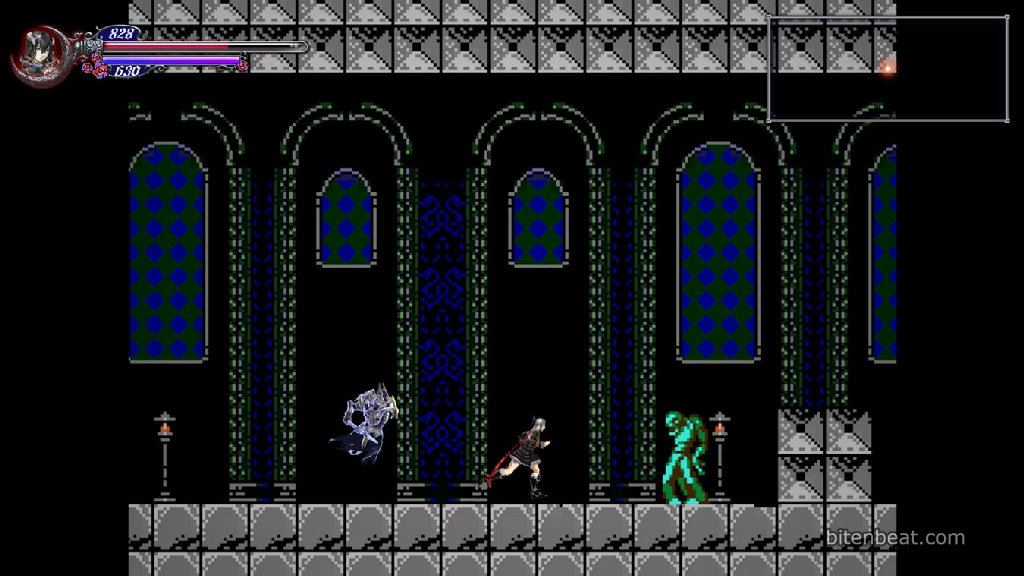
The game contains countless references to various Castlevania titles, and one of my favorites is the 8-bit area!
It’s also worth remembering that the name Bloodstained itself is already a huge reference.
Replayability and Game Retention
In addition to completing the achievements, you can also start a new game with a different character and play Boss Rush mode (where you face the game’s bosses in sequential order).
There’s no way you won’t want to play this again!