
Technical Information
Developer: Double Dash Studios
Publisher: Double Dash Studios
Release Date: October 22, 2019
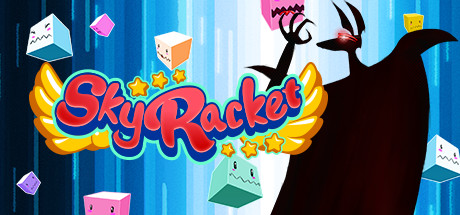
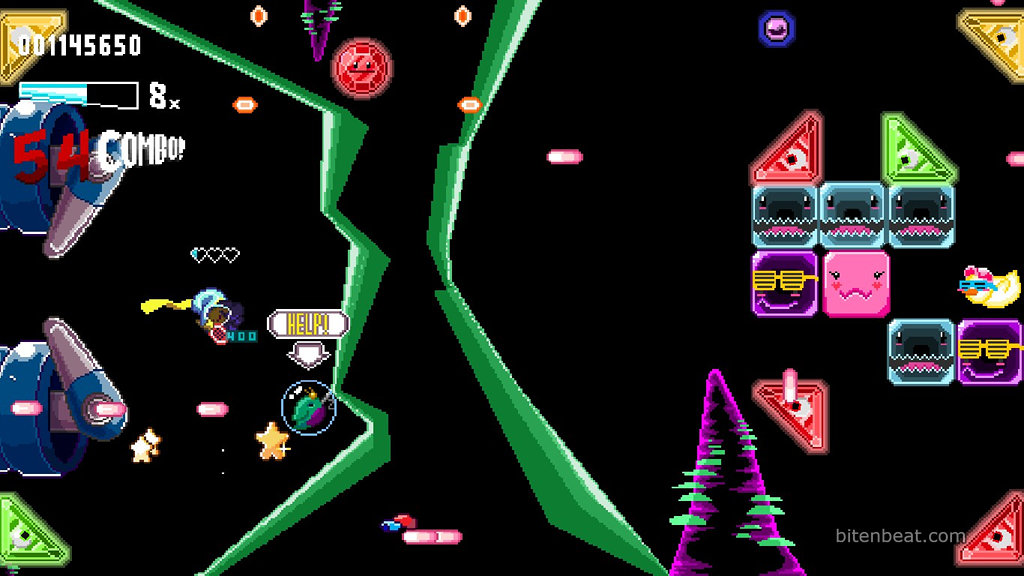
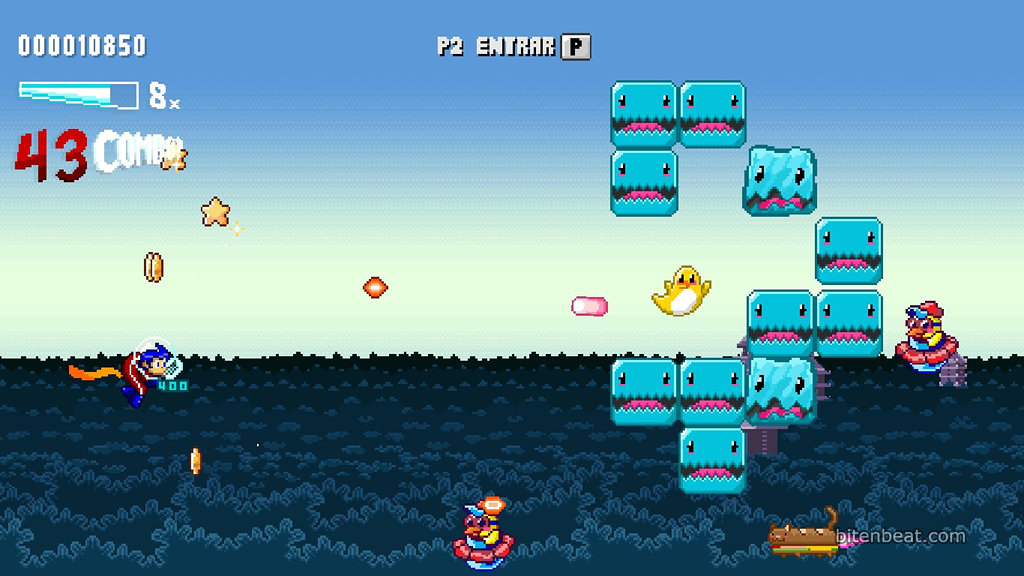
Sky Racket is a game that blends shmup elements with Arkanoid-style gameplay.
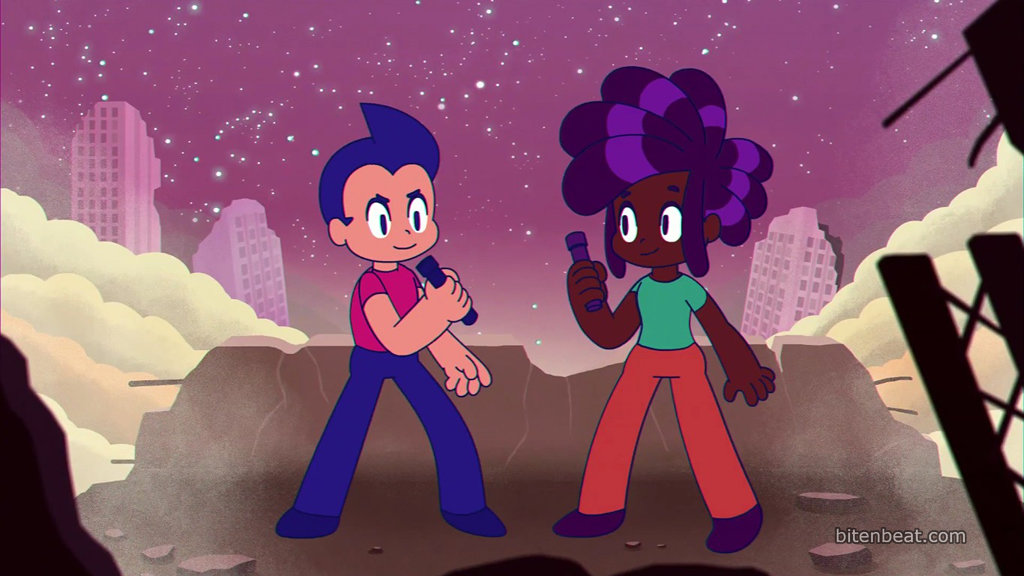
Control RacketGirl or RacketBoy and save the galaxy from the terrible Korrg! Your mission is to deflect enemy shots, sending them back and knocking enemies down.
Final Thoughts – Analyzing the Game as a Whole
Graphics and UI
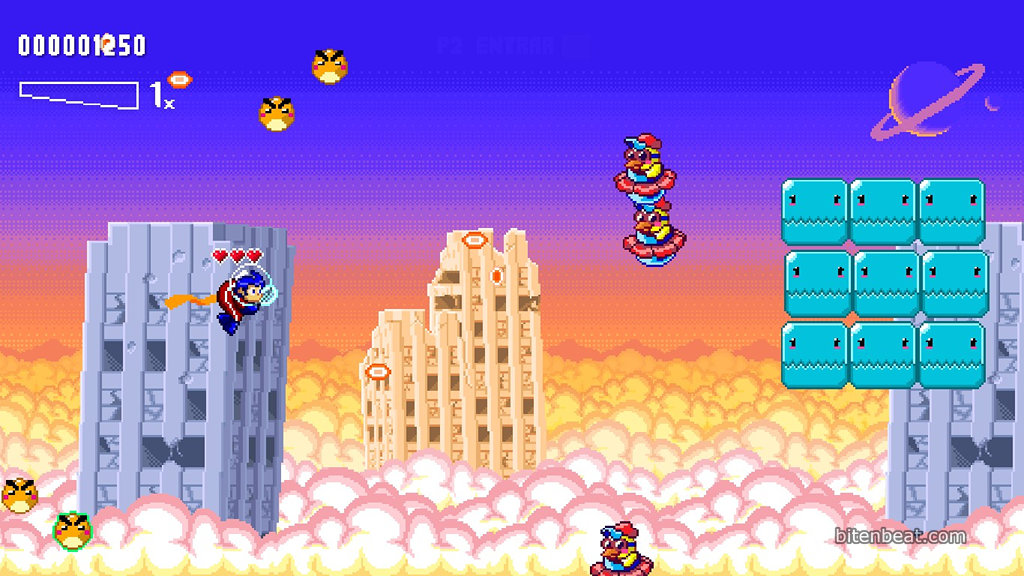
The art is a solid 10/10: extremely well-crafted pixel art with excellent animations.
The backgrounds and parallax effects are very well integrated, perfectly matching the game’s overall atmosphere. I really liked the effects used in the backgrounds, they strongly resemble games from the Mega Drive and SNES era.
The menus are simple, and the HUD is very simple. The character’s life is displayed in the form of hearts, which only appear when damage is taken, keeping the screen free of visual clutter.
The icing on the cake is using a joystick. The game detects whether you’re using an Xbox One or PlayStation 4 controller and changes the button prompts (confirm, back, etc.) in the menu according to the controller model you’re using.
Soundtrack and Sound Effects
Right from the moment you boot up the game, you can already notice the care put into the soundtrack.
The music is very cute and full of charm! It reminded me a lot of Pop’n TwinBee: Rainbow Bell Adventures on the SNES.
The tracks are so enjoyable that they actually make you want to listen to them in your day-to-day life.
The sound effects are also very well done, and some enemies even have voices, which adds more excitement to the game.
Gameplay
The gameplay is extremely innovative, I’ve never played anything quite like it.
I found it somewhat difficult at first, the game even feels a bit nonsensical early on, but you gradually get the hang of it.
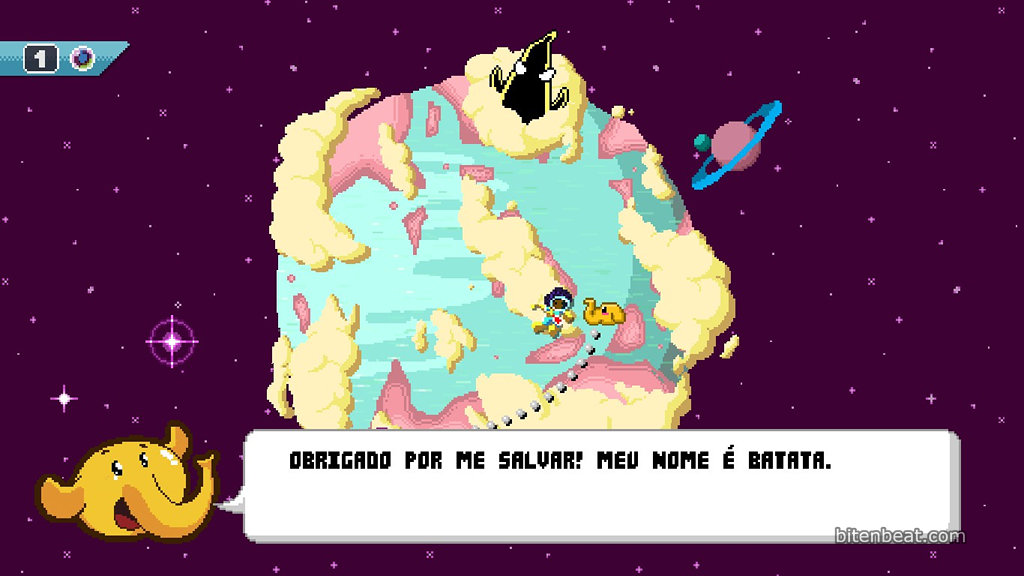
Each stage features specific challenges (such as finishing the level without taking a hit or scoring a certain number of points), which increases the game’s replay value. You navigate through the stages using a map and can replay them as many times as you want.
The game’s difficulty isn’t low, but the learning curve is fast.
The game has two save slots, and once you complete a stage, your progress is automatically saved.
One of the first things I noticed was the stage intro screens. They were heavily influenced by Sonic games on the Mega Drive, while the map strongly resembles Super Mario World. The warning screen that appears before each boss is another retro-inspired touch, straight out of Gradius III. The stage that features signage reminded me of Stage 4 from Gokujou Parodius, which includes traffic signs.
Fans of the 16-bit era will definitely notice all these references, all applied with a good sense of originality.
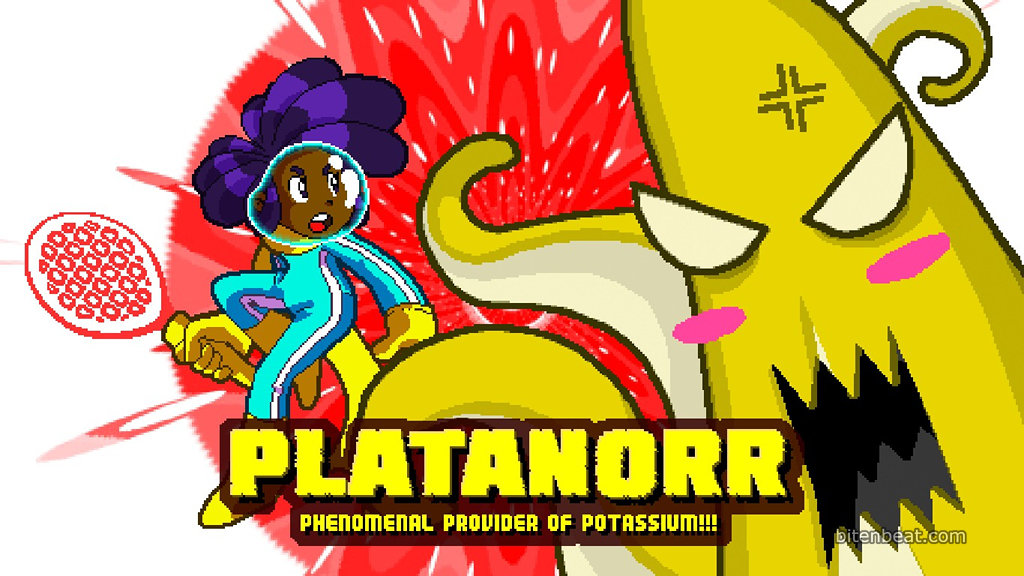
The enemies and bosses are very creative, some even bordering on the comical. Before facing a boss, an introduction screen is shown, which turned out really cool!
Replayability and Game Retention
The game is short, which may make more casual players feel less motivated to start a new save. However, the stage challenges are not easy and can keep players who enjoy unlocking achievements engaged.