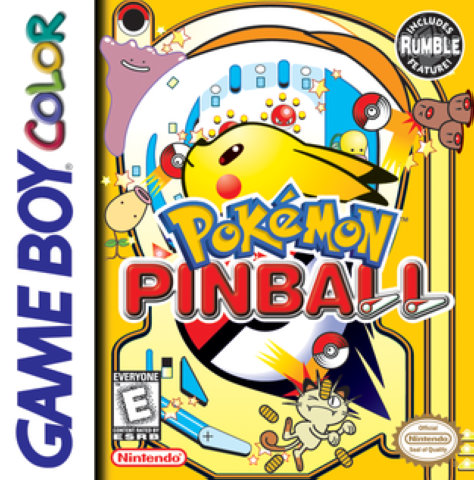
Pokémon Pinball (Game Boy Color)

Technical Information
Developer: Jupiter, HAL Laboratory
Publisher: Nintendo
Release Date: April 14, 1999
As the name itself suggests, this is a pinball game with a Pokémon theme.
It is a spin-off of the franchise’s first generation. In this game, in addition to scoring points to reach the top of the rankings, your goal is to capture all 151 Pokémon.
Final Thoughts – Analyzing the Game as a Whole
Graphics and UI
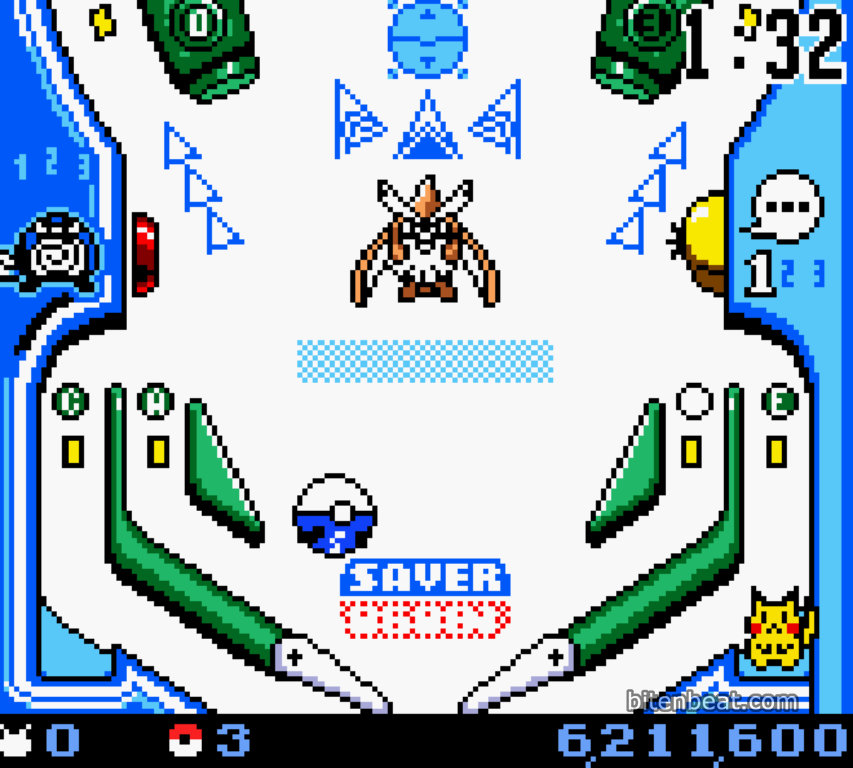
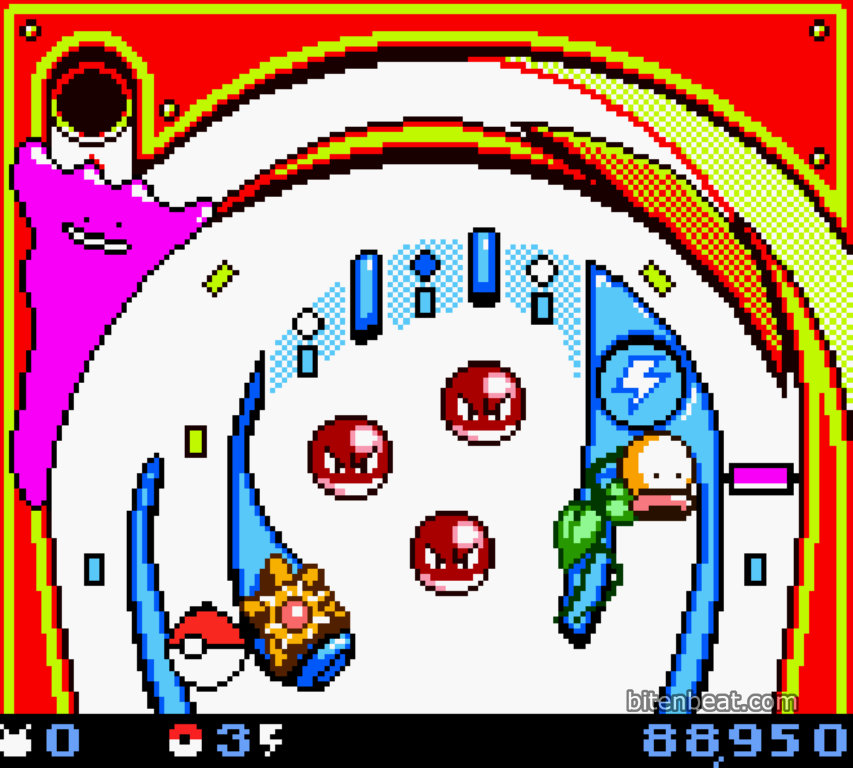
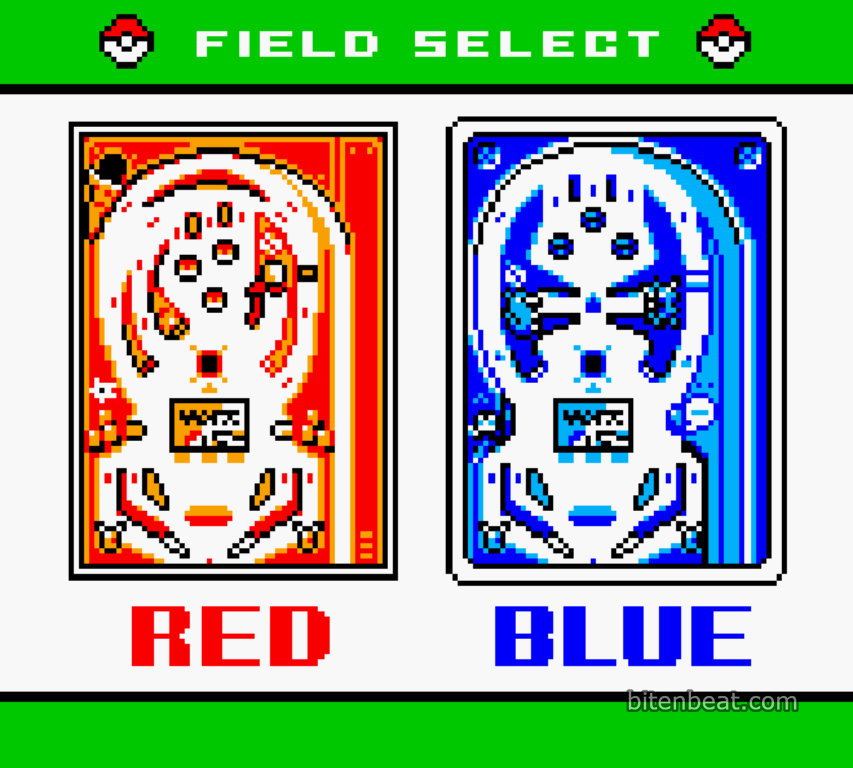
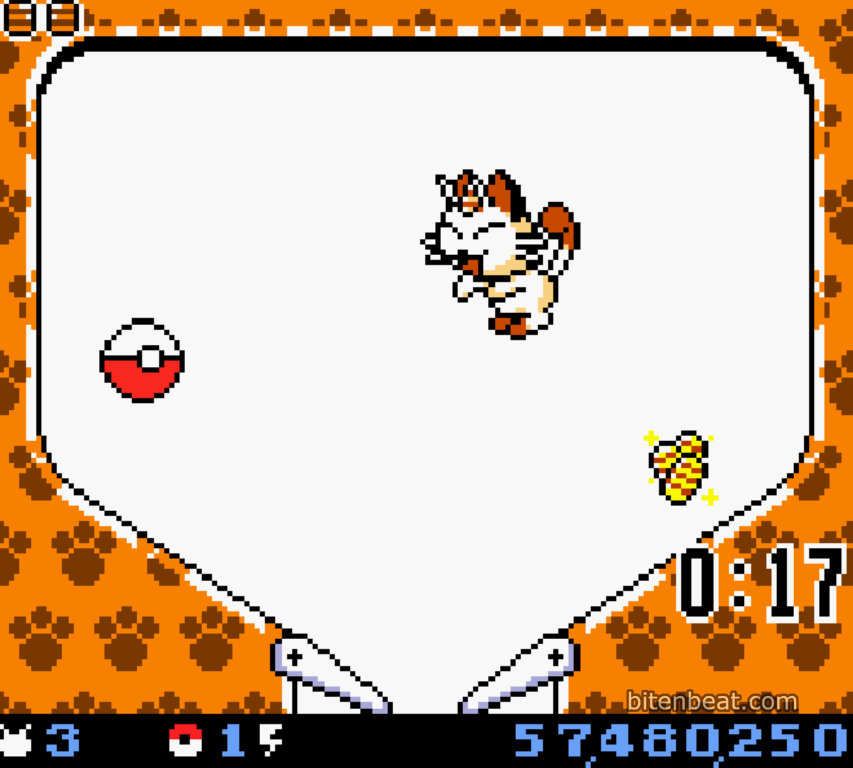
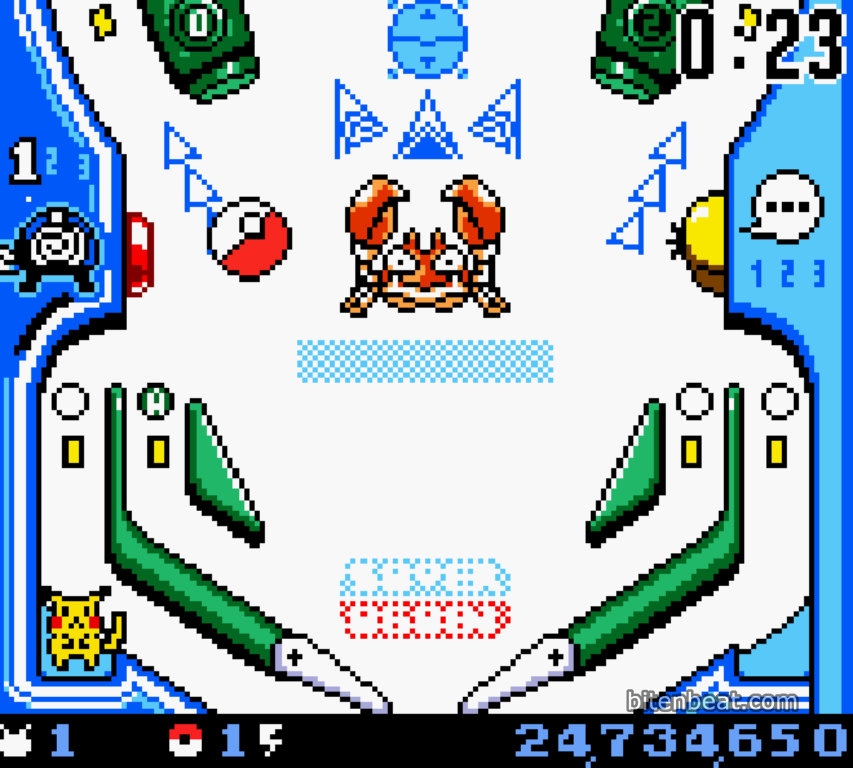
I really liked the design of both fields, they are very different from each other and, because of that, they affect how the Poké Ball behaves during gameplay.
The Pokémon look extremely cute, and it’s really nice to see their animations.
The Poké Ball changes once you reach a certain score.
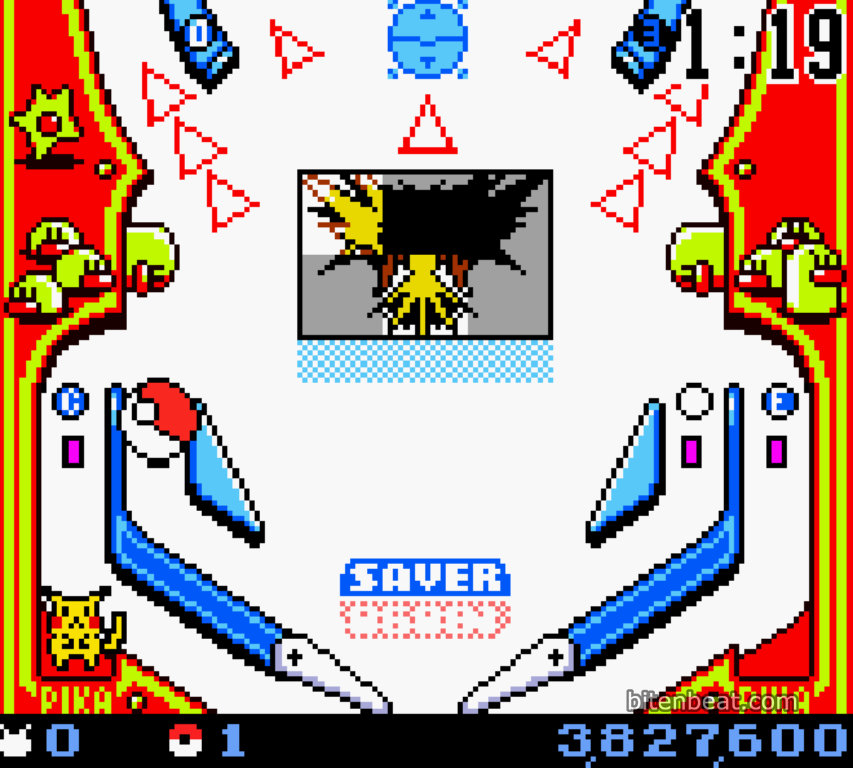
The game doesn’t have many elements, the HUD is extremely simple. It shows your score, the number of Poké Balls, and the number of Pikachu charges.
When an event occurs, a descriptive phrase appears at the bottom of the screen. It’s very easy to comprehend.
During Pokémon capture and training, the game clearly indicates the spots you need to hit. The game was made so that any child can understand it!
Soundtrack and Sound Effects
The music is great, very cheerful and energetic.
Each Pokémon’s sound is exactly the same as in the Red/Blue/Yellow versions, and there’s an extra bonus: Pikachu’s voice when he saves your Poké Ball.
Gameplay
There is a big difference between playing this game on the Game Boy and on an emulator. The cartridge’s rumble (vibration) feature makes all the difference, bringing much more excitement to the gameplay.
At the start, you can choose between two fields: red and blue. Each one has its own specific set of Pokémon.
After selecting the field, the city selection begins, which is done through a kind of “roulette”, and you must press the “A” button to stop it.
To find a Pokémon, you must shoot the Poké Ball into Bellsprout’s mouth (red field) or Cloyster’s mouth (blue field).
The shadow of a random Pokémon will be displayed on a small screen near the flippers, and you’ll need to hit the Voltorbs/Shellders for it to be revealed. After that, you must hit the Pokémon with the Poké Ball four times to capture it.
At certain moments, by hitting specific spots, you’ll be sent to special stages that help you accumulate more points.
The game’s physics are good, I didn’t see anything absurd happening.
After losing all Poké Balls, you are taken to the ranking screen.
It’s possible to access the Pokédex from the main menu, where all captured Pokémon are registered. Pokémon you haven’t managed to capture are shown as silhouettes.
Overall, the game is a mix of skill and luck (after all, you can shoot the Poké Ball in one direction and have it bounce back and fall straight into the hole between the flippers).
Replayability and Game Retention
The game is absurdly difficult. If you captured a Pokémon and lost, you’ll only be able to evolve it if you capture it again in another playthrough. The problem is actually finding the Pokémon you need, which depends much more on luck than on skill.
For me, it’s a great casual game. Playing it with the goal of completing the Pokédex is very frustrating and discouraging at many moments. I’ve never managed to complete it, either on the cartridge or on an emulator.