#bookmark-btn:hover {
transform: scale(1.25);
color: gold;
}
document.getElementById("bookmark-btn").addEventListener("click", function() {
let isMac = navigator.platform.toUpperCase().indexOf('MAC') >= 0;
if(isMac){
alert("Press Cmd + D to add this page to your favorites.");
}else{
alert("Press Ctrl + D to add this page to your favorites.");
}
});
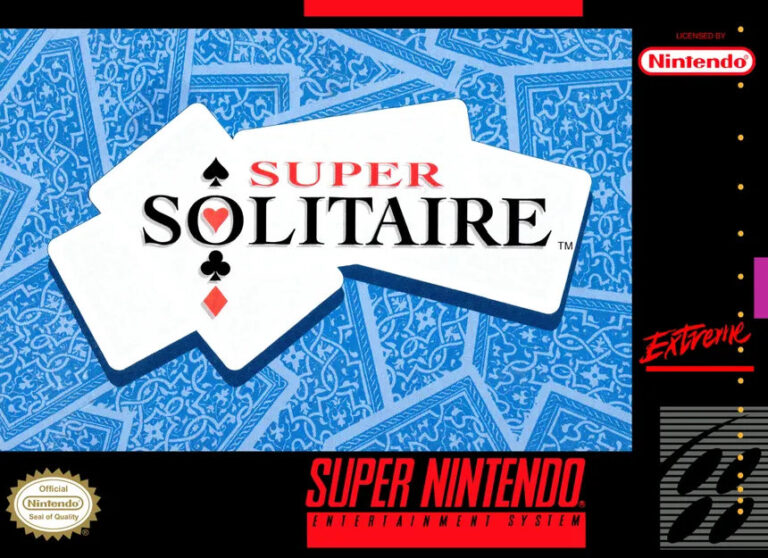
Super Solitaire (SNES)

Technical Information
Developer: Beam Software
Publisher: Extreme Entertainment Group
Release Date: January 1994
In Japan, this game was released under the name Trump Island.
Super Solitaire is a collection of 12 card games and is one of the 76 SNES games compatible with the Super NES Mouse.
Final Considerations – Analyzing the Work as a Whole
Graphics and UI
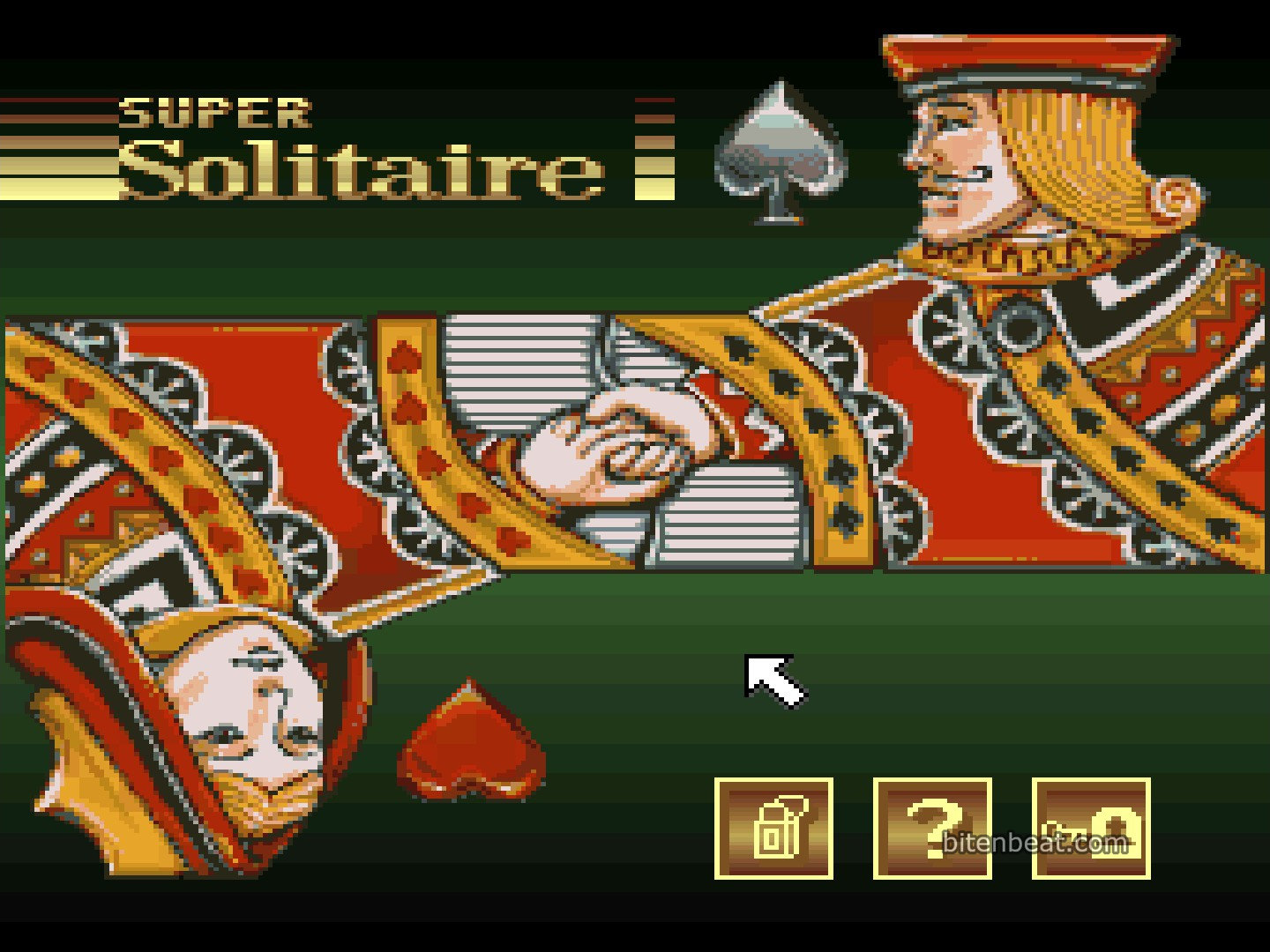
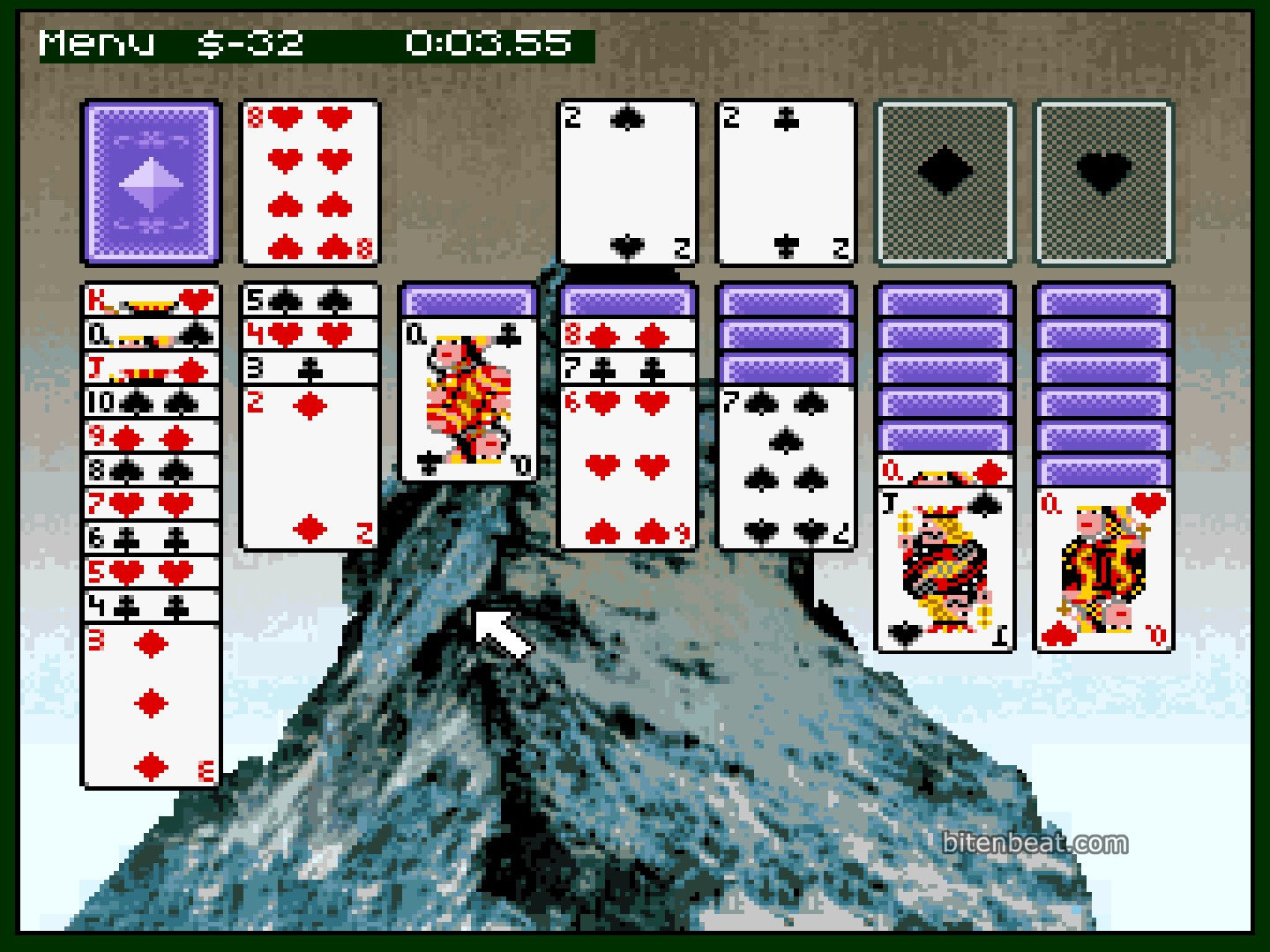
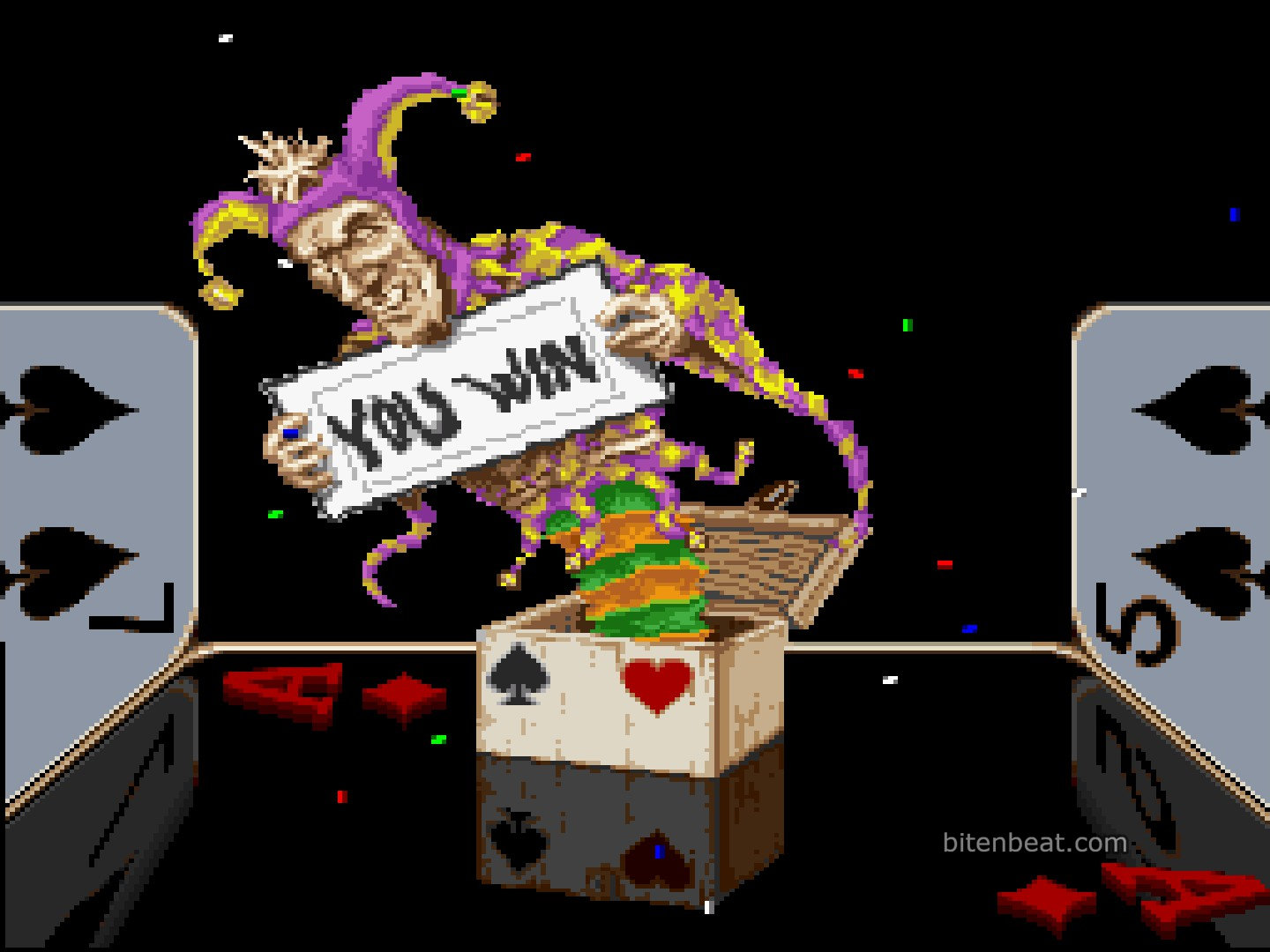
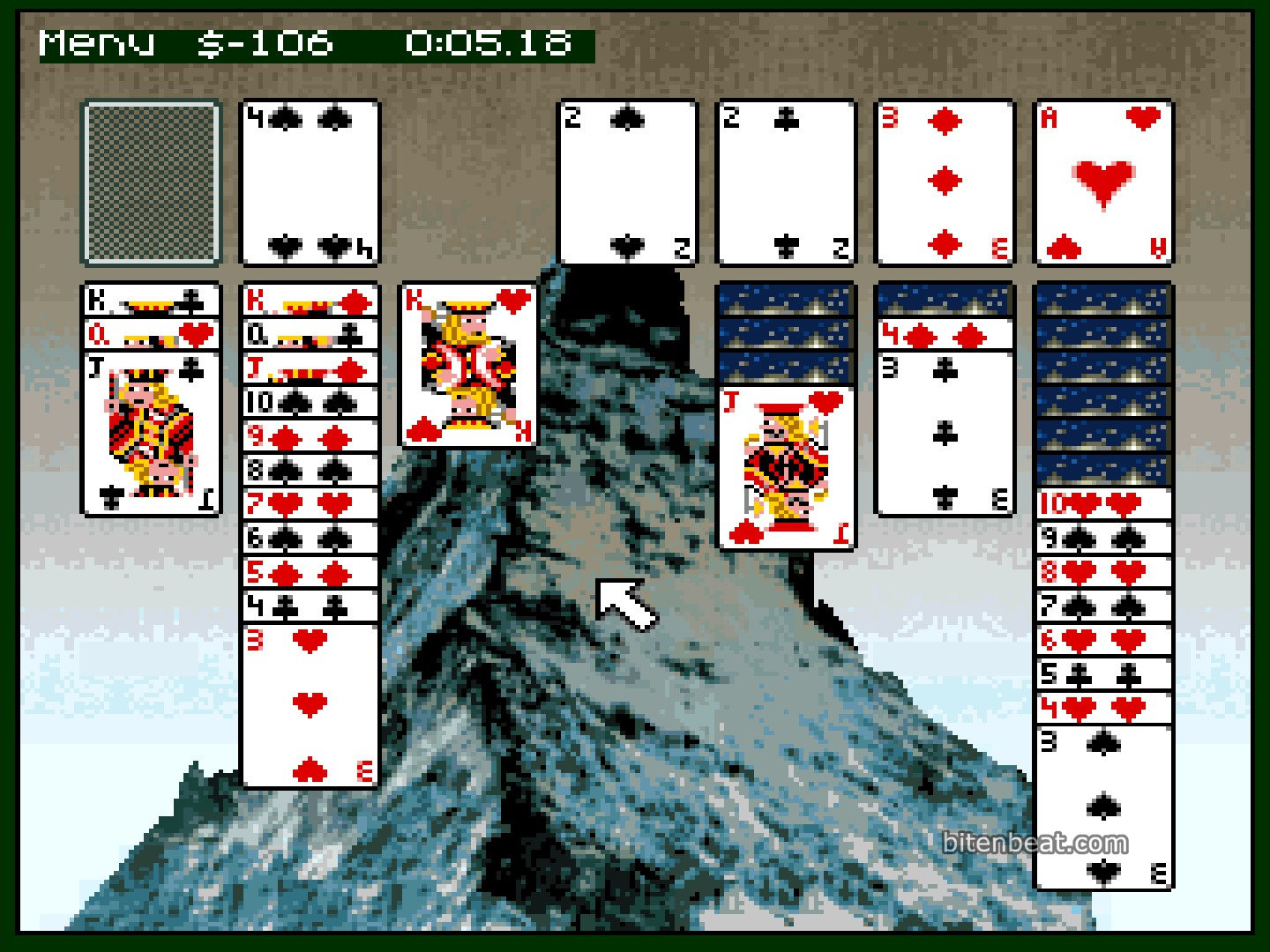
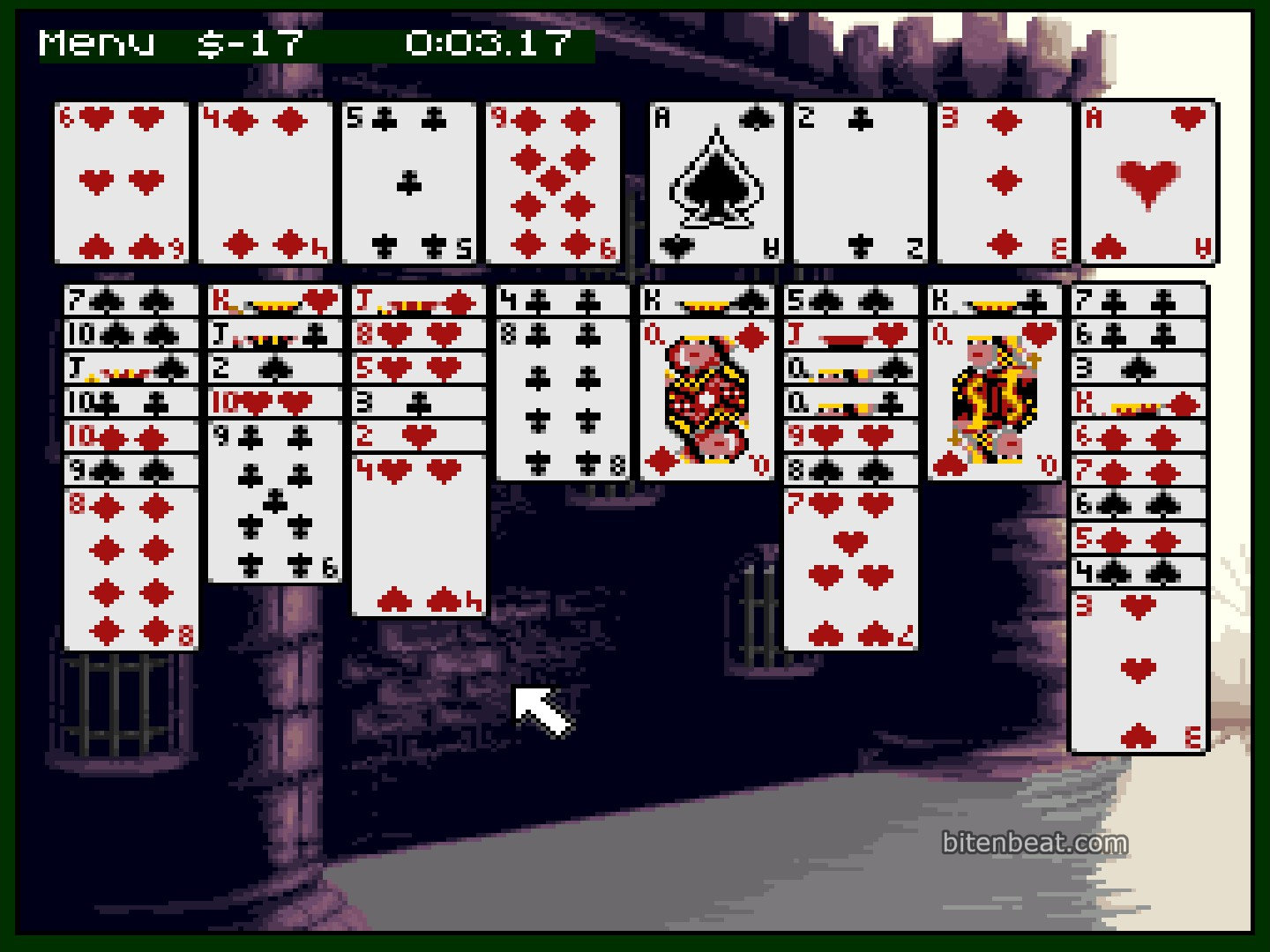
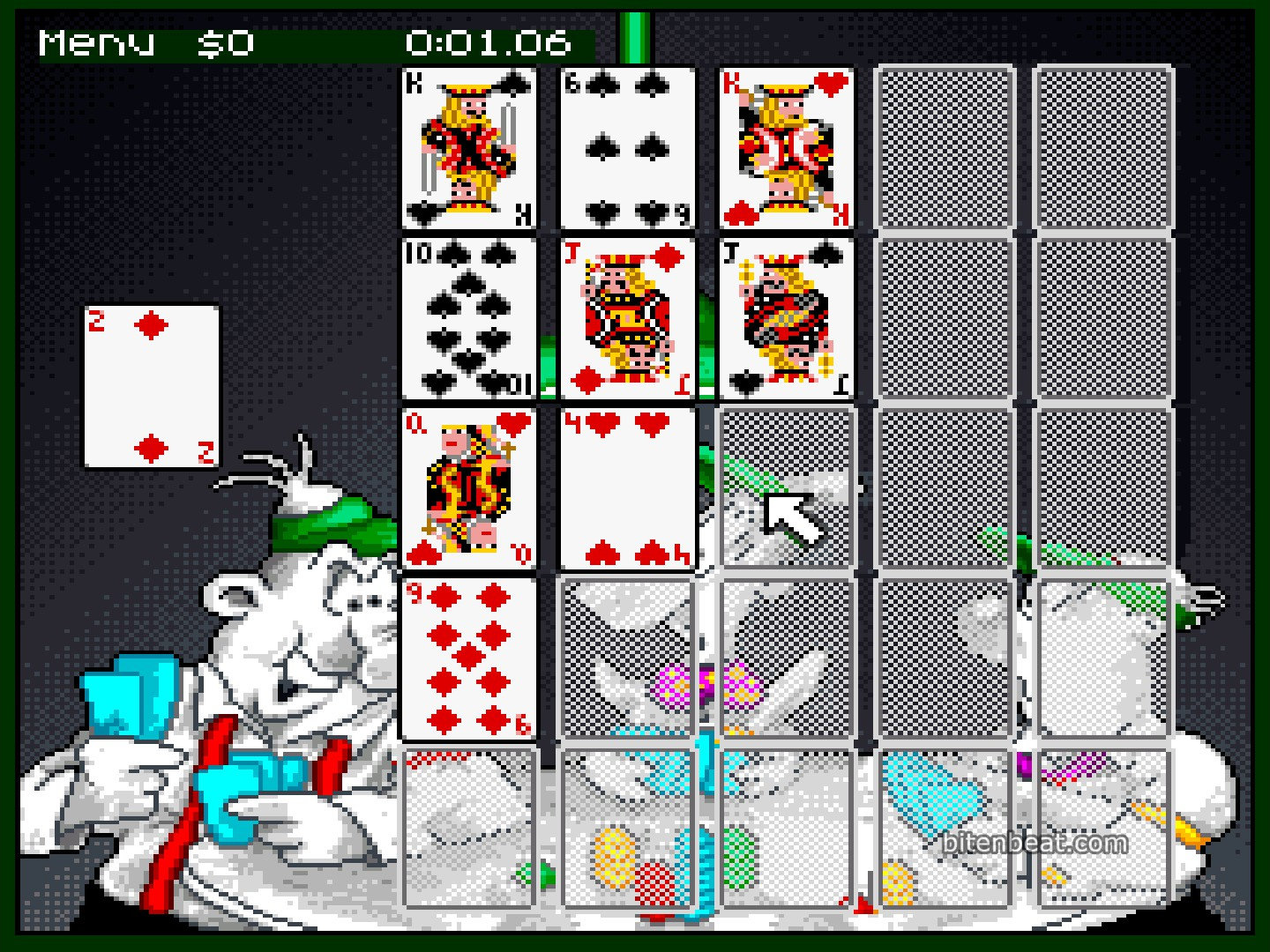
The game features very beautiful artwork that, within the technological limitations of the SNES, still offers a good level of detail.
Each game has its own specific background (which refers to its name), and you can choose between 8 different card designs. Personally, I liked the moon illustration the most.
For a card game, I think it fulfills its role well. The game is quite static, and practically the only animation is the movement of the cards.
Soundtrack and Sound Effects
Super Solitaire has 3 songs and 3 sound effect sets, and allows the player to choose which ones they prefer.
I liked the Jazz music a lot. It gives the game a charming atmosphere and also reminded me of Side Pocket.
Aside from the default effects, the other sound effects are quite flashy. I found them somewhat inconsistent with the relaxed vibe of card games. Perhaps when this game was made, it was designed mainly for children (which makes sense, since it’s an SNES game), and this was a way to make it feel more lively or interesting for them.
Gameplay
Clearly, this collection was designed to be played with the Super NES Mouse. It is possible to play using the joystick, but I don’t recommend it. Even though you can adjust the cursor speed, playing with the controller becomes uncomfortable because it lacks the necessary agility to move the cards efficiently.
I don’t know all the games in the collection, but among the ones I already knew how to play, the only one that confused me was Poker. I didn’t understand how the AI evaluated whether the cards in my hand were good or not. It wasn’t clear which other cards it was comparing them to. After reading the manual, I discovered that it actually calculates a score based on the five combinations you build (royal flush, two pairs, straight, etc.).
Some games also have variation options, such as the number of cards (3 or 1) revealed in the Solitaire game.
There is a mode called Tournament, which is divided into three options:
Standard: You must finish all 12 games before time runs out.
Championship: You must finish all 12 games, but all games use fixed card layouts. You will always play the same card combinations in each game, and your goal is to improve your score with each attempt. For players with good memory, this type of mode may not be very appealing, since it is possible to memorize all the moves to achieve the best score.
Custom: You can select which games you want to play and in what order.
Replayability and Game Retention
Since it is a 16-bit game, everything was created in pixel art. After some time playing, I found it somewhat tiring to look at the cards. It seems that my eyes are becoming less agile at recognizing numbers and suits.
It’s an interesting experience, perhaps even more so when using an actual SNES and the Super NES Mouse. However, by today’s standards, I would not really recommend it.
For traditional FreeCell or Solitaire-style games, Microsoft’s Solitaire & Casual Games package is a much better option (even if you are not a Game Pass subscriber and have to deal with ads).
If you’re interested in learning more about the game, I highly recommend reading the manual to understand how the scoring system works.